ethyl chloride

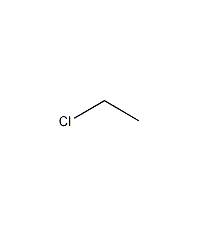
ethyl chloride structural formula

structural formula

business number 01ht
molecular formula c2h5cl
molecular weight 64.51
label

ethyl chloride,

ethyl chloride,

ethyl chloride,

aliphatic halogenated derivatives

numbering system

cas number:75-00-3

mdl number:mfcd00000961

einecs number:200-830-5

rtecs number:kh7525000

brn number:1730751

pubchem number:24845449

physical property data

1. characteristics: colorless gas with an ether-like odor. [1]

2. melting point (℃): -138.7[2]

3. boiling point (℃): 12.5[3]

4. relative density (water = 1): 0.92[4]

5. relative vapor density (air=1): 2.22[5]

6. saturated vapor pressure (kpa): 133.3 (20℃)[6]

7. heat of combustion (kj/mol): -1323.8[7]

8. critical temperature (℃): 187.2[8]

9. critical pressure (mpa): 5.23[9]

10. octanol/water partition coefficient: 1.43 [10]

11. flash point (℃): -50 (cc) [11]

12. ignition temperature ( ℃): 519[12]

13. explosion upper limit (%): 14.8[13]

14. explosion lower limit (%): 3.6[14]

15. solubility: slightly soluble in water, miscible in most organic solvents. [15]

16. viscosity (mpa·s, 5ºc, liquid): 0.292

17. flash point (ºc, closed): -50

18. flash point (ºc, opening): -43

19. heat of evaporation (kj/kg, b.p.): 383.0

20. heat of fusion (kj/kg): 69.04

21. heat of formation (kj/mol, liquid): 132.3

22. heat of formation (kj/mol, gas): 107.6

23. specific heat capacity (kj/(kg·k), 0ºc): 1.55

24. electrical conductivity (s/m, 0ºc): <3×10⁻⁹

25. thermal conductivity (w/(m·k), liquid): 0.14676

26. volume expansion coefficient (k-1 , 0~15ºc, average): 0.00156

27. refractive index at room temperature (n20): 1.36805

28 .refractive index at room temperature (n25): 1.36625

29. relative density (25℃, 4℃): 0.88895

30. eccentricity factor: 0.204

31. lennard-jones parameter (a): 7.198

32. lennard-jones parameter (k) :206.3

33. solubility parameter (j·cm-3)0.5:17.731

34.van der waals area (cm2·mol-1): 5.270×10⁹

35. van der waals volume (cm 3·mol-1): 35.520

36. gas phase standard claims heat (enthalpy) (kj·mol-1): -112.3

37. gas phase standard entropy (j·mol-1·k-1): 275.89

38. gas phase standard formation free energy (kj·mol-1): -60.4

39. gas phase standard hot melt (j·mol-1·k-1): 62.64

40. liquid phase standard claims heat (enthalpy) (kj·mol-1): -132.80

41. liquid phase standard entropy (j·mol-1·k-1): 190.79

42. liquid phase standard free energy of formation (kj·mol-1): -55.73

43. liquid phase standard hot melt (j·mol-1 sup>·k-1): 108.8

toxicological data

1. acute toxicity[16]

lc50: 160000mg/m3 (rat inhalation, 2h); 146000mg/kg (mouse inhalation)

2. irritation no data available

3. mutagenicity[17] microbial mutagenicity: salmonella typhimurium 10μg/dish. mammalian somatic mutations: hamster ovary 2340mg/l.

4. carcinogenicity[18] iarc carcinogenicity comment: g3, insufficient evidence of carcinogenicity to humans and animals .

ecological data

1. ecotoxicity no data yet

2. biodegradability[19]

aerobic biodegradation (h): 168~672

anaerobic biodegradation (h): 672~2688

3 .non-biodegradability[20]

photooxidation half-life in air (h): 160~1604

first-level hydrolysis half-life (h): 912

4. other harmful effects[21] this substance has the environment may be hazardous and special attention should be paid to pollution of surface water, soil, atmosphere and drinking water, and special attention should be paid to aquatic life.

molecular structure data

1. molar refractive index: 16.16

2. molar volume (cm3/mol): 72.9

3. isotonic specific volume (90.2k ): 150.1

4. surface tension (dyne/cm): 17.9

5. polarizability (10-24cm3): 6.40

compute chemical data

1. reference value for hydrophobic parameter calculation (xlogp): 1.2

2. number of hydrogen bond donors: 0

3. number of hydrogen bond acceptors: 0

4. number of rotatable chemical bonds: 0

5. number of tautomers: none

6. topological molecule polar surface area 0

7. number of heavy atoms: 3

8. surface charge: 0

9. complexity: 2.8

10. number of isotope atoms: 0

11. determine the number of atomic stereocenters: 0

12. uncertain number of atomic stereocenters: 0

13. determine the number of chemical bond stereocenters: 0

14. number of uncertain chemical bond stereocenters: 0

15. number of covalent bond units: 1

properties and stability

1. when there is no moisture, ethyl chloride will hardly change when heated to 400°c. it partially decomposes into ethylene and hydrogen chloride at 400~500℃. when heated to 500~600°c in the presence of pumice, most of it decomposes into ethylene and hydrogen chloride. metals, metal chlorides and metal oxides can accelerate their decomposition. in alcohol-alkali solution, ethyl chloride easily removes hydrogen chloride to generate ethylene. together with water, it is heated to 100°c in a sealed tube and hydrolyzed into ethanol. in the presence of catalysts such as titanium dioxide and barium chloride, it reacts with water vapor at 300~425°c to produce ethanol, acetaldehyde, and ethylene. it reacts with chlorine under light to produce 1,1-dichloroethane. in the presence of antimony pentoxide, 1,2-dichloroethane is generated. it reacts with benzene in the presence of fridel-crafts type catalyst to produce ethylbenzene. react with lead-sodium alloy to obtain tetraethyl lead.

2. stability[22] stable

3. incompatible substances[23] strong oxidants, potassium, sodium and their alloys

4. polymerization hazards[24] no polymerization

5. decomposition products[25] hydrogen chloride

storage method

storage precautions[26] store in a cool, ventilated warehouse dedicated to flammable gases. keep away from fire and heat sources. the storage temperature should not exceed 30℃. it should be stored separately from oxidants, active metal powders, etc., and avoid mixed storage. use explosion-proof lighting and ventilation facilities. it is prohibited to use mechanical equipment and tools that are prone to sparks. the storage area should be equipped with leakage emergency response equipment.

synthesis method

in the industrial production of ethyl chloride, the ethylene hydrochlorination method is generally used, a few use the ethane chlorination method, and a very few use the ethanol method.

1. ethylene hydrochlorination method: produced by addition reaction of ethylene and hydrogen chloride as raw materials. the technology and economy of this method are relatively reasonable, and there are two types: gas phase method and liquid phase method. the liquid phase method is to react high-concentration ethylene with hydrogen chloride in a solvent such as ethyl chloride (30-40°c, 253-303kpa) in the presence of a catalyst such as alcl3, and then perform gas-liquid separation after alkali washing, and distillation to obtain pure product. the gas phase method uses alcl3, nh4cl, silica gel, etc. as catalysts, uses a lower concentration of ethylene and ethane mixed gas as raw materials, and reacts at 130-250°c.

2. ethane chlorination method : in industry, thermal chlorination is the main method, that is, ethane is chlorinated at 250-500℃ and pressure 202-304kpa (the by-product hydrogen chloride reacts with ethylene to produce ethyl chloride). 3. ethanol method: react with ethanol and hydrochloric acid in the presence of zinc chloride. raw material consumption quota: ethanol (95%) 945kg/t, hydrochloric acid (30%) 2830kg/t, zinc chloride 90kg/t. in addition, the tail gas after absorbing hydrochloric acid, a by-product of the production of trichloroacetaldehyde, is used as a 98%ethyl chloride can also be obtained by drying with sulfuric acid, followed by pressurization, freezing, liquefaction, and distillation purification.

purpose

1. mainly used as raw material for tetraethyl lead, ethyl cellulose and ethyl carbazole dyes. it can also be used as aerosol, refrigerant, local anesthetic, ethylating agent, olefin polymerization solvent, gasoline anti-seismic agent, etc. it is also used as a catalyst for polypropylene and a solvent for phosphorus, sulfur, grease, resin, wax, etc.; in the synthesis of pesticides, dyes, medicines and their intermediates.

2. used as a catalyst for polypropylene, and also used as a refrigerant, anesthetic, pesticide, etc. [27]

extended-reading:https://www.newtopchem.com/archives/40454
extended-reading:https://www.newtopchem.com/archives/1041
extended-reading:https://www.bdmaee.net/wp-content/uploads/2021/05/138-3.jpg
extended-reading:https://www.bdmaee.net/wp-content/uploads/2022/08/zinc-isooctanoate-cas-136-53-8-zinc-2-ethyloctanoate.pdf
extended-reading:https://www.bdmaee.net/soft-foam-pipeline-composite-amine-catalyst/
extended-reading:https://www.newtopchem.com/archives/39760
extended-reading:https://www.cyclohexylamine.net/bismuth-neodecanoate-cas-251-964-6/
extended-reading:https://www.bdmaee.net/monobutyl-tin-oxide/
extended-reading:https://www.newtopchem.com/archives/45184
extended-reading:https://www.cyclohexylamine.net/dabco-delay-type-catalyst-delay-type-strong-gel-catalyst/
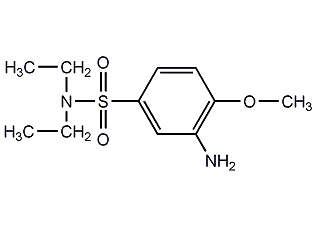
fast red itr color base

fast red itr color base structural formula

structural formula

business number 02c1
molecular formula c11h18n2o3s
molecular weight 258.34
label

azoic diazo no. 42

numbering system

cas number:97-35-8

mdl number:mfcd00009045

einecs number:202-575-5

rtecs number:none

brn number:none

pubchem number:24852003

physical property data

1. properties: white uniform powder.

2. density (g/ml, 20℃): undetermined

3. relative vapor density (g/ml, air=1): undetermined

4. melting point (ºc): 102-105

5. boiling point (ºc, normal pressure): undetermined

6. boiling point (ºc, kpa): undetermined

7. refractive index: undetermined

8. flash point (ºc): undetermined

9. specific rotation (º): undetermined

p>

10. autoignition point or ignition temperature (ºc): not determined

11. vapor pressure (mmhg, 20.2ºc): not determined

12. saturated vapor pressure (kpa, ºc): undetermined

13. heat of combustion (kj/mol): undetermined

14. critical temperature (ºc): undetermined

15. critical pressure (kpa): undetermined

16. log value of oil-water (octanol/water) distribution coefficient: undetermined

17. explosion upper limit (%, v/v): undetermined

18. lower explosion limit (%, v/v): undetermined

19. solubility: insoluble in water, soluble in hydrochloric acid and sulfuric acid.

toxicological data

none

ecological data

none

molecular structure data

1. molar refractive index: 67.95

2. molar volume (cm3/mol): 214.2

3. isotonic specific volume (90.2k ): 556.4

4. surface tension (dyne/cm): 45.4

5. polarizability (10-24cm3): 26.93

compute chemical data

1. reference value for hydrophobic parameter calculation (xlogp): none

2. number of hydrogen bond donors: 1

3. number of hydrogen bond acceptors: 5

4. number of rotatable chemical bonds: 5

5. number of tautomers: none

6. topological molecule polar surface area 81

7. number of heavy atoms: 17

8. surface charge: 0

9. complexity: 322

10. number of isotope atoms: 0

11. determine the number of atomic stereocenters: 0

12. uncertain number of atomic stereocenters: 0

13. determine the number of chemical bond stereocenters: 0

14. number of uncertain chemical bond stereocenters: 0

15. number of covalent bond units: 1

properties and stability

none

storage method

none

synthesis method

using o-aminoanisole as raw material, it is first acylated with acetic anhydride, chlorosulfonated with chlorosulfonic acid, condensed with diethylamine, and then hydrolyzed with sodium hydroxide. raw material consumption (kg/t) o-acetamidoanisole (100%) 425 diethylamine (100%) 180 chlorosulfonic acid 1800 caustic soda (50%) 170 hydrochloric acid (31%) 120

purpose

it is mainly used for dyeing and printing cotton and viscose fabrics. it is the only light pink light-fast dye among ice dyes. it can replace soluble reduced pink ir (indigosol pink ir) and bright red base. it can also be used for printing and dyeing silk and nylon fabrics.

extended-reading:https://www.newtopchem.com/archives/category/products/page/119
extended-reading:https://www.bdmaee.net/n-ethylmorpholine/
extended-reading:https://www.morpholine.org/3-morpholinopropylamine/
extended-reading:https://www.cyclohexylamine.net/dabco-ne210-amine-balance-catalyst-ne210/
extended-reading:https://www.newtopchem.com/archives/687
extended-reading:https://www.newtopchem.com/archives/category/products/page/155
extended-reading:https://www.bdmaee.net/lupragen-n204/
extended-reading:https://www.cyclohexylamine.net/dabco-dc1-delayed-catalyst-dabco-dc1/
extended-reading:https://www.newtopchem.com/archives/748
extended-reading:https://www.bdmaee.net/u-cat-2110-catalyst-cas110-97-4-sanyo-japan/

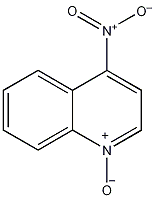
4-nitroquinoline n-oxide

4-nitroquinoline n-oxide structural formula

structural formula

business number 017s
molecular formula c9h6n2o3
molecular weight 190.16
label

1-oxo-4-nitroquinoline,

4-nitroquinoline n-oxide

numbering system

cas number:56-57-5

mdl number:mfcd00006738

einecs number:200-281-1

rtecs number:vc2100000

brn number:165756

pubchem number:24897854

physical property data

1. character: light yellow-brown flake or needle crystals.

2. density ( g/ml,25/4℃) : undetermined

3.   relative vapor density (g/ml,air=1): undetermined

4. melting point ( ºc): 151153 ℃(156157℃).

5. boiling point ( ºc,normal pressure): undetermined

6. boiling point ( ºc,5.2kpa): undetermined

7. refractive index: undetermined

8. flashpoint (ºc): undetermined

9. specific optical rotation (º): undetermined

10. autoignition point or ignition temperature (ºc): not ok

11. vapor pressure (kpa,25ºc): undetermined

12. saturated vapor pressure (kpa,60ºc): undetermined

13. heat of combustion (kj/mol): undetermined

14. critical temperature (ºc): undetermined

15. critical pressure (kpa): undetermined

16. oil and water (octanol/water) partition coefficient pair value: undetermined

17. explosion limit (%,v/v): undetermined

18. lower explosion limit (%,v/v): not ok

19. solubility: undetermined.

toxicological data

none

ecological data

none

molecular structure data

none

compute chemical data

1. reference value for hydrophobic parameter calculation (xlogp): none

2. number of hydrogen bond donors: 0

3. number of hydrogen bond acceptors: 3

4. number of rotatable chemical bonds: 0

5. number of tautomers: none

6. topological molecule polar surface area 71.3

7. number of heavy atoms: 14

8. surface charge: 0

9. complexity: 229

10. number of isotope atoms: 0

11. determine the number of atomic stereocenters: 0

12. uncertain number of atomic stereocenters: 0

13. determine the number of chemical bond stereocenters: 0

14. number of uncertain chemical bond stereocenters: 0

15. number of covalent bond units: 1

properties and stability

none

storage method

this product should be kept sealed.

synthesis method

nitration of quinoline with sulfuric acid and nitric acid-n-oxide.

purpose

for cancer research. used in organic synthesis. an effective preservative��but it has carcinogenic effects.

extended-reading:https:////www.bdmaee.net/wp-content/uploads/2022/08/-mp601-delayed-equilibrium-catalyst–mp601-catalyst.pdf
extended-reading:https://www.bdmaee.net/nt-cat-t1-catalyst-cas77-58-7-newtopchem/
extended-reading:https://www.bdmaee.net/niax-ef-708-foaming-catalyst-/
extended-reading:https://www.cyclohexylamine.net/dimethyltin-dioctanoate-cas-68928-76-7/
extended-reading:https://www.bdmaee.net/fentacat-f13-catalyst-cas80284-38-9-solvay/
extended-reading:https://www.newtopchem.com/archives/44710
extended-reading:https://www.newtopchem.com/archives/category/products/page/19
extended-reading:https://www.cyclohexylamine.net/methyl-tin-maleate-powder-methyltin-maleate/
extended-reading:https://www.bdmaee.net/nt-cat-a-1-catalyst-cas3033-62-3-newtopchem/
extended-reading:https://www.newtopchem.com/archives/category/products/page/99

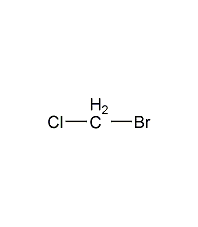
bromochloromethane

bromochloromethane structural formula

structural formula

business number 01hs
molecular formula ch2clbr
molecular weight 129.38
label

chlorobromomethane,

methylene bromide chloride,

chlorobromethylene,

methylene bromide chloride,

bromochloro-methane,

chloromethylbromide,

monochloromonobromomethane,

methylene chlorobromide,

cb,

small fire extinguishing agent,

mineral flotation agent,

penetrant for coatings

numbering system

cas number:74-97-5

mdl number:mfcd00000880

einecs number:200-826-3

rtecs number:pa5250000

brn number:1730801

pubchem number:24863036

physical property data

1. properties: colorless and transparent liquid with a special odor similar to chloroform. [1]

2. melting point (℃): -88[2]

3. boiling point (℃): 68.1[3]

4. relative density (water = 1): 1.93[4]

5. relative vapor density (air=1): 4.5[5]

6. saturated vapor pressure (kpa): 15.3 (20℃)[6]

7. critical temperature (℃): 297[7]

8. critical pressure (mpa): 6.08[8]

9. octanol/water partition coefficient: 1.41[9]

10. solubility: insoluble in water, soluble in ethanol, acetone, most organic solvents such as ether, benzene, carbon tetrachloride, chloroform, methanol, etc. [10]

11. kinematic viscosity (m2/s, 20ºc): 0.3486×10⁻⁶

12. kinematic viscosity (m2/s, 40ºc): 0.2949×10⁻⁶

13. kinematic viscosity ( m2/s, 60ºc): 0.2659×10⁻⁶

14. heat of evaporation (kj/kg, b.p.): 232.02

15. heat of formation (kj/mol, 25ºc): -50

16. specific heat capacity (j/(kg·k), constant pressure): 0.41

17 .solubility (%, water, 25ºc): 0.9

18. liquid phase standard hot melt (j·mol-1·k-1) : 100.8

19. gas phase standard claimed heat (enthalpy) (kj·mol-1): -44.8

20. gas phase standard entropy (j· mol-1·k-1): 287.59

21. gas phase standard formation free energy (kj·mol-1): 34.0

22. gas phase standard hot melt (j·mol-1·k-1): 52.71

toxicological data

1. acute toxicity[11] ld50: 5000mg/kg (rat oral); 4300mg/kg (mouse oral oral)

2. irritation no data available

3. subacute and chronic toxicity[12] rats, rabbits, dogs and other animals are exposed to 5.3g/m3, 7 hours a day, after 14 days,there is no poisoning reaction and no pathological changes.

4. mutagenicity[13] microbial mutagenicity: salmonella typhimurium 10mg/dish. cytogenetic analysis: hamster lung 1 μmol/l. sister chromatid exchange: 5μmol/l.

ecological data

1. ecotoxicity[14] lc50: 338mg/l (48h) (medaka)

2. biodegradability[15] miti-i test, initial concentration 100ppm, sludge concentration 30ppm, degradation 4% after 4 weeks

3. non-biodegradability[16] in the air, when the hydroxyl radical concentration is 5.00×10⁵ pieces/cm3, the degradation half-life is 145d (theoretical).

4. other harmful effects[17] the ozone depletion potential (odp) is 0.12, which will cause damage to the ozone layer .

molecular structure data

1. molar refractive index: 19.26

2. molar volume (cm3/mol): 69.6

3. isotonic specific volume (90.2k ): 162.5

4. surface tension (dyne/cm): 29.7

5. polarizability (10-24cm3): 7.63

compute chemical data

1. reference value for hydrophobic parameter calculation (xlogp): 1.7

2. number of hydrogen bond donors: 0

3. number of hydrogen bond acceptors: 0

4. number of rotatable chemical bonds: 0

5. number of tautomers: none

6. topological molecule polar surface area 0

7. number of heavy atoms: 3

8. surface charge: 0

9. complexity: 4.8

10. number of isotope atoms: 0

11. determine the number of atomic stereocenters: 0

12. uncertain number of atomic stereocenters: 0

13. determine the number of chemical bond stereocenters: 0

14. number of uncertain chemical bond stereocenters: 0

15. number of covalent bond units: 1

properties and stability

1. stability[18] stable

2. incompatible substances [19] strong oxidants, strong bases, alkali metals

3. polymerization hazards[20] no polymerization

4. decomposition products [21] hydrogen chloride, hydrogen bromide

storage method

storage precautions[22] store in a cool, ventilated warehouse. keep away from fire and heat sources. keep container tightly sealed. they should be stored separately from alkali metals and food chemicals, and avoid mixed storage. the storage area should be equipped with emergency release equipment and suitable containment materials.

synthesis method

none

purpose

1. used as small fire extinguishing agent, mineral flotation agent and penetrant for coatings. [23]

extended-reading:https://www.bdmaee.net/niax-d-50-tertiary-amine-catalyst-/
extended-reading:https://www.cyclohexylamine.net/high-quality-bismuth-octoate-cas-67874-71-9-bismuth-2-ethylhexanoate/
extended-reading:https://www.newtopchem.com/archives/859
extended-reading:https://www.newtopchem.com/archives/39412
extended-reading:https://www.newtopchem.com/archives/472
extended-reading:https://www.bdmaee.net/wp-content/uploads/2022/08/26.jpg
extended-reading:https://www.morpholine.org/polyurethane-metal-carboxylate-catalyst-polycat-46-catalyst-polycat-46/
extended-reading:https://www.bdmaee.net/wp-content/uploads/2022/08/dimethyldecanoic-acid-dimethyl-tin-cas68928-76-7-dimethyldineodecanoatetin.pdf
extended-reading:https://www.morpholine.org/acetic-acid-potassium-salt/
extended-reading:https://www.cyclohexylamine.net/lupragen-n206-tegoamin-bde-pc-cat-np90/

α-d-methylglucoside

α-d-methylglucoside structural formula

structural formula

business number 02c0
molecular formula c7h14o6
molecular weight 194.18
label

α-methyl-d-glucoside,

methyl α-d-glucoside

numbering system

cas number:97-30-3

mdl number:mfcd00064086

einecs number:202-571-3

rtecs number:none

brn number:81568

pubchem id:none

physical property data

1. properties: white powder.

2. density (g/ml, 20℃): 1.46

3. relative vapor density (g/ml, air=1): undetermined

4. melting point (ºc): 169-171

5. boiling point (ºc, normal pressure): 200

6. boiling point (ºc, kpa): undetermined

7. refractive index: 157.5

8. flash point (ºc): undetermined

9. specific rotation (º): 158.9

10. autoignition point or ignition temperature (ºc): not determined

11. vapor pressure (mmhg, 20.2ºc): not determined

12. saturated vapor pressure (kpa, ºc): undetermined

13. heat of combustion (kj/mol): undetermined

14. critical temperature (ºc): undetermined

15. critical pressure (kpa): undetermined

16. log value of oil-water (octanol/water) partition coefficient: undetermined

17. explosion upper limit (%, v/v) : undetermined

18. lower explosion limit (%, v/v): undetermined

19. solubility: undetermined

toxicological data

none

ecological data

this substance is slightly hazardous to water.

molecular structure data

1. molar refractive index: 41.92

2. molar volume (cm3/mol): 131.9

3. isotonic specific volume (90.2k ): 379.2

4. surface tension (dyne/cm): 68.3

5. polarizability (10-24cm3): 16.61

compute chemical data

1. reference value for hydrophobic parameter calculation (xlogp): none

2. number of hydrogen bond donors: 4

3. number of hydrogen bond acceptors: 6

4. number of rotatable chemical bonds: 2

5. number of tautomers: none

6. topological molecule polar surface area 99.4

7. number of heavy atoms: 13

8. surface charge: 0

9. complexity: 163

10. number of isotope atoms: 0

11. determine the number of atomic stereocenters: 5

12. uncertain number of atomic stereocenters: 0

13. determine the number of chemical bond stereocenters: 0

14. number of uncertain chemical bond stereocenters: 0

15. number of covalent bond units: 1

properties and stability

avoid contact with strong oxidizing agents.

storage method

store in a cool, ventilated warehouse. keep away from fire and heat sources. keep container tightly sealed. should be kept away from oxidizer, do not store together. equipped with the appropriate variety and quantity of fire equipment. the storage area should be equipped with emergency release equipment and suitable containment materials.

synthesis method

none

purpose

copolymerizer and resin regulator used in the synthesis of polyether and polyester polyols.

extended-reading:https://www.bdmaee.net/n-dimethylpropylamine/
extended-reading:https://www.bdmaee.net/wp-content/uploads/2021/05/1-2.jpg
extended-reading:https://www.newtopchem.com/archives/44818
extended-reading:https://www.bdmaee.net/wp-content/uploads/2022/08/102-3.jpg
extended-reading:https://www.cyclohexylamine.net/polyurethane-metal-carboxylate-catalyst-polycat-46-catalyst-polycat-46/
extended-reading:https://www.bdmaee.net/n-ethylmorpholine/
extended-reading:https://www.bdmaee.net/wp-content/uploads/2022/08/-ne500-non-emission-amine-catalyst-ne500-strong-gel-amine-catalyst-ne500.pdf
extended-reading:https://www.bdmaee.net/2114-2/
extended-reading:https://www.bdmaee.net/wp-content/uploads/2022/08/33-14.jpg
extended-reading:https://www.bdmaee.net/nt-cat-a-302-catalyst-cas1739-84-0-newtopchem/

benzo[a]anthracene

benzo[a]anthracene structural formula

structural formula

business number 017r
molecular formula c18c12
molecular weight 228.29
label

1,2-benzanthracene,

tetraphene,

benz[a]anthracene,

naphthanthracene,

aromatic hydrocarbons

numbering system

cas number:56-55-3

mdl number:mfcd00003599

einecs number:200-280-6

rtecs number:cv9275000

brn number:1909298

pubchem number:24847436

physical property data

1.characteristics: white or light yellow flaky crystals. there is yellow-green fluorescence. can be sublimated.

2. melting point (ºc): 160.5

3. refractive index: undetermined

4. flash point (ºc): undetermined

5. specific rotation (º): undetermined

6. autoignition point or ignition temperature (ºc): undetermined

7. vapor pressure (kpa , 25ºc): not determined

8. saturated vapor pressure (kpa, 60ºc): not determined

9. heat of combustion (kj/mol): undetermined

10. critical temperature (ºc): undetermined

11. critical pressure (kpa): undetermined

12. the logarithmic value of the oil-water (octanol/water) partition coefficient: undetermined

13. explosion upper limit (%, v/v): undetermined

14. lower explosion limit (%, v/v): undetermined

15. solubility: soluble in most organic solvents, difficult to soluble in acetic acid and hot ethanol, insoluble in water.

16. standard heat of combustion (enthalpy) of crystalline phase (kj·mol-1): -8969.0

17. crystal phase standard claims heat (enthalpy) (kj·mol-1): 170.8

18. gas-phase standard combustion heat (enthalpy) (kj·mol-1): -9091.2

19. gas phase standard claims heat (enthalpy) (kj·mol-1): 293.0

toxicological data

none

ecological data

none

molecular structure data

1. molar refractive index: 79.78

2. molar volume (cm3/mol): 191.7

3. isotonic specific volume (90.2k ): 518.7

4. surface tension (dyne/cm): 53.5

5. dielectric constant (f/m): 3.24

6. extreme chemical rate (10-24cm3): 31.62

compute chemical data

1. reference value for hydrophobic parameter calculation (xlogp): none

2. number of hydrogen bond donors: 0

3. number of hydrogen bond acceptors: 0

4. number of rotatable chemical bonds: 0

5. number of tautomers: none

6. topological molecule polar surface area 0

7. number of heavy atoms: 18

8. surface charge: 0

9. complexity: 294

10. number of isotope atoms: 0

11. determine the number of atomic stereocenters: 0

12. uncertain number of atomic stereocenters: 0

13. determine the number of chemical bond stereocenters: 0

14. number of uncertain chemical bond stereocenters: 0

15. number of covalent bond units: 1

properties and stability

storage method

this product should be sealed and stored in a cool, dry place.

synthesis method

1. this product exists in coal tar, coal tar pitch, creosote, and is pyrolyzed at 700°c by coking, various coal-burning flue gases, automobile engine exhaust, and carbohydrates, amino acids, and fatty acids. benzo(a)anthracene is present.

2. obtain flakes from glacial acetic acid or ethanol.

purpose

used in organic synthesis. ​

extended-reading:https://www.bdmaee.net/bismuth-neodecanoate-cas34364-26-6-bismuth-neodecanoate/
extended-reading:https://www.newtopchem.com/archives/44716
extended-reading:https://www.newtopchem.com/archives/598
extended-reading:https://www.newtopchem.com/archives/44236
extended-reading:https://www.newtopchem.com/archives/category/products/page/11
extended-reading:https://www.newtopchem.com/archives/690
extended-reading:https://www.newtopchem.com/archives/748
extended-reading:https://www.bdmaee.net/butyltin-mercaptide/
extended-reading:https://www.newtopchem.com/archives/44710
extended-reading:https://www.bdmaee.net/wp-content/uploads/2022/08/dibutyltin-dibenzoate-cas1067-33-0-dibutyltin-dibenzoate-solution.pdf

2,2′-dihydroxy-5,5′-dichlorophenyl sulfide

2,2'-dihydroxy-5,5'-dichlorophenyl sulfide structural formula

structural formula

business number 02bz
molecular formula c12h8cl2o2s
molecular weight 287.16
label

bis-(2-hydroxy-5-chlorophenyl) sulfide,

2,2′-dihydroxy-5,5′-dichlorodiphenyl sulfide,

bis(5-chloro-2-hydroxyphenyl) sulfide

numbering system

cas number:97-24-5

mdl number:mfcd00031479

einecs number:202-568-7

rtecs number:sn0350000

brn number:none

pubchem id:none

physical property data

1. characteristics: undetermined

2. density (g/ml, 20℃): undetermined

3. relative vapor density (g/ml, air=1 ): undetermined

4. melting point (ºc): 175

5. boiling point (ºc, normal pressure): undetermined

6. boiling point (ºc , kpa): not determined

7. refractive index: not determined

8. flash point (ºc): not determined

9. specific rotation ( º): not determined

10. autoignition point or ignition temperature (ºc): not determined

11. vapor pressure (mmhg, 20.2ºc): not determined

12. saturated vapor pressure (kpa, ºc): undetermined

13. heat of combustion (kj/mol): undetermined

14. critical temperature (ºc): undetermined

15. critical pressure (kpa): undetermined

16. log value of oil-water (octanol/water) partition coefficient: undetermined

17. explosion upper limit (%, v/v): undetermined

18. explosion lower limit (%, v/v): undetermined

19. solubility: undetermined

toxicological data

acute toxicity: mouse peritoneal cavity ldl0: 250mg/kg;

ecological data

none

molecular structure data

1. molar refractive index: 72.18

2. molar volume (cm3/mol): 180.7

3. isotonic specific volume (90.2k ): 534.5

4. surface tension (dyne/cm): 76.4

5. polarizability (10-24cm3): 28.61

compute chemical data

1. reference value for hydrophobic parameter calculation (xlogp): 4.5

2. number of hydrogen bond donors: 2

3. number of hydrogen bond acceptors: 3

4. number of rotatable chemical bonds: 2

5. number of tautomers: 5

6. topological molecule polar surface area 65.8

7. number of heavy atoms: 17

8. surface charge: 0

9. complexity: 231

10. number of isotope atoms: 0

11. determine the number of atomic stereocenters: 0

12. uncertain number of atomic stereocenters: 0

13. determine the number of chemical bond stereocenters: 0

14. uncertain number of stereocenters of chemical bonds: 0

15. covalency��number of units: 1

properties and stability

none

storage method

none

synthesis method

none

purpose

none

extended-reading:https://www.bdmaee.net/pc-cat-np50-catalyst-pentamethyldipropylenetriamine/
extended-reading:https://www.newtopchem.com/archives/44638
extended-reading:https://www.bdmaee.net/wp-content/uploads/2022/08/tmr-4–tmr-4-trimer-catalyst-tmr-4.pdf
extended-reading:https://www.newtopchem.com/archives/577
extended-reading:https://www.newtopchem.com/archives/45177
extended-reading:https://www.newtopchem.com/archives/category/products/
extended-reading:https://www.cyclohexylamine.net/low-atomization-catalyst-low-atomization-catalyst-9727/
extended-reading:https://www.newtopchem.com/archives/44405
extended-reading:https://www.bdmaee.net/butyltinhydroxide-oxide/
extended-reading:https://www.newtopchem.com/archives/category/products/page/23

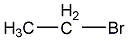
bromoethane

bromeethane structural formula

structural formula

business number 01hr
molecular formula c2h5br
molecular weight 108.97
label

ethyl bromide,

ethyl bromide,

bromoethane,

bromoethane,

ethyl bromide,

aliphatic halogenated derivatives

numbering system

cas number:74-96-4

mdl number:mfcd00000232

einecs number:200-825-8

rtecs number:kh6475000

brn number:1209224

pubchem number:24854383

physical property data

1. properties: colorless and volatile liquid [1]

2. melting point (℃): -119[2]

3. boiling point (℃): 38.4[3]

4. relative density (water=1): 1.45 (25℃)[4 ]

5. relative vapor density (air=1): 3.76[5]

6. saturated vapor pressure (kpa): 53.2 (20℃)[6]

7. heat of combustion (kj/mol): -1423.3[7]

8. critical temperature (℃): 776.8[8]

9. critical pressure (mpa): 6.23[9]

10. octanol/water partition coefficient: 1.61[10]

11. flash point (℃): -23[11]

12. ignition temperature (℃): 511[12]

13. explosion upper limit (%): 11.3[12]

14. lower explosion limit (%): 6.7[14]

15. solubility: insoluble in water, soluble in ethanol and ether and most organic solvents. [15]

16. critical density (g·cm-3): 0.507

17. critical volume (cm 3·mol-1): 215

18. critical compression factor: 0.320

19. eccentricity factor: 0.183

20. solubility parameter (j·cm-3)0.5: 18.475

21. van der waals area (cm 2·mol-1): 5.550×10⁹

22. van der waals volume (cm 3·mol-1): 38.300

23. liquid phase standard claims heat (enthalpy) (kj·mol-1) : -91.8

24. liquid phase standard hot melt (j·mol-1·k-1): 100.5

25. gas phase standard claimed heat (enthalpy) (kj·mol-1): -63.6

26. gas phase standard entropy (j·mol-1 sup>·k-1): 287.36

27. gas phase standard free energy of formation (kj·mol-1): -25.7

28. vapor phase standard hot melt (j·mol-1·k-1): 64.23

toxicological data

1. acute toxicity[16]

ld50: 1350mg/kg (rat oral)

lc50 : 72386mg/m3 (mouse inhalation, 1h)

2. irritation no information available

ecological data

1. ecotoxicity no data yet

2. biodegradability[17] miti-i test , the initial concentration is 100ppm, the sludge concentration is 30ppm, and the degradation is 13%~45% after 4 weeks.

3. non-biodegradability[18] in the air, when the concentration of hydroxyl radicals is 5.00×10⁵/cm3, the degradation half-life is 46d ( theory). at 25°c, when the ph value is 7, the hydrolysis half-life is 30 days (theoretical).

4. other harmful effects[19] this substance is harmful to the environment. special attention should be paid to the pollution of water bodies. .

molecular structure data

1. molar refractive index: 19.04

2. molar volume (cm3/mol): 74.7

3. isotonic specific volume (90.2k ): 163.8

4. surface tension (dyne/cm): 23.1

5. dielectric constant:

6. dipole moment (10-24cm3 ):

7. polarizability: 7.55

compute chemical data

1. reference value for hydrophobic parameter calculation (xlogp): 1.4

2. number of hydrogen bond donors: 0

3. number of hydrogen bond acceptors: 0

4. number of rotatable chemical bonds: 0

5. number of tautomers: none

6. topological molecule polar surface area 0

7. number of heavy atoms: 3

8. surface charge: 0

9. complexity: 2.8

10. number of isotope atoms: 0

11. determine the number of atomic stereocenters: 0

12. uncertain number of atomic stereocenters: 0

13. determine the number of chemical bond stereocenters: 0

14. number of uncertain chemical bond stereocenters: 0

15. number of covalent bond units: 1

properties and stability

1. ethyl bromide is a sweet-tasting flammable liquid that easily decomposes under light or flame to produce hydrogen bromide and carbonyl bromide, the latter of which has highly toxic effects similar to phosgene.

2. react with strong alkali to generate ethylene, which is hydrolyzed in weak alkali to generate ethanol.

3. stability[20] stable

4. incompatible substances[21] strong alkali, strong oxidizing agent, magnesium

5. conditions to avoid contact [22] heat and light p>

6. polymerization hazard[23] no polymerization

7. decomposition products[24] sup> hydrogen bromide

storage method

storage precautions[25] store in a cool, ventilated warehouse. keep away from fire and heat sources. keep container tightly sealed. they should be stored separately from oxidants, alkalis, and food chemicals, and avoid mixed storage. use explosion-proof lighting and ventilation facilities. it is prohibited to use mechanical equipment and tools that are prone to sparks. suitable materials should be available in the storage area to contain spills.

synthesis method

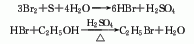
1. obtained from the reaction of ethanol and sodium bromide: add 40% sodium bromide solution and ethanol into the reaction pot, add sulfuric acid while stirring, and the temperature should not exceed 50°c. after addition, react at 45-50°c for 2 hours. distill, neutralize the distillate with 3% sodium carbonate solution, and let it stand for 2 hours to separate the organic phase into ethyl bromide. raw material consumption quota: ethanol (95%) 557kg/t, hydrobromic acid (48%) 1610kg/t, sulfuric acid (92%) 1165kg/t.

2. from ethanol and bromine obtained from the reaction: slowly add bromine to the suspension of sulfur and water while stirring, keeping the temperature at 35-40°c. then add ethanol. add sulfuric acid at 25-28°c and react for 42 hours. distill and collect the 38-39°c fraction to obtain bromoethane. the yield is about 90%. raw material consumption quota: ethanol 770kg/t, bromine 250kg/t, sulfuric acid 1042kg/t, sulfur 18kg/t. in method (1), you can also use hydrobromic acid and ethanol to react. the preparation process is the same as the sodium bromide method, and the yield is 96%. in addition, it can be obtained by the addition of ethylene and hydrogen bromide or by bromination of ethane. ethyl bromide. the purity of industrial bromoethane is ≥98%.

3. use industrial product ethyl bromide alkane is used as raw material, washed several times with concentrated sulfuric acid, once with water, twice with 10% sodium carbonate solution, once with 5% sodium thiosulfate solution, let stand to separate the aqueous layer, and wash with anhydrous chlorine after drying the calcium oxide, it is distilled and the 37-40°c fraction is collected as the finished product.

4. preparation method:

in a reaction flask equipped with a stirrer, dropping funnel, and distillation device, add 41.5g (2.81mol) of 48% hydrobromic acid, cool in a water bath, and slowly add 120g (65ml) of concentrated sulfuric acid while stirring. , then add 100g (2.06mol) of 95% ethanol (2), heat slowly, and add 109ml of concentrated sulfuric acid dropwise from the dropping funnel, while steaming out the generated bromoethane. the connecting tube extends into the receiving bottle under the water surface, and the receiving bottle is cooled with ice water. stop the reaction when no bromoethane evaporates. separate the crude ethyl bromide from the distillate, wash with water, 5% sodium carbonate solution, water in sequence, and dry over anhydrous calcium chloride. heating and distilling in a water bath, collecting the fraction at 38-39°c to obtain 205g of bromoethane (1), with a yield of 91%. [27]

5. preparation method:

add 100ml (1.7mol) of 95% ethanol (2) and 90ml of water into the reaction bottle. slowly add 190ml of concentrated sulfuric acid while stirring continuously. the reaction is exothermic. be sure to cool to room temperature. slowly add 163g (1.5ml) of finely ground sodium bromide and a few grains of zeolite while stirring. install the distillation device and add an appropriate amount of � to the receiving bottle.of water and place it in an ice bath. heat slowly to allow the reaction and distillation to proceed smoothly until no oil is distilled out. the organic layer was separated and dried with sulfuric acid. distill and collect the fractions at 35-40°c to obtain 100-120g of bromoethane (1) with a yield of 61%-74%. [28]

purpose

1. it is an important raw material for organic synthesis. in agriculture, it is used as a fumigation pesticide for grain storage, warehouses and buildings. ethyl bromide is produced by reacting potassium bromide with chilled sulfuric acid and ethanol. commonly used in ethylation of gasoline, refrigerants and anesthetics. therefore, both chemical production workers and fumigators can be exposed to varying concentrations of ethyl bromide.

2. ethyl bromide is a raw material for making barbiturates. it is also used as a refrigerant, anesthetic, solvent, fumigant, organic synthesis, etc.

3. used as analytical reagents, such as solvents and refractive index standard samples. it is also used as a fire extinguishing agent in organic synthesis and aviation industry.

4. used in organic synthesis, as solvent, refrigerant, and in the pharmaceutical industry. [26]

extended-reading:https://www.bdmaee.net/wp-content/uploads/2022/08/pentamethyldiethylenetriamine-cas3030-47-5-jeffcat-pmdeta.pdf
extended-reading:https://www.bdmaee.net/wp-content/uploads/2022/08/-dc2-delayed-catalyst–dc2-delayed-catalyst–dc2.pdf
extended-reading:https://www.bdmaee.net/fomrez-ul-1-strong-gel-catalyst-/
extended-reading:https://www.bdmaee.net/polyurethane-gel-catalyst/
extended-reading:https://www.bdmaee.net/u-cat-2313-catalyst-cas9733-28-3-sanyo-japan/
extended-reading:https://www.cyclohexylamine.net/delayed-catalyst-8154-polyurethane-catalyst-8154/
extended-reading:https://www.newtopchem.com/archives/category/products/page/6
extended-reading:https://www.newtopchem.com/archives/44677
extended-reading:https://www.cyclohexylamine.net/category/product/page/12/
extended-reading:https://www.bdmaee.net/wp-content/uploads/2022/08/14.jpg

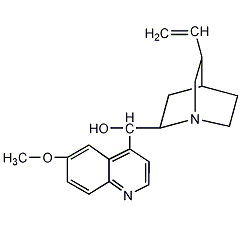
quinidine

quinidine structural formula

structural formula

business number 017q
molecular formula c20h24n2o2
molecular weight 324.42
label

isoquinine; isoquinine;

numbering system

cas number:56-54-2

mdl number:mfcd00135581

einecs number:200-279-0

rtecs number:va4725000

brn number:91866

pubchem number:24899331

physical property data

1. characteristics: white shiny crystal. products containing crystal water will weather in the air. sensitive to light. friction can produce light.

2. density (g/ml,25/4℃) : undetermined

3. relative vapor density (g/ml,air=1): undetermined

4. melting point (ºc): 174175(无水品)

5. boiling point ( ºc,normal pressure): undetermined

6. boiling point ( ºc,5.2kpa): undetermined

7.   refractive index: undetermined

8. flashpoint (ºc): undetermined

9. specific optical rotation (º): [α]d15 +230°(c=1.8, in chloroform),[α]d17 +258°c1 , ethanol (中), [α]d17 + 322°(c=1.62mol/lhydrochloric acid)

10. autoignition point or ignition temperature (ºc): undetermined

11. vapor pressure (kpa,25ºc): undetermined

12. saturation vapor pressure (kpa,60ºc): undetermined

13. heat of combustion (kj/mol): undetermined

14. critical temperature (ºc): undetermined

15. critical pressure (kpa): unconfirmed.�

16. oil and water (octanol/water) partition coefficient pair value: undetermined

17. explosion limit (%,v/v): not ok

18. lower explosion limit (%,v/v): not ok

19. solubility:in blue fluorescence occurs in dilute sulfuric acid. very soluble in methanol,1gproduct dissolves in approx.2000mlcold water,800ml boiling water,360mlethanol,56mlb�, 1.6mlchloroform, almost insoluble in petroleum ether.

toxicological data

1, skin or eye irritation: rabbit, skin contact, standard draize test, 3%, mild reaction
2, acute toxicity: rat oral ld50: 263mg/kg; rat intravenous ld50: 23mg/kg ; rat ld50: 60mg/kg; mouse oral ld50 : 535mg/kg; mouse abdominal cavity ld50: 135mg/kg; mouse subcutaneous ldlo: 400mg/kg; mouse intravenous ld50: 53600mg/kg; mouse intramuscular ld50: 200mg/kg; feline vein ld50: 30mg/kg
3 , other multiple dose toxicity: rat oral tdlo: 650mg/kg/7w-i

ecological data

none

molecular structure data

1. molar refractive index: 95.78

2. molar volume (m3/mol):266.3

3. isotonic specific volume (90.2k):728.7

4. surface tension (dyne/cm):56.0

5. polarizability10-24cm3): 37.97

compute chemical data

1. reference value for hydrophobic parameter calculation (xlogp): 2.9

2. number of hydrogen bond donors: 1

3. number of hydrogen bond acceptors: 4

4. number of rotatable chemical bonds: 4

5. number of tautomers:

6. topological molecular polar surface area (tpsa):45.6

7. number of heavy atoms: 24

8. surface charge: 0

9. complexity: 457

10. number of isotope atoms: 0

11. determine the number of atomic stereocenters: 4

12. the number of uncertain atomic stereocenters: 0

13. determine the number of stereocenters of chemical bonds: 0

14. uncertain number of chemical bond stereocenters: 0

15. number of covalent bond units: 1

properties and stability

none

storage method

this product should be sealed and stored away from light.

synthesis method

for the golden rooster the alkaloids contained in napi are isomers of quinine. it can be obtained by extracting quinine, cinchonine and cinchonidine from cinchona bark, extracting quinine from the mother liquor, and then treating it with sulfuric acid.

purpose

chiral catalyst. medicine.

extended-reading:https://www.bdmaee.net/wp-content/uploads/2020/06/70.jpg
extended-reading:https://www.newtopchem.com/archives/44131
extended-reading:https://www.bdmaee.net/fascat8201-catalyst/
extended-reading:https://www.newtopchem.com/archives/44428
extended-reading:https://www.newtopchem.com/archives/698
extended-reading:https://www.newtopchem.com/archives/44782
extended-reading:https://www.newtopchem.com/archives/44180
extended-reading:https://www.bdmaee.net/cyclohexylamine-series-products/
extended-reading:https://www.newtopchem.com/archives/44359
extended-reading:https://www.bdmaee.net/wp-content/uploads/2022/08/drier-butyl-tin-oxide-fascat-4101.pdf

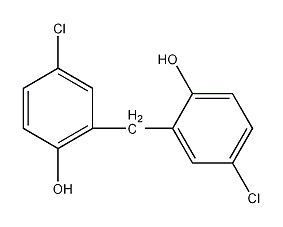
dichlorophenol

dichlorophenol structural formula

structural formula

business number 02by
molecular formula c13h10cl2o2
molecular weight 269.12
label

diclofen,

2,2′-methylenebis(4-chlorophenol),

dichlorophenol,

dichlorophenol,

2,2′-methylenebis(4-chlorophenol),

2,2′-dihydroxy-5,5′-dichlorodiphenylmethane,

2,2′-dihydroxy-5,5′-dichlorobiphenylmethane,

2,2′-methylenebis(4-chlorophenol),

nl-4 bactericidal algaecide,

anthiphen,cordocel,didroxane,gingivit,

2,2′-dihydroxy phenyl-5,5′-dichloromethane,

5,5′-dichloro-2,2′-dihydroxy phenyl methane,

biocide-algaecide nl-4,

fungicide

numbering system

cas number:97-23-4

mdl number:mfcd00002322

einecs number:202-567-1

rtecs number:sm0175000

brn number:1884514

pubchem number:24848095

physical property data

1. properties: reddish brown to dark brown liquid

2. melting point (ºc): 177~178

3. solubility: almost insoluble in water, soluble in organic solvents such as ethanol and toluene.

4. relative density: 1.11~1.16

5. ph value: 13~14

toxicological data

1. skin/eye irritation: standard dresser test: rabbit skin contact, 500mg/24hreaction severity, mild reaction; standard dresser test: rabbit eye contact, 50μg/24hreaction severity, strong reaction;

2. acute toxicity: rat oral ld50: 1506mg/kg; rat intravenous ld50: 17mg/kg; mouse oral lc50: 1mg/kg; dog oral ld50: 2mg/kg; guinea pigs oral ld50: 1250mg/kg;

3. mutagenicity: mutant microorganism test: bacteria – salmonella typhimurium, 50μmol/plate; mutant microorganism test: bacteria – salmonella typhimurium, 150μg/plate

ecological data

it is extremely harmful to water and toxic to fish. do not let the product enter the water body.

molecular structure data

1. molar refractive index: 69.12

2. molar volume (cm3/mol): 189.5

3. isotonic specific volume (90.2k ): 520.0

4. surface tension (dyne/cm): 56.6

5. dielectric constant:

6. dipole moment (10-24cm3):

7. polarizability: 27.40

compute chemical data

1. reference value for hydrophobic parameter calculation (xlogp): none

2. number of hydrogen bond donors: 2

3. number of hydrogen bond acceptors: 2

4. number of rotatable chemical bonds: 2

5. number of tautomers: 5

6. topological molecule polar surface area 40.5

7. number of heavy atoms: 17

8. surface charge: 0

9. complexity: 226

10. number of isotope atoms: 0

11. determine the number of atomic stereocenters: 0

12. uncertain number of atomic stereocenters: 0

13. determine the number of chemical bond stereocenters: 0

14. number of uncertain chemical bond stereocenters: 0

15. number of covalent bond units: 1

properties and stability

1. avoid contact with strong oxidants.

2. white crystal or light gray powder, soluble in most solvents such as ethanol and ether and alkali, slightly soluble in benzene, and insoluble in water.

3. this product has low toxicity.

storage method

1. store in a cool, ventilated warehouse. keep away from fire and heat sources. keep container tightly sealed. should be kept away from oxidizer, do not store together.

2. equipped with corresponding varieties and quantities of fire-fighting equipment.

3. the storage area should be equipped with leakage emergency treatment equipment and suitable containment materials.

synthesis method

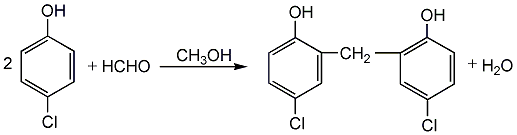
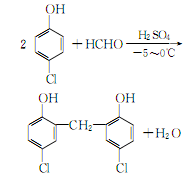
1. obtained from the reaction of p-chlorophenol and formaldehyde. the post-shrinking reaction is carried out in the solvent methanol (or ethanol), using sulfuric acid as the catalyst, and the reaction temperature is controlled below -5°c. another process method is to use molecular sieves as catalysts. in this case, the condensation reaction of p-chlorophenol and formaldehyde is carried out at 110°c.

2. first, combine the solvent ethanol and add a catalyst amount of concentrated sulfuric acid to the reaction kettle, then add 277kg of p-chlorophenol, cool to -10~0°c, start adding 30kg of formaldehyde dropwise, and react for 6 hours. after the reaction is completed, let it stand, filter and dry to obtain a solid product.

3.it is obtained by the condensation reaction of p-chlorophenol and formaldehyde. one method is to conduct it in the solvent methanol (or ethanol) and use sulfuric acid as the catalyst. molecular sieves can also be used as catalysts, and the reaction is carried out at a temperature of 110°c.

4.the condensation reaction of p-chlorophenol and formaldehyde is carried out in the solvent methanol (or ethanol) with sulfuric acid as the catalyst. the reaction temperature is controlled below -5°c; or molecular sieves are used as catalysts and the reaction can be carried out at a temperature of 110°c.

purpose

1. used as biocide in industrial processing. it has high activity against bacteria, fungi, algae and yeast. it is widely used in cooling circulating water treatment in chemical fertilizer, petrochemical, oil refining, metallurgy and other industries. when the dosage is 50~100g/m3, the 24h sterilization rate reaches more than 99%. it can also be used as an anti-fogging agent for strong materials, pulp and wood.

2.in oil field chemicals, it can be used as a bactericide in water-based oil well fracturing fluids. the dichlorophenol used in the circulating water system is an aqueous solution in the form of a single sodium salt. since it is a reddish-brown liquid, putting it into the circulating water will affect the color of the water. dichlorophenol has good biocidal and inhibitory effects on heterotrophic bacteria, iron bacteria, sulfate-reducing bacteria and other fungi and algae. it is an efficient and broad-spectrum biocide. the applicable range of ph is wider, and the treatment effect is better under alkaline conditions. spraying wooden cooling towers with commercial dichlorophenol solution can reduce the amount of biocide used in circulating water and prevent fungal erosion of wood. chlorophenols should not be used together with cationic agents (such as quaternary ammonium salts, etc.), but their combined use with certain anionic surfactants can significantly reduce its dosage and improve killing effect.

3.dichlorophenol is effective against heterophilic bacteria, iron bacteria, sulfate-reducing bacteria and algae. it is a highly efficient and broad-spectrum fungicide with good bactericidal and inhibitory effects. it has a wide ph range and has better treatment effects in alkaline conditions. spraying wooden cooling towers with dichlorophenol solution can reduce the amount of fungicides in circulating water and prevent fungi from corroding the wood. chlorophenols should not be used together with cationic agents (such as quaternary ammonium salts, etc.), but their combined use with certain anionic surfactants can significantly reduce its dosage and improve sterilization effect. dichlorophenol used in circulating water systems is an aqueous solution in the form of a monosodium salt. since it is a reddish-brown liquid, putting it into circulating water will affect the color of the water. the general mass concentration used is 100 mg/l, and the sterilization rate reaches more than 99%.

4.preservative and antifungal agent for natural adhesives and synthetic rubber latex. it can be used as a fungicide in agriculture, medicine, and soap products.

extended-reading:https:////www.bdmaee.net/wp-content/uploads/2022/08/dimethylaminoethoxyethanol-cas-1704-62-7-n-dimethylethylaminoglycol.pdf
extended-reading:https://www.morpholine.org/potassium-acetate/
extended-reading:https://www.bdmaee.net/wp-content/uploads/2022/08/-pt305-reactive-amine-catalyst-pt305–amine-catalyst.pdf
extended-reading:https://www.newtopchem.com/archives/590
extended-reading:https://www.newtopchem.com/archives/44377
extended-reading:https://www.bdmaee.net/wp-content/uploads/2021/05/1-4.jpg
extended-reading:https://www.newtopchem.com/archives/39799
extended-reading:https://www.newtopchem.com/archives/1808
extended-reading:https://www.bdmaee.net/niax-k-zero-3000-trimer-catalyst-/
extended-reading:https://www.newtopchem.com/archives/category/products/page/24

bdmaee:bis (2-dimethylaminoethyl) ether

cas no:3033-62-3

china supplier

for more information, please contact the following email:

email:sales@newtopchem.com

email:service@newtopchem.com

email:technical@newtopchem.com

BDMAEE Manufacture !