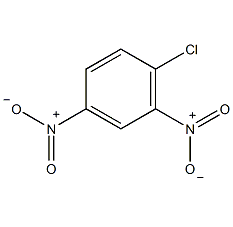
1-chloro-2,4-dinitrobenzene
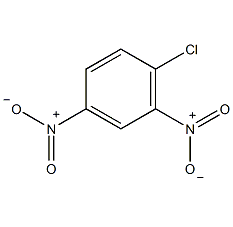
1-chloro-2,4-dinitrobenzene structural formula

structural formula

business number 02bs
molecular formula c6h3cln2o4
molecular weight 202
label

2,4-dinitrochlorobenzene,

4-chloro-1,3-dinitrobenzene,

2,4-dinitrobenzene chloride,

1,3-dinitro-4-chlorobenzene,

6-chloro-1,3-dinitrobenzene,

chlorodinitrobenzene,

2,4-diazochlorobenzene,

2,4-dinitrochlorobenzene,

4-chloro-1,3-dinitrobenzene,

aromatic nitrogen-containing compounds and their derivatives

numbering system

cas number:97-00-7

mdl number:mfcd00007075

einecs number:202-551-4

rtecs number:cz0525000

brn number:613161

pubchem id:none

physical property data

1. characteristics: light yellow or yellow-brown needle-like crystals with a bitter almond smell. [1]

2. melting point (℃): 52~54[2]

3. boiling point (℃) : 315[3]

4. relative density (water = 1): 1.69[4]

5. relative vapor density (air = 1): 6.98[5]

6. octanol/water partition coefficient: 2.17[6]

7. flash point (℃): 194 (cc) [7]

8. explosion limit (%): 22.0[8]

9. lower explosion limit (%): 2.0[9]

10. solubility: insoluble in water, easily soluble in ethanol and ether. [10]

toxicological data

1. skin/eye irritation: standard dresser test: human skin contact, 30μg; starting irritation test: rabbit skin contact, 100μg/24h; standard dresser test: rabbit skin contact, 2mg/24hreaction severity, strong reaction; standard dresser test: rabbit eye contact, 50μg/24 hreaction severity, strong reaction; 2. acute toxicity: rat oral ld50: 780mg/kg; rat peritoneal cavity ld50: 280mg/kg; rabbit skin contact ld50: 130mg/kg kg; 3. other multiple dose toxicity: rat oral tdlo: 2340mg/kg/30d-i; rat inhalation tclo: 200 μg/m3/4h/17w-i; 4. mutagenicity: mutant microbial test: bacteria -salmonella typhimurium, 3μg/plate; mutant microorganism test: bacteria-salmonella typhimurium, 50μg/plate; dna damage test: rat liver, 5μmol/l; dna damage test: mouse peritoneal cavity, 30mg/kg; morphological transformation test: hamster kidney, 10mg/l; 5. it is a highly toxic substance. the time-weighted average allowable concentration of toxic substances in the air in the workplace is 0.6mg/m3, and the allowable concentration for short-term exposure is 1.8mg/m3. toxic if taken orally, inhaled or in contact with skin, and has cumulative hazards.

6. acute toxicity[11] ld50: 640mg/kg (rat oral); 130mg/kg (rabbit dermal )

7. irritation[12]rabbit transdermal: 100mg (24h), causing irritation (open stimulation test)

8. mutagenicity[13] microbial mutagenicity: salmonella typhimurium 3μg/dish. dna damage: 30mg/kg in mouse abdominal cavity.

ecological data

1. ecotoxicity no data available

2. biodegradability no data available

3 .non-biodegradable[14] in the air, when the concentration of hydroxyl radicals is 5.00×10⁵/cm3, the degradation half-life is 750d (theoretical).

4. other harmful effects[15] this substance is harmful to the environment, and special attention should be paid to the pollution of water bodies. .

molecular structure data

1. molar refractive index: 44.23

2. molar volume (cm3/mol): 125.0

3. isotonic specific volume (90.2k ): 354.1

4. surface tension (dyne/cm): 64.2

5. polarizability: 17.53

compute chemical data

1. reference value for hydrophobic parameter calculation (xlogp): none

2. number of hydrogen bond donors: 0

3. number of hydrogen bond acceptors: 4

4. number of rotatable chemical bonds: 0

5. number of tautomers: none

6. topological molecule polar surface area 91.6

7. number of heavy atoms: 13

8. surface charge: 0

9. complexity: 224

10. number of isotope atoms: 0

11. determine the number of atomic stereocenters: 0

12. uncertain number of atomic stereocenters: 0

13. determine the number of chemical bond stereocenters: 0

14. number of uncertain chemical bond stereocenters: 0

15. number of covalent bond units: 1

properties and stability

1. this product is toxic, more toxic than mononitrochlorobenzene. it has a significant irritating effect on the skin and mucous membranes, causing severe dermatitis. it can cause blood poisoning, damage the liver and kidneys, and damage nerves, causing neuralgia and neuritis. ventilate the maximum allowable concentration in the air. operators should wear protective equipment. it is prohibited to drink alcohol before or after work. this product can explode when heated to high temperatures. toxic when inhaled, swallowed or in contact with skin, and has cumulative hazards.

2. stability[16] stable

3. incompatible substances[17] strong oxidizing agent, strong alkali, strong reducing agent

4. conditions to avoid contact [18] vibration, heat

5. polymerization hazard[19] no polymerization

6. decomposition products[20] nitrogen oxides, hydrogen chloride

storage method

1. storage precautions [21] store in a cool, well-ventilated special warehouse, and implement the system of “two people to send and receive, and two people to keep”. keep away from fire and heat sources. the packaging is sealed. they should be stored separately from oxidants, reducing agents, alkalis, and food chemicals, and avoid mixed storage. equipped with the appropriate variety and quantity of fire equipment. suitable materials should be available in the storage area to contain spills.

2. packed in iron drums, with a net weight of 200kg or 300kg. store in a ventilated, cool, dry place. avoid mixed storage and transportation with inorganic oxidants and acids. store and transport according to regulations for flammable and toxic substances.

synthesis method

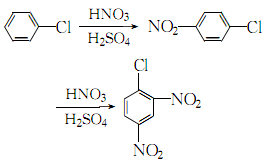
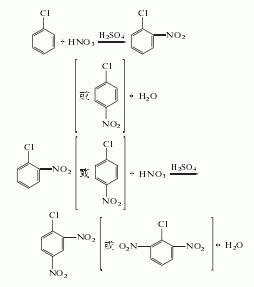
1. obtained from nitrification of chlorobenzene twice with mixed acid. the two-step nitrification process realizes continuous production, and the production device mainly consists of four reaction towers. the mixed acid (nitric acid accounts for 33.1%, sulfuric acid accounts for 62.88%, and the rest is water) is continuously passed through four reaction towers at a flow rate of 11.3kg/min and chlorobenzene at a flow rate of 3.18kg/min. the reaction temperatures are controlled at 75-85°c and 100°c respectively. ℃, 120±20℃ and 125±2℃. after reacting for about 3 hours, the reaction product is washed with water to obtain a qualified product.
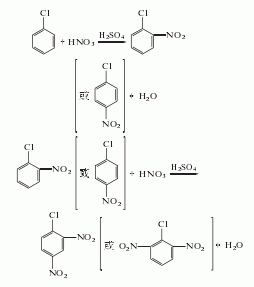
2. by pair, neighbor the by-product co-melting oil of chlorobenzene is nitrated with mixed acid, separated waste acid, neutralized, washed with water and purified by crystallization to obtain the finished product, and 2,6-oil is produced as a by-product.

3.chlorobenzene is nitrated twice with mixed acid, and the reaction product is washed with water and separated to obtain the product.

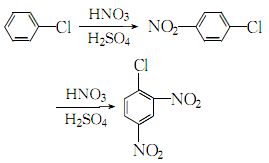
4.place a mixed acid solution with a nitric acid content of 33.1% and a sulfuric acid content of 62.88% and chlorobenzene at 11.3kg/min respectively. and 3.18kg/min flow continuously through 4 reactors. the reaction temperatures are controlled at 75~85℃, 100℃, (120±2)℃ and (125±2)℃ respectively, and the residence time of the reactants is controlled to 3h. , the obtained product is poured into crushed ice to solidify, and after standing, filtering, washing with water, dissolving in hot ethanol, cooling, and filtering to dryness, the finished product is obtained. the process reaction is:
5. it is produced from chlorobenzene and mixed acid through two-step nitration batch reaction. in the first step of nitrification, first use 1400kg chlorobenzene to extract the previous batch of nitration waste acid, separate the waste acid after stratification, then add 1500kg of the previous batch of second-step nitrification waste acid and 830kg of 98% nitric acid and the previous batch of second-step nitrification waste acid. the mixed acid consists of 770kg of waste acid, and the feeding temperature is controlled at about 55°c. after the addition is completed, raise the temperature to 80°c for 30 minutes. after the stratification is complete, the waste acid is separated.to the obtained p-nitrochlorobenzene, a mixed acid composed of 2000kg of 98% sulfuric acid and 880kg of 98% nitric acid was slowly added. the feeding temperature was controlled at 65°c. after the addition, the temperature was raised to 100°c for 1 hour, and the mixture was allowed to stand for stratification and the waste was separated. acid layer, the obtained crude dinitrochlorobenzene is washed with water and treated with ethanol to obtain the pure product.

purpose

1. identify nicotinic acid, nicotinamide and other pyridine compounds. identification of thiol compounds thiols. standard for the determination of carbon, hydrogen and chlorine in organic microanalyses. molecular polymerization inhibitors commonly used in industry, dosage 0.10% ~ 0.001%. this product is used to manufacture dyes, pesticides, and medicines. it can also be used to prepare sulfate black dye, ice dye, saccharin, dinitroaniline, picric acid, p-nitroanthrinobenzene and other products.

2. molecular polymerization inhibitor commonly used in industry, dosage 0.001% ~ 0.10%. it can be used to make dyes, pesticides, medicines, and can also be used to prepare sulfur black dye, ice dye, saccharin, dinitroaniline, picric acid, p-nitroanthralide and other products.

3. used as a chromogenic reagent for the detection of nicotinic acid, nicotinamide and pyridoxal (vitamin b6) by thin layer chromatography.

4. used as raw materials for synthetic dyes, pesticides and medicines. [22]

extended-reading:https://www.newtopchem.com/archives/category/products/page/89
extended-reading:https://www.bdmaee.net/jeffcat-zr-50-catalyst-cas67151-63-7-/
extended-reading:https://www.cyclohexylamine.net/trimethylhydroxyethyl-bisaminoethyl-ether-jeffcat-zf-10/
extended-reading:https://www.cyclohexylamine.net/high-quality-n-methylimidazole-cas-616-47-7-1-methylimidazole/
extended-reading:https://www.cyclohexylamine.net/dabco-eg-pc-cat-td-33eg-niax-a-533/
extended-reading:https://www.bdmaee.net/dabco-mp601-delayed-equilibrium-catalyst-dabco-mp601-catalyst/
extended-reading:https://www.cyclohexylamine.net/catalyst-1028-polyurethane-catalyst-1028/
extended-reading:https://www.bdmaee.net/retardation-catalyst-c-225/
extended-reading:https://www.bdmaee.net/fascat4102-catalyst-monobutyl-triiso-octoate-tin-arkema-pmc/
extended-reading:https://www.newtopchem.com/archives/40053
formulating high resilience foam with low odor reactive catalyst technology

high resilience foam with low odor reactive catalyst technology: a comprehensive overview

contents

  1. introduction
    1.1. overview of high resilience (hr) foam
    1.2. the challenge of odor in foam production
    1.3. low odor reactive catalyst technology: a solution
  2. principles and mechanisms
    2.1. polyurethane foam chemistry
    2.2. reactive catalysts in foam formation
    2.3. understanding odor generation
    2.4. mechanism of low odor reactive catalysts
  3. product characteristics and parameters
    3.1. key performance indicators
    3.2. formulation components
    3.3. processing parameters
    3.4. comparison table: traditional vs. low odor catalysts
  4. applications and benefits
    4.1. mattress industry
    4.2. furniture upholstery
    4.3. automotive seating
    4.4. other applications
    4.5. advantages of low odor hr foam
  5. testing and evaluation methods
    5.1. physical property testing
    5.2. chemical analysis
    5.3. odor evaluation methods
  6. future trends and development
    6.1. sustainable foam technologies
    6.2. advancements in catalyst design
    6.3. emerging applications
  7. safety and environmental considerations
    7.1. handling and storage
    7.2. environmental impact assessment
    7.3. regulatory compliance
  8. conclusion
  9. references

1. introduction

1.1. overview of high resilience (hr) foam

high resilience (hr) foam, also known as cold-cure foam or molded foam, is a type of polyurethane foam characterized by its exceptional elasticity, durability, and comfort. 💡 it exhibits superior support and cushioning properties compared to conventional flexible polyurethane foams, making it a popular choice for various applications, including mattresses, furniture, and automotive seating. the "resilience" refers to the foam’s ability to quickly recover its original shape after compression, providing long-lasting performance and reduced sagging over time. hr foam is typically produced using a combination of polyols, isocyanates, water, and catalysts, along with other additives to achieve specific properties.

1.2. the challenge of odor in foam production

a significant challenge in the production of polyurethane foam, including hr foam, is the generation of undesirable odors. these odors can originate from various sources, including:

  • unreacted raw materials: residual isocyanates, polyols, or other additives.
  • catalyst decomposition products: amine catalysts, commonly used in foam production, can decompose during the exothermic reaction, releasing volatile organic compounds (vocs) that contribute to unpleasant odors.
  • side reactions: undesirable side reactions during the polymerization process can generate volatile byproducts.
  • additives: some additives, such as flame retardants and surfactants, can also contribute to odor.

the presence of these odors can be a major concern for manufacturers and consumers alike, impacting indoor air quality, product acceptance, and overall user experience. 😫 traditional methods to mitigate odor, such as extended curing times or post-treatment processes, can be costly and time-consuming.

1.3. low odor reactive catalyst technology: a solution

low odor reactive catalyst technology offers a promising solution to address the odor issue in hr foam production. this technology involves the use of specially designed catalysts that minimize the formation of volatile odor-causing compounds during the foaming process. 🧪 these catalysts are typically formulated to:

  • exhibit high selectivity: promoting the desired polyurethane reaction while minimizing side reactions.
  • reduce catalyst decomposition: enhancing the thermal stability of the catalyst to prevent the release of volatile decomposition products.
  • promote complete reaction: ensuring a more complete reaction of raw materials, reducing residual unreacted components.
  • be chemically bound: some low odor catalysts are designed to be chemically bound into the polyurethane matrix, further reducing their volatility.

by utilizing low odor reactive catalyst technology, manufacturers can produce hr foam with significantly reduced odor levels, improving product quality, and enhancing consumer satisfaction. 🎉

2. principles and mechanisms

2.1. polyurethane foam chemistry

polyurethane foam formation is a complex chemical reaction involving the polymerization of polyols and isocyanates. the basic reaction can be represented as:

r-n=c=o + r’-oh → r-nh-c(o)-o-r’

where:

  • r-n=c=o represents an isocyanate.
  • r’-oh represents a polyol.
  • r-nh-c(o)-o-r’ represents a urethane linkage.

the reaction is exothermic, generating heat that drives the expansion of the foam. water is often added as a blowing agent, reacting with isocyanate to produce carbon dioxide, which expands the foam structure:

r-n=c=o + h₂o → r-nh₂ + co₂
r-nh₂ + r-n=c=o → r-nh-c(o)-nh-r

the amine formed in the first reaction further reacts with isocyanate to form a urea linkage. this reaction contributes to the formation of a rigid polymer network.

2.2. reactive catalysts in foam formation

reactive catalysts play a crucial role in accelerating the polyurethane reaction and controlling the foam formation process. ⚙️ the two main types of catalysts used in polyurethane foam production are:

  • amine catalysts: primarily promote the blowing reaction between isocyanate and water, generating carbon dioxide. they also catalyze the urethane reaction.
  • organometallic catalysts (e.g., tin catalysts): primarily promote the urethane reaction between isocyanate and polyol.

the balance between these two types of catalysts is critical for achieving the desired foam properties, such as cell size, density, and firmness.

2.3. understanding odor generation

as mentioned previously, odor generation in polyurethane foam production is a multifaceted issue. the key contributors to odor include:

  • tertiary amines: many conventional amine catalysts are tertiary amines that can degrade during the foaming process, releasing volatile amines such as triethylamine, dimethylcyclohexylamine, and bis(dimethylaminoethyl)ether.
  • unreacted isocyanates: while less prevalent in well-controlled processes, residual isocyanates (e.g., tdi, mdi) can contribute to pungent odors.
  • polyol degradation: certain polyols, especially those containing high levels of unsaturation, can undergo thermal degradation, releasing volatile aldehydes and other odorous compounds.
  • additives: flame retardants, surfactants, and other additives can also contribute to odor, especially if they are not fully incorporated into the polymer matrix.

2.4. mechanism of low odor reactive catalysts

low odor reactive catalysts are designed to minimize odor generation through various mechanisms:

  • sterically hindered amines: some low odor catalysts utilize sterically hindered amine structures, which are less prone to decomposition and release fewer volatile amine byproducts.
  • blocked isocyanate catalysts: these catalysts contain blocked isocyanate groups that are released under specific reaction conditions. this controlled release helps to promote a more complete reaction and reduce residual isocyanate levels.
  • metal-free catalysts: the utilization of organic catalysts that do not contain metals (like tin) can reduce the formation of specific types of odorous compounds associated with metal catalyst degradation.
  • chemically bound catalysts: certain low odor catalysts are designed to be chemically incorporated into the polyurethane polymer network during the reaction, reducing their volatility and preventing their release as odor-causing compounds.

3. product characteristics and parameters

3.1. key performance indicators

the performance of hr foam is typically evaluated based on several key performance indicators (kpis):

  • density: mass per unit volume (kg/m³).
  • resilience: percentage of rebound height after a standard drop test (%).
  • tensile strength: resistance to breaking under tension (kpa).
  • elongation at break: percentage increase in length before breaking (%).
  • compression set: percentage of permanent deformation after compression under specified conditions (%).
  • hardness (ild – indentation load deflection): force required to indent the foam by a specified amount (n).
  • airflow: measure of the foam’s permeability to air (cfm).
  • odor emission: qualitative or quantitative assessment of odor intensity.

3.2. formulation components

a typical hr foam formulation comprises the following components:

  • polyol: the main component, typically a polyether polyol with a high molecular weight and functionality.
  • isocyanate: typically tdi (toluene diisocyanate) or mdi (methylene diphenyl diisocyanate), or a blend of both.
  • water: blowing agent that reacts with isocyanate to generate carbon dioxide.
  • catalyst(s): amine and/or organometallic catalysts to control the reaction rate and foam structure.
  • surfactant: stabilizes the foam cells and prevents collapse.
  • flame retardant: optional additive to improve fire resistance.
  • colorant: optional additive to impart color to the foam.

3.3. processing parameters

the properties of hr foam are highly dependent on the processing parameters used during manufacturing. key parameters include:

  • mixing speed: affects the homogeneity of the mixture and the cell size of the foam.
  • mold temperature: influences the reaction rate and the foam’s density gradient.
  • pour rate: affects the foam’s cell structure and overall quality.
  • cure time: time allowed for the foam to fully react and solidify.
  • post-cure treatment: optional heat treatment to remove residual volatiles and improve stability.

3.4. comparison table: traditional vs. low odor catalysts

feature traditional catalysts low odor catalysts
odor emission high low
volatility high low
decomposition prone to decomposition resistant to decomposition
selectivity lower higher
reactivity can be high but less controlled controlled and selective
chemical binding generally no some are designed for chemical binding to the polymer matrix
examples triethylenediamine (teda), dimethylcyclohexylamine (dmcha), tin(ii) octoate sterically hindered amines, blocked isocyanate catalysts, metal-free organic catalysts, chemically bound catalysts
impact on vocs increase vocs reduce vocs
impact on air quality negative positive
application general purpose foam production applications where low odor and voc emissions are critical (e.g., mattresses, automotive)

4. applications and benefits

4.1. mattress industry

hr foam is widely used in the mattress industry due to its excellent comfort, support, and durability. low odor hr foam is particularly desirable for mattresses, as it minimizes off-gassing and promotes a healthier sleep environment. 😴

4.2. furniture upholstery

the superior resilience and cushioning properties of hr foam make it an ideal material for furniture upholstery. low odor hr foam ensures that furniture pieces are comfortable and aesthetically pleasing, without emitting unpleasant odors.

4.3. automotive seating

hr foam is commonly used in automotive seating applications to provide comfort and support to drivers and passengers. low odor hr foam is especially important in enclosed vehicle interiors, where odor emissions can be concentrated. 🚗

4.4. other applications

hr foam also finds applications in:

  • packaging: providing cushioning and protection for sensitive goods.
  • acoustic insulation: absorbing sound and reducing noise levels.
  • thermal insulation: providing thermal insulation in buildings and appliances.
  • medical applications: cushions, supports, and prosthetics.

4.5. advantages of low odor hr foam

the use of low odor hr foam offers several significant advantages:

  • improved air quality: reduced emissions of volatile organic compounds (vocs) and unpleasant odors.
  • enhanced consumer satisfaction: greater comfort and a more pleasant user experience.
  • increased product value: higher perceived quality and marketability.
  • reduced manufacturing costs: potentially shorter curing times and less need for post-treatment processes.
  • environmentally friendly: lower environmental impact due to reduced emissions.

5. testing and evaluation methods

5.1. physical property testing

the physical properties of hr foam are typically evaluated using standard test methods such as:

  • astm d3574: standard test methods for flexible cellular materials—slab, bonded, and molded urethane foams. this standard covers a wide range of tests, including density, tensile strength, elongation, compression set, and hardness.
  • iso 2440: flexible cellular polymeric materials — accelerated ageing tests. this standard specifies accelerated aging tests to assess the long-term durability of the foam.
  • iso 1798: flexible cellular polymeric materials — determination of tensile strength and elongation at break.

5.2. chemical analysis

chemical analysis is used to characterize the composition of the foam and to identify potential odor-causing compounds. common techniques include:

  • gas chromatography-mass spectrometry (gc-ms): used to identify and quantify volatile organic compounds (vocs) in the foam.
  • high-performance liquid chromatography (hplc): used to analyze non-volatile components, such as polyols and additives.
  • fourier transform infrared spectroscopy (ftir): used to identify the chemical bonds present in the foam and to confirm the formation of urethane linkages.

5.3. odor evaluation methods

odor evaluation can be performed using both subjective and objective methods:

  • sensory evaluation (olfactometry): trained panelists assess the odor intensity and characteristics of the foam using a standardized scale.
  • odor index measurement: measurement of specific odor-causing compounds in the air surrounding the foam.
  • microchamber/tube (µct) testing: small samples are placed in a microchamber, and the evolved gasses are collected on a sorbent tube and subsequently analyzed by gc-ms. this method provides a quantitative assessment of voc emissions.

6. future trends and development

6.1. sustainable foam technologies

there is growing interest in developing more sustainable foam technologies that utilize bio-based polyols, recycled materials, and environmentally friendly blowing agents. 🌱 these technologies aim to reduce the environmental footprint of foam production and to promote a circular economy.

6.2. advancements in catalyst design

future research and development efforts will focus on designing even more efficient and selective catalysts that further minimize odor emissions and improve the overall performance of hr foam. this includes the development of catalysts with improved thermal stability, enhanced selectivity for the urethane reaction, and the ability to be chemically bound into the polymer matrix.

6.3. emerging applications

the unique properties of hr foam are driving its adoption in new and emerging applications, such as:

  • medical implants: providing cushioning and support for medical implants.
  • aerospace: providing lightweight and durable insulation for aircraft.
  • sports equipment: providing impact protection and cushioning for sports equipment.

7. safety and environmental considerations

7.1. handling and storage

isocyanates are reactive chemicals and should be handled with care. proper personal protective equipment (ppe), such as gloves, eye protection, and respirators, should be worn when handling isocyanates and other raw materials. materials should be stored in accordance with manufacturer’s recommendations, in tightly sealed containers in a cool, dry, and well-ventilated area.

7.2. environmental impact assessment

the environmental impact of hr foam production should be carefully assessed. this includes evaluating the emissions of vocs, greenhouse gases, and other pollutants. efforts should be made to minimize waste generation and to recycle or reuse materials whenever possible.

7.3. regulatory compliance

hr foam production is subject to various regulations related to health, safety, and the environment. manufacturers must comply with these regulations to ensure the safety of workers and the protection of the environment. examples of relevant regulations include reach (registration, evaluation, authorisation and restriction of chemicals) in europe and tsca (toxic substances control act) in the united states.

8. conclusion

high resilience (hr) foam with low odor reactive catalyst technology represents a significant advancement in polyurethane foam production. by utilizing specially designed catalysts, manufacturers can produce hr foam with significantly reduced odor levels, improved air quality, and enhanced consumer satisfaction. this technology is particularly beneficial for applications where odor emissions are a concern, such as mattresses, furniture, and automotive seating. as research and development efforts continue, we can expect further advancements in catalyst design and sustainable foam technologies, leading to even more environmentally friendly and high-performing hr foams in the future. ✅

9. references

  1. oertel, g. (ed.). (1985). polyurethane handbook. hanser gardner publications.
  2. saunders, j. h., & frisch, k. c. (1962). polyurethanes: chemistry and technology, part i: chemistry. interscience publishers.
  3. woods, g. (1990). the ici polyurethanes book. john wiley & sons.
  4. rand, l., & frisch, k. c. (1962). polyurethanes: chemistry and technology, part ii: technology. interscience publishers.
  5. szycher, m. (1999). szycher’s handbook of polyurethanes. crc press.
  6. hepburn, c. (1991). polyurethane elastomers. elsevier science publishers.
  7. prociak, a., ryszkowska, j., & uram, k. (2016). polyurethane foams: raw materials, manufacturing, and applications. crc press.
  8. ashida, k. (2006). polyurethane and related foams: chemistry and technology. crc press.
  9. european standard en iso 1798:2008, flexible cellular polymeric materials – determination of tensile strength and elongation at break.
  10. astm d3574-17, standard test methods for flexible cellular materials—slab, bonded, and molded urethane foams, astm international, west conshohocken, pa, 2017, doi: 10.1520/d3574-17, www.astm.org.
  11. reach regulation (ec) no 1907/2006.
  12. tsca – toxic substances control act, us environmental protection agency.

sales contact:sales@newtopchem.com

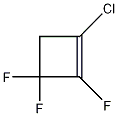
1-chloro-2,3,3-trifluorocyclobutene

1-chloro-2,3,3-trifluorocyclobutene structural formula

1-chloro-2,3,3-trifluorocyclobutene structural formula

structural formula

business number 07aa
molecular formula c4h2clf3
molecular weight 142.51
label

alicyclic compounds

numbering system

cas number:694-62-2

mdl number:mfcd00041524

einecs number:none

rtecs number:none

brn number:2243404

pubchem id:none

physical property data

1. characteristics: colorless liquid.

2. density (g/ml,25/4): 1.355

3. relative vapor density (g/ml,air=1 ): undetermined

4. melting point (ºc): 51-52

5. boiling point (ºc,normal pressure): undetermined

6. boiling point (ºc,5.2kpa): undetermined

7. refractive index: 1.365

8. flashpoint (ºc): -15

9. specific optical rotation (º): undetermined

10. autoignition point or ignition temperature (ºc): undetermined

11. vapor pressure (kpa,25ºc): undetermined

12. saturated vapor pressure (kpa,60ºc): undetermined

13. heat of combustion (kj/mol): undetermined

14. critical temperature (ºc): undetermined

15. critical pressure (kpa): undetermined

16. oil and water (octanol/logarial value of the partition coefficient of water: undetermined

17. explosion limit (%,v/v): undetermined

18. lower explosion limit (%,v/v): undetermined

19. solubility: miscible with water.

toxicological data

none

ecological data

usually not harmful to water, do not discharge materials into the surrounding environment without government permission.

molecular structure data

1. molar refractive index: 23.16

2. molar volumem3/ mol96.8

3. isotonic specific volume90.2k 203.3

4. surface tensiondyne/cm19.4

5. dielectric constant:

6. dipole moment10 -24cm3)

7. polarizability: 9.18

compute chemical data

1. reference value for hydrophobic parameter calculation (xlogp): 1.7

2. number of hydrogen bond donors: 0

3. number of hydrogen bond acceptors: 3

4. number of rotatable chemical bonds: 0

5. number of tautomers: none

6. topological molecule polar surface area 0

7. number of heavy atoms: 8

8. surface charge: 0

9. complexity: 149

10. number of isotope atoms: 0

11. determine the number of atomic stereocenters: 0

12. uncertain number of atomic stereocenters: 0

13. determine the number of chemical bond stereocenters: 0

14. number of uncertain chemical bond stereocenters: 0

15. number of covalent bond units: 1

properties and stability

keep away from oxides and sources of fire.

storage method

store in an airtight container and place store in a cool, dry place. store away from oxidizing agents.

synthesis method

none

purpose

none

resource:allhdi.com

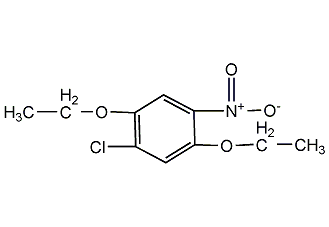
1-chloro-2,5-diethoxy-4-nitrobenzene

1-Chloro-2,5-diethoxy-4-nitrobenzene structural formula

1-chloro-2,5-diethoxy-4-nitrobenzene structural formula

structural formula

business number 023g
molecular formula c10h12clno4
molecular weight 245.66
label

1-chloro-2,5-diethoxy-4-nitrobenzene,

4-chloro-2,5-diethoxynitrobenzene,

4-chloro-2,5-diethoxynitrobenzene

numbering system

cas number:91-43-0

mdl number:mfcd00024578

einecs number:202-067-3

rtecs number:none

brn number:none

pubchem id:none

physical property data

none

toxicological data

none

ecological data

none

molecular structure data

1. molar refractive index: 60.31

2. molar volume (cm3/mol): 194.2

3. isotonic specific volume (90.2k ): 491.5

4. surface tension (dyne/cm): 41.0

5. polarizability (10-24cm3): 23.91

compute chemical data

1. reference value for hydrophobic parameter calculation (xlogp): 3.1

2. number of hydrogen bond donors: 0

3. number of hydrogen bond acceptors: 4

4. number of rotatable chemical bonds: 4

5. number of tautomers: none

6. topological molecule polar surface area 64.3

7. number of heavy atoms: 16

8. surface charge: 0

9. complexity: 233

10. number of isotope atoms: 0

11. determine the number of atomic stereocenters: 0

12. uncertain number of atomic stereocenters: 0

13. determine the number of chemical bond stereocenters: 0

14. number of uncertain chemical bond stereocenters: 0

15. number of covalent bond units: 1

properties and stability

none

storage method

none

synthesis method

none

purpose

none

1-chloro-2,4-dinitrobenzene 1-chloro-2,4-dinitrobenzene

1-chloro-2,4-dinitrobenzene structural formula

structural formula

business number 02bs
molecular formula c6h3cln2o4
molecular weight 202
label

2,4-dinitrochlorobenzene,

4-chloro-1,3-dinitrobenzene,

2,4-dinitrobenzene chloride,

1,3-dinitro-4-chlorobenzene,

6-chloro-1,3-dinitrobenzene,

chlorodinitrobenzene,

2,4-diazochlorobenzene,

2,4-dinitrochlorobenzene,

4-chloro-1,3-dinitrobenzene,

aromatic nitrogen-containing compounds and their derivatives

numbering system

cas number:97-00-7

mdl number:mfcd00007075

einecs number:202-551-4

rtecs number:cz0525000

brn number:613161

pubchem id:none

physical property data

1. characteristics: light yellow or yellow-brown needle-like crystals with a bitter almond smell. [1]

2. melting point (℃): 52~54[2]

3. boiling point (℃) : 315[3]

4. relative density (water = 1): 1.69[4]

5. relative vapor density (air = 1): 6.98[5]

6. octanol/water partition coefficient: 2.17[6]

7. flash point (℃): 194 (cc) [7]

8. explosion limit (%): 22.0[8]

9. lower explosion limit (%): 2.0[9]

10. solubility: insoluble in water, easily soluble in ethanol and ether. [10]

toxicological data

1. skin/eye irritation: standard dresser test: human skin contact, 30μg; starting irritation test: rabbit skin contact, 100μg/24h; standard dresser test: rabbit skin contact, 2mg/24hreaction severity, strong reaction; standard dresser test: rabbit eye contact, 50μg/24 hreaction severity, strong reaction; 2. acute toxicity: rat oral ld50: 780mg/kg; rat peritoneal cavity ld50: 280mg/kg; rabbit skin contact ld50: 130mg/kg kg; 3. other multiple dose toxicity: rat oral tdlo: 2340mg/kg/30d-i; rat inhalation tclo: 200 μg/m3/4h/17w-i; 4. mutagenicity: mutant microbial test: bacteria -salmonella typhimurium, 3μg/plate; mutant microorganism test: bacteria-salmonella typhimurium, 50μg/plate; dna damage test: rat liver, 5μmol/l; dna damage test: mouse peritoneal cavity, 30mg/kg; morphological transformation test: hamster kidney, 10mg/l; 5. it is a highly toxic substance. the time-weighted average allowable concentration of toxic substances in the air in the workplace is 0.6mg/m3, and the allowable concentration for short-term exposure is 1.8mg/m3. toxic if taken orally, inhaled or in contact with skin, and has cumulative hazards.

6. acute toxicity[11] ld50: 640mg/kg (rat oral); 130mg/kg (rabbit dermal )

7. irritation[12]rabbit transdermal: 100mg (24h), causing irritation (open stimulation test)

8. mutagenicity[13] microbial mutagenicity: salmonella typhimurium 3μg/dish. dna damage: 30mg/kg in mouse abdominal cavity.

ecological data

1. ecotoxicity no data available

2. biodegradability no data available

3 .non-biodegradable[14] in the air, when the concentration of hydroxyl radicals is 5.00×10⁵/cm3, the degradation half-life is 750d (theoretical).

4. other harmful effects[15] this substance is harmful to the environment, and special attention should be paid to the pollution of water bodies. .

molecular structure data

1. molar refractive index: 44.23

2. molar volume (cm3/mol): 125.0

3. isotonic specific volume (90.2k ): 354.1

4. surface tension (dyne/cm): 64.2

5. polarizability: 17.53

calculate chemical data

1. reference value for hydrophobic parameter calculation (xlogp): none

2. number of hydrogen bond donors: 0

3. number of hydrogen bond acceptors: 4

4. number of rotatable chemical bonds: 0

5. number of tautomers: none

6. topological molecule polar surface area 91.6

7. number of heavy atoms: 13

8. surface charge: 0

9. complexity: 224

10. number of isotope atoms: 0

11. determine the number of atomic stereocenters: 0

12. uncertain number of atomic stereocenters: 0

13. determine the number of chemical bond stereocenters: 0

14. number of uncertain chemical bond stereocenters: 0

15. number of covalent bond units: 1

properties and stability

1. this product is toxic, more toxic than mononitrochlorobenzene. it has a significant irritating effect on the skin and mucous membranes, causing severe dermatitis. it can cause blood poisoning, damage the liver and kidneys, and damage nerves, causing neuralgia and neuritis. ventilate the maximum allowable concentration in the air. operators should wear protective equipment. it is prohibited to drink alcohol before or after work. this product can explode when heated to high temperatures. toxic when inhaled, swallowed or in contact with skin, and has cumulative hazards.

2. stability[16] stable

3. incompatible substances[17] strong oxidizing agent, strong alkali, strong reducing agent

4. conditions to avoid contact [18] vibration, heat

5. polymerization hazard[19] no polymerization

6. decomposition products[20] nitrogen oxides, hydrogen chloride

storage method

1. storage precautions [21] store in a cool, well-ventilated special warehouse, and implement the “two people to send and receive, and two people to keep” system. keep away from fire and heat sources. the packaging is sealed. they should be stored separately from oxidants, reducing agents, alkalis, and food chemicals, and avoid mixed storage. equipped with the appropriate variety and quantity of fire equipment. suitable materials should be available in the storage area to contain spills.

2. packed in iron drums, with a net weight of 200kg or 300kg. store in a ventilated, cool, dry place. avoid mixed storage and transportation with inorganic oxidants and acids. store and transport according to regulations for flammable and toxic substances.

synthesis method

1. obtained from nitrification of chlorobenzene twice with mixed acid. the two-step nitrification process realizes continuous production, and the production device mainly consists of four reaction towers. the mixed acid (nitric acid accounts for 33.1%, sulfuric acid accounts for 62.88%, and the rest is water) is continuously passed through four reaction towers at a flow rate of 11.3kg/min and chlorobenzene at a flow rate of 3.18kg/min. the reaction temperatures are controlled at 75-85°c and 100°c respectively. ℃, 120±20℃ and 125±2℃. after reacting for about 3 hours, the reaction product is washed with water to obtain a qualified product.

2. by pair, neighbor the by-product co-fusion oil of chlorobenzene is nitrated with mixed acid, separated waste acid, neutralized, washed with water and purified by crystallization to obtain the finished product, and 2,6-oil is a by-product.

3.chlorobenzene is nitrated twice with mixed acid, and the reaction product is washed with water and separated to obtain the product.

4.place a mixed acid solution with a nitric acid content of 33.1% and a sulfuric acid content of 62.88% and chlorobenzene at 11.3kg/min respectively. and 3.18kg/min flow continuously through 4 reactors. the reaction temperatures are controlled at 75~85℃, 100℃, (120±2)℃ and (125±2)℃ respectively, and the residence time of the reactants is controlled to 3h. , the obtained product is poured into crushed ice to solidify, and after standing, filtering, washing with water, dissolving in hot ethanol, cooling, and filtering to dryness, the finished product is obtained. the process reaction is:

5. it is produced from chlorobenzene and mixed acid through two-step nitration batch reaction. in the first step of nitrification, first use 1400kg chlorobenzene to extract the previous batch of nitrification waste acid, separate the waste acid after stratification, and then add the previous batch of second-step nitrification waste acid 1500kg and 830kg of 98% nitric acid and the previous batch of second-step nitrification waste acid. the mixed acid consists of 770kg of waste acid, and the feeding temperature is controlled at about 55°c. after the addition is completed, raise the temperature to 80°c for 30 minutes. after the mixture is completely separated, the waste acid is separated. the mixed acid composed of 2000kg of 98% sulfuric acid and 880kg of 98% nitric acid is slowly added to the obtained p-nitrochlorobenzene. the feeding temperature is controlled at 65°c. after the addition, the temperature is raised to 100°c. ℃ for 1 hour, let it stand for stratification, and separate the waste acid layer. the crude dinitrochlorobenzene obtained can be washed with water and treated with ethanol to obtain the pure product.

purpose

1. identify nicotinic acid, nicotinamide and other pyridine compounds. identification of thiol compounds thiols. standard for the determination of carbon, hydrogen and chlorine by organic microanalysis. molecular polymerization inhibitors commonly used in industry, dosage 0.10% ~ 0.001%. this product is used to manufacture dyes, pesticides, medicines, and can also be used to prepare sulfate black dye, ice dye, saccharin, dinitroaniline, picric acid, p-nitroanthralide and other products.

2. molecular polymerization inhibitor commonly used in industry, dosage 0.001% ~ 0.10%. it can be used to manufacture dyes, pesticides, medicines, and can also be used to prepare sulfur black dye, ice dye, saccharin, dinitroaniline, picric acid, p-nitroanthralide and other products.

3. used as a chromogenic reagent for the detection of nicotinic acid, nicotinamide and pyridoxal (vitamin b6) by thin layer chromatography.

4. used as raw materials for synthetic dyes, pesticides and medicines. [22]

the obtained p-nitrochlorobenzene is then slowly added with a mixed acid composed of 2000kg of 98% sulfuric acid and 880kg of 98% nitric acid. the feeding temperature is controlled at 65°c. after the addition is completed, the temperature is raised to 100°c for 1 hour, and the mixture is left to stratify and separate the waste. acid layer, the obtained crude dinitrochlorobenzene is washed with water and treated with ethanol to obtain the pure product.

purpose

1. identify nicotinic acid, nicotinamide and other pyridine compounds. identification of thiol compounds thiols. standard for the determination of carbon, hydrogen and chlorine by organic microanalysis. molecular polymerization inhibitors commonly used in industry, dosage 0.10% ~ 0.001%. this product is used to manufacture dyes, pesticides, medicines, and can also be used to prepare sulfate black dye, ice dye, saccharin, dinitroaniline, picric acid, p-nitroanthralide and other products.

2. molecular polymerization inhibitor commonly used in industry, dosage 0.001% ~ 0.10%. it can be used to manufacture dyes, pesticides, medicines, and can also be used to prepare sulfur black dye, ice dye, saccharin, dinitroaniline, picric acid, p-nitroanthralide and other products.

3. used as a chromogenic reagent for the detection of nicotinic acid, nicotinamide and pyridoxal (vitamin b6) by thin layer chromatography.

4. used as raw materials for synthetic dyes, pesticides and medicines. [22]

1-chloro-2,4-dimethylbenzene 1-chloro-2,4-dimethybenzene

structural formula

business number 029j
molecular formula c8h9cl
molecular weight 140.61
label

4-chloro-m-xylene,

4-chloro-m-xylene

numbering system

cas number:95-66-9

mdl number:mfcd00060644

einecs number:none

rtecs number:none

brn number:none

pubchem id:none

physical property data

1. characteristics: liquid.

2. density (g/ml,20): 1.06

3. relative vapor density (g/ml,air=1): undetermined

4. melting point (ºc): -32

5. boiling point (ºc,normal pressure):187

6. boiling point (ºc,kpa): undetermined

7. refractive index: undetermined

8. flashpoint (ºc): undetermined

9. specific rotation (º): undetermined

10. autoignition point or ignition temperature (ºc): undetermined

11. vapor pressure (mmhg,ºc): undetermined

12. saturated vapor pressure (kpa, ºc): undetermined

13. heat of combustion (kj/mol): undetermined

14. critical temperature (ºc): undetermined

15. critical pressure (kpa): undetermined

16. oil and water (octanol/log value of the partition coefficient for water: undetermined

17. explosion upper limit (%,v/v): undetermined

autoignition point or ignition temperature (ºc) : undetermined

11. vapor pressure (mmhg,ºc): undetermined

12. saturated vapor pressure (kpa, ºc): undetermined

13. heat of combustion (kj/mol): undetermined

14. critical temperature (ºc): undetermined

15. critical pressure (kpa): undetermined

16. oil and water (octanol/log value of the partition coefficient for water: undetermined

17. explosion upper limit (%,v/v): undetermined

18. lower explosion limit (%,v/v): undetermined

19. solubility: undetermined

toxicological data

none

ecological data

this substance is slightly harmful to water.

molecular structure data

none

compute chemical data

1. reference value for hydrophobic parameter calculation (xlogp): none

2. number of hydrogen bond donors: 0

3. number of hydrogen bond acceptors: 0

4. number of rotatable chemical bonds: 0

5. number of tautomers: none

6. topological molecule polar surface area 0

7. number of heavy atoms: 9

8. surface charge: 0

9. complexity: 90.6

10. number of isotope atoms: 0

11. determine the number of atomic stereocenters: 0

12. uncertain number of atomic stereocenters: 0

13. determine the number of chemical bond stereocenters: 0

14. number of uncertain chemical bond stereocenters: 0

15. number of covalent bond units: 1

properties and stability

avoid contact with strong oxidants.

storage method

stored in a cool, ventilated warehouse. keep away from fire and heat sources. the packaging is sealed. should be kept away from oxidizer, do not store together. equipped with the appropriate variety and quantity of fire equipment. suitable materials should be available in the storage area to contain spills.

synthesis method

none

purpose

for organic synthesis.

level1 lfo1; tab-stops: list 36.0pt; mso-pagination: wi-orphan; mso-margin-top-alt: auto; mso-margin-bottom-alt: auto” align=left>18. lower explosion limit (%,v/v): undetermined

19. solubility: undetermined

toxicological data

none

ecological data

this substance is slightly harmful to water.

molecular structure data

none

compute chemical data

1. reference value for hydrophobic parameter calculation (xlogp): none

2. number of hydrogen bond donors: 0

3. number of hydrogen bond acceptors: 0

4. number of rotatable chemical bonds: 0

5. number of tautomers: none

6. topological molecule polar surface area 0

7. number of heavy atoms: 9

8. surface charge: 0

9. complexity: 90.6

10. number of isotope atoms: 0

11. determine the number of atomic stereocenters: 0

12. uncertain number of atomic stereocenters: 0

13. determine the number of chemical bond stereocenters: 0

14. number of uncertain chemical bond stereocenters: 0

15. number of covalent bond units: 1

properties and stability

avoid contact with strong oxidants.

storage method

stored in a cool, ventilated warehouse. keep away from fire and heat sources. the packaging is sealed. should be kept away from oxidizer, do not store together. equipped with the appropriate variety and quantity of fire equipment. suitable materials should be available in the storage area to contain spills.

synthesis method

none

purpose

for organic synthesis.

bdmaee:bis (2-dimethylaminoethyl) ether

cas no:3033-62-3

china supplier

for more information, please contact the following email:

email:sales@newtopchem.com

email:service@newtopchem.com

email:technical@newtopchem.com

BDMAEE Manufacture !