1,4-dichlorobenzene 1,4-dichlorobenzene

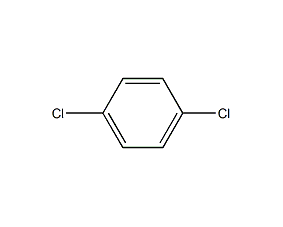
1,4-dichlorobenzene structural formula

structural formula

business number 02tj
molecular formula c6h4cl2
molecular weight 147.00
label

1,4-dichlorobenzene,

p-dichlorobenzene,

p-dichlorobenzene,

1,4-dichloorbenzene,

p-dichlorobenzene,

pesticides,

disinfectant,

fabric moth repellent,

antifungal agent,

air deodorizer,

halogenated hydrocarbon solvents

numbering system

cas number:106-46-7

mdl number:mfcd00000604

einecs number:203-400-5

rtecs number:cz4550000

brn number:1680023

pubchem id:none

physical property data

1. characteristics: white crystal with camphor smell. [1]

2. melting point (℃): 53.1[2]

3. boiling point (℃): 174 [3]

4. relative density (water = 1): 1.46[4]

5. relative vapor density (air=1): 5.08[5]

6. saturated vapor pressure (kpa): 1.33 (54.8℃)[6]

7. heat of combustion (kj/mol): -2931.3[7]

8. critical temperature (℃): 407.5[8]

9. critical pressure (mpa): 4.11[9]

10. octanol/water partition coefficient: 3.37[ 10]

11. flash point (℃): 66 (cc) [11]

12. ignition temperature (℃) :646[12]

13. explosion upper limit (%): 7.8[13]

14. explosion lower limit ( %): 1.8[14]

15. solubility: insoluble in water, soluble in ethanol, ether, and benzene. [15]

16. viscosity (mpa·s, 55.4ºc): 0.8394

17. flash point (ºc, closed): 65.6

18. flash point (ºc, open): 73.9

19. heat of evaporation (kj/mol): 38.81

20. heat of fusion (kj/mol) : 18.17

21. heat of formation (kj/mol, 25ºc, solid): 42.37

22. heat of combustion (kj/mol, 25ºc, liquid): 2936.08

23. solubility (%, water, 35ºc): 0.010

24. specific heat capacity (kj/(kg·k), -50ºc, solid): 0.92

25. specific heat capacity (kj/(kg·k), 53~59ºc, liquid): 1.25

26. sublimation heat α form (kj/kg): 64.81

27. sublimation heat β shape (kj/kg): 63.05

28. refractive index at room temperature (n25): 1.521080

29. refractive index at room temperature (n20): 1.528555

30. relative density (25℃, 4℃): 1.241760

31. relative density (20℃, 4℃): 1.503529

32. liquid phase standard claims heat (enthalpy) (kj· mol-1): -20.7

33. liquid phase standard hot melt (j·mol-1·k-1): 170.9

34. gas phase standard claimed heat (enthalpy) (kj·mol-1): 22.5

35. gas phase standard entropy ( j·mol-1·k-1): 336.85

36.��� phase standard free energy of formation (kj·mol-1): 76.7

37. gas phase standard hot melt (j·mol-1· k-1):113.77

toxicological data

1. acute toxicity[16]

ld50: 500mg/kg (rat oral); >2g/kg (rabbit oral skin)

lc50: 5000mg/m3 (rat inhalation, 4h)

2. irritation[17] human eye: 80ppm, causing irritation.

3. subacute and chronic toxicity[18] rats, guinea pigs and rabbits exposed to 5.23g/m3 , 69 times, tremors, weakness, weight loss, eye irritation, disheveled hair, and pathological changes in liver and kidney were seen.

4. mutagenicity [19] sister chromatid exchange: human lymphocytes 100μg/l. sperm morphology: rat abdominal cavity 800mg/kg

5. teratogenicity[20] orally dyed female rats 6 to 15 days after conception the poison 7500mg/kg caused developmental malformations of the musculoskeletal system in offspring rats, and inhalation of 800ppm/6h in female rabbits 6 to 18 days after conception caused developmental malformations of the cardiovascular system.

6. carcinogenicity [21] iarc carcinogenicity comment: g2b, suspected carcinogen in humans.

7. others[22] the lowest oral toxic dose in rats (tdlo): 7500mg/kg (administered on 6th to 15th day of pregnancy), causing musculoskeletal developmental abnormalities.

ecological data

1. ecotoxicity[23]

lc50: 4.54mg/l (24h) (bluegill sunfish, static);

7.5~10mg/l (24h), 7.17mg/l (48h), 7.4mg/l (96h) (red perch, static);

33.7mg/l (96h) ) (fathead minnow);

129mg/l (48h), 69mg/l (96h) (grass shrimp)

2. biodegradability [ 24]

aerobic biodegradation (h): 672~4320

anaerobic biodegradation (h): 2688~17280

3. non-biodegradability[25]

photolysis maximum light absorption wavelength range (nm): 223.5~280

photooxidation half-life in air (h): 200.6~2006

first-level hydrolysis half-life (h): >879a

4. bioaccumulation[26] bcf: 78 (mosquito fish, contact concentration 57~233μg/l, contact time 1~4d); 370~720 (rainbow trout, contact time 119d); 60 ( bluegill sunfish, exposure time 28 days)

5. other harmful effects[27] this substance is harmful to the environment and can cause damage to water bodies and the atmosphere. pollution bioaccumulates in food chains important to humans, especially in aquatic organisms.

molecular structure data

1. molar refractive index: 36.04

2. molar volume (cm3/mol): 113.3

3. isotonic specific volume (90.2k ): 279.0

4. surface tension (dyne/cm): 36.7

5. dielectric constant:

6. dipole moment (10-24cm3):

7. polarizability: 14.28

compute chemical data

1. reference value for hydrophobic parameter calculation (xlogp): none

2. number of hydrogen bond donors: 0

3. number of hydrogen bond acceptors: 0

4. number of rotatable chemical bonds: 0

5. number of tautomers: none

6. topological molecule polar surface area 0

7. number of heavy atoms: 8

8. surface charge: 0

9. complexity: 54.9

10. number of isotope atoms: 0

11. determine the number of atomic stereocenters: 0

12. uncertain number of atomic stereocenters: 0

13. determine the number of chemical bond stereocenters: 0

14. number of uncertain chemical bond stereocenters: 0

15. number of covalent bond units: 1

properties and stability

1. this product mainly damages the liver, followed by the kidneys. long-term exposure to air containing p-dichlorobenzene can cause symptoms such as headache, nausea, vomiting, weakness, liver atrophy, cataracts, and pain in the skin, eyes, and throat. in severe cases, it may damage the liver and internal organs, and may develop into cirrhosis of the liver. necrosis. the olfactory threshold concentration is 0.03mg/l. the maximum allowable concentration in the workplace is 450 mg/m3 (united states) and 300 mg/m3 (japan).

2. stability[28] stable

3. incompatible substances[29] strong oxidizer, aluminum

4. conditions to avoid contact[30] heating

5. polymerization hazard[31] no polymerization

6. decomposition products[32] hydrogen chloride

storage method

storage precautions[33] store in a cool, ventilated warehouse. keep away from fire and heat sources. the packaging is sealed. they should be stored separately from oxidants, aluminum, and food chemicals, and avoid mixed storage. equipped with the appropriate variety and quantity of fire equipment. suitable materials should be available in the storage area to contain spills.

synthesis method

directional chlorination of benzene or recovery from chlorobenzene production.

1. directional chlorination of benzene. place benzene in a chlorination reactor, add 0.1%-0.6% of the weight of benzene antimony sulfide, introduce chlorine gas, and control the chlorination temperature at about 20°c. for 30-45 minutes, add the benzene sulfonic acid directional catalyst, and then pass in chlorine gas. when the dichlorobenzene crystals precipitate, heat the reaction solution to 50-60°c, and then slowly add chlorine gas until the reaction solution increases in weight by the theoretical amount. until about 95%, the yield is 70%-75%. since the benzene chlorination product has many components, the key to industrial preparation is to select appropriate separation and purification methods for dichlorobenzene. there are many methods for separating and refining p- and ortho-dichlorobenzene. the distillation method is more difficult and energy-consuming than the crystallization method, which is not conducive to product stability and equipment corrosion prevention. the recrystallization method has been developed into the continuous fractional crystallization method. the emulsification method uses surface-active substances to emulsify and separate. this method has the advantages of simple operation, low energy consumption, high efficiency and less environmental pollution. research on it is increasing and developing rapidly.

2. production process of chlorobenzene the chlorobenzene distillation tower bottom is recovered, and the mixed dichlorobenzene is steamed out through vacuum distillation, and is crystallized in a crystallizer to obtain relatively pure p-dichlorobenzene.

purpose

1. used in the synthesis of bright red-based gg, reactive bright yellow and other dyes, used as pesticide intermediates, fumigation insecticides, fabric mothproofing agents, and also used in organic synthesis.

2. used as pesticides, fungicides, analytical reagents and in organic synthesis. [34]
��pour chlorine gas slowly until the weight of the reaction solution increases by about 95% of the theoretical amount, and the yield is 70%-75%. since the benzene chlorination product has many components, the key to industrial preparation is to select appropriate separation and purification methods for dichlorobenzene. there are many methods for separating and refining p- and ortho-dichlorobenzene. the distillation method is more difficult and energy-consuming than the crystallization method, which is not conducive to product stability and equipment corrosion prevention. the recrystallization method has been developed into the continuous fractional crystallization method. the emulsification method uses surface-active substances to emulsify and separate. this method has the advantages of simple operation, low energy consumption, high efficiency and less environmental pollution. research on it is increasing and developing rapidly.

2. production process of chlorobenzene the chlorobenzene distillation tower bottom is recovered, and the mixed dichlorobenzene is steamed out through vacuum distillation, and is crystallized in a crystallizer to obtain relatively pure p-dichlorobenzene.

purpose

1. used in the synthesis of bright red-based gg, reactive bright yellow and other dyes, used as pesticide intermediates, fumigation insecticides, fabric mothproofing agents, and also used in organic synthesis.

2. used as pesticides, fungicides, analytical reagents and in organic synthesis. [34]
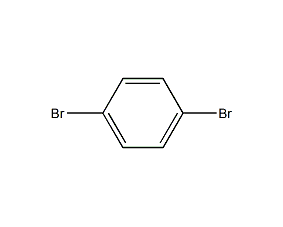
1,4-dibromobenzene 1,4-dibromobenzene

1,4-dibromobenzene structural formula

structural formula

business number 02t9
molecular formula c6h4br2
molecular weight 235.90
label

1,4-dibromobenzene,

p-dibromobenzene,

dibromobenzene,

1,4-dibromobenzene,

para-dibromobenzene,

p-benzene dibromide,

p-dibromobenzene,

1,4-dibrombenzol,

1,4-dibromo-benzen,

benzene, p-dibromo-,

benzene,1,4-dibromo-

numbering system

cas number:106-37-6

mdl number:mfcd00000089

einecs number:203-390-2

rtecs number:cz1791000

brn number:1904543

pubchem id:none

physical property data

1. properties: off-white crystal.

2. density (g/ml, 25℃): 1.8410

3. relative density (20℃, 4℃): 1.26117

4. melting point (ºc): 87.3

5. boiling point (ºc, normal pressure): 218.5

6. relative density (25℃, 4℃): 1.964199.6

7. refractive index (d20): 1.5742

8. gas phase standard entropy (j·mol-1·k-1): 359.87

9. gas phase standard hot melt (j·mol– 1·k-1): 117.64

10. autoignition point or ignition temperature (ºc): undetermined

11. vapor pressure (mmhg, 25ºc): undetermined

12. saturated vapor pressure (kpa, 20ºc): undetermined

13. heat of combustion (kj/mol): undetermined

p>

14. critical temperature (ºc): undetermined

15. critical pressure (kpa): undetermined

16. oil-water (octanol/water) partition coefficient logarithmic value of p>

19. solubility: insoluble in water, easily soluble in benzene and chloroform.

toxicological data

1. acute toxicity: rat oral ld50: 3120mg/kg; mouse abdominal ld50: 1891mg/kg;

2. other multiple dose toxicity: rat oral tdlo: 1800mg/ kg/90d-i;

ecological data

this substance may be harmful to the environment. special attention should be paid to the pollution of water bodies, especially the occurrence of bioaccumulation in aquatic organisms.

molecular structure data

1. molar refractive index: 41.63

2. molar volume (cm3/mol): 121.8

3. isotonic specific volume (90.2k): 308.2

4. surface tension (dyne/cm): 41.0

5. dielectric constant:

6. dipole moment (10-24cm3):

7. polarizability: 16.50

compute chemical data

1. reference value for hydrophobic parameter calculation (xlogp): none

2. number of hydrogen bond donors: 0

3. number of hydrogen bond acceptors: 0

4. number of rotatable chemical bonds: 0

5. number of tautomers: none

6. topological molecule polar surface area 0

7. number of heavy atoms: 8

8. surface charge: 0

9. complexity: 54.9

10. number of isotope atoms: 0

11. determine the number of atomic stereocenters: 0

12. uncertain number of atomic stereocenters: 0

13. determine the number of chemical bond stereocenters: 0

14. number of uncertain chemical bond stereocenters: 0

15. number of covalent bond units: 1

properties and stability

avoid contact with strong oxidizing agents.

storage method

stored in a cool, ventilated warehouse. keep away from fire and heat sources. protect from direct sunlight. the storage temperature should not exceed 30℃. the packaging is sealed. should be kept away from oxidizer, do not store together. equipped with the appropriate variety and quantity of fire equipment. suitable materials should be available in the storage area to contain spills.

synthesis method

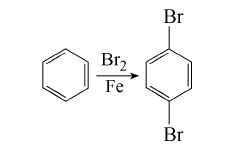
add 2g iron filings to 1mol benzene, slowly add bromine dropwise, usually the reaction will start after 15 minutes (slow boiling), control the rate of adding bromine to keep the reactant slightly boil. after the bromine is added, heat at 20~30°c for 1 hour, and then heat at 60°c for 45 minutes until the brown vapor of bromine disappears. filter out the iron filings, wash with water and then steam. the aqueous layer of the steamed bromobenzene in the first part is separated, dried with calcium chloride and then distilled. the fraction collected at 150~170℃ is mainly bromobenzene. the residue after distillation was poured into a porcelain dish while hot, condensed and combined with the p-dibromobenzene obtained by steam distillation. after drying, activated carbon was added and recrystallized with methanol to obtain 24g of p-dibromobenzene, with a yield of 10%.

purpose

used in organic synthesis, dye intermediates.

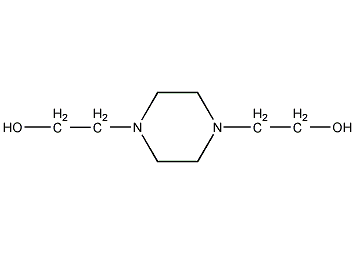
1,4-bis(2-hydroxyethyl)piperazine 1,4-bis(2-hydroxyethyl)piperazine

1,4-bis(2-hydroxyoxy)p-diazepine cyclohexane structural formula

1,4-bis(2-hydroxyoxy)p-diazepine cyclohexane structural formula

structural formula

business number 03ft
molecular formula c8h18n2o2
molecular weight 174.24
label

1,4-piperazinediethanol,

heterocyclic compounds

numbering system

cas number:122-96-3

mdl number:mfcd00006157

einecs number:204-586-0

rtecs number:tl3675000

brn number:none

pubchem number:24891787

physical property data

none yet

toxicological data

1, skin/eye irritation: rabbit skinirritation experiment: 10mg/24h slightly irritating to the skin.

2, acute toxicity: rat oral ld50: 3730mg/kg

rabbit skinld50>10ml/kg

ecological data

none yet

molecular structure data

1 molar refractive index:47.30

2, molar volume (m3/mol):158.7

3, isotonic ratio (90.2k): 407.5

4, surface tension (dyne/cm): 43.4

5 polarizability (10-24cm3):18.75

compute chemical data

1. reference value for calculation of hydrophobic parameters (xlogp): -1.3

2. number of hydrogen bond donors: 2

3. number of hydrogen bond acceptors: 4

4. number of rotatable chemical bonds: 4

5. number of tautomers: none

6. topological molecule polar surface area 46.9

7. number of heavy atoms: 12

8. surface charge: 0

9. complexity: 99.6

10. number of isotope atoms: 0

11. determine the number of atomic stereocenters: 0

12. uncertain number of atomic stereocenters: 0

13. determine the number of chemical bond stereocenters: 0

14. number of uncertain chemical bond stereocenters: 0

15. number of covalent bond units: 1

properties and stability

none yet

storage method

none yet

synthesis method

none yet

purpose

none yet

00; font-family: arial; mso-font-kerning: 0pt; mso-fareast-font-family: arial”>, polarizability (10-24cm 3):18.75

compute chemical data

1. reference value for calculation of hydrophobic parameters (xlogp): -1.3

2. number of hydrogen bond donors: 2

3. number of hydrogen bond acceptors: 4

4. number of rotatable chemical bonds: 4

5. number of tautomers: none

6. topological molecule polar surface area 46.9

7. number of heavy atoms: 12

8. surface charge: 0

9. complexity: 99.6

10. number of isotope atoms: 0

11. determine the number of atomic stereocenters: 0

12. uncertain number of atomic stereocenters: 0

13. determine the number of chemical bond stereocenters: 0

14. number of uncertain chemical bond stereocenters: 0

15. number of covalent bond units: 1

properties and stability

none yet

storage method

none yet

synthesis method

none yet

purpose

none yet

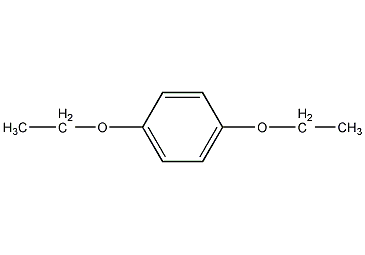
1,4-diethoxybenzene 1,4-diethoxybenzene

1,4-diethoxybenzene structural formula

1,4-diethoxybenzene structural formula

structural formula

business number 03fs
molecular formula c10h14o2
molecular weight 166.22
label

p-diethoxybenzene,

1,4-diethoxybenzene,

diethoxybenzene,

paraphenylene ether,

hydroquinone diethylether,

(c2h5o)2c6h4,

aromatic compounds

numbering system

cas number:122-95-2

mdl number:mfcd00015146

einecs number:204-585-5

rtecs number:none

brn number:none

pubchem number:24878716

physical property data

1. melting point (℃): 72

2. boiling point (ºc): 246

3. solubility: insoluble in water

toxicological data

none yet

ecological data

none yet

molecular structure data

5. molecular property data:

1. molar refractive index: 48.87

2. molar volume (cm3/mol): 170.4

3. isotonic specific volume (90.2k): 400.1

4. surface tension (dyne/cm): 30.3

5. polarizability (10-24cm3): 19.37

compute chemical data

1. reference value for hydrophobic parameter calculation (xlogp): none

2. number of hydrogen bond donors: 0

3. number of hydrogen bond acceptors: 2

4. number of rotatable chemical bonds: 4

5. number of tautomers: none

6. topological molecule polar surface area 18.5

7. number of heavy atoms: 12

8. surface charge: 0

9. complexity: 92.4

10. number of isotope atoms: 0

11. determine the number of atomic stereocenters: 0

12. uncertain number of atomic stereocenters: 0

13. determine the number of chemical bond stereocenters: 0

14. number of uncertain chemical bond stereocenters: 0

15. number of covalent bond units: 1

properties and stability

none yet

storage method

none yet

synthesis method

none yet

purpose

1. application

organic intermediates

1,2-diphenylhydrazine 1,2-diphenyldiazane

1,2-diphenylhydrazine structural formula

1,2-diphenylhydrazine structural formula

structural formula

business number 03fb
molecular formula c12h12n2
molecular weight 184.24
label

1,2-diphenylhydrazine,

1,2-diphenylhydrazine,

diphenylhydrazine,

hydrogenated azobenzene,

1,2-diphenylhydramine,

hydrazophene,

1,2-diphenylhydrazine,

1,2-diphenyldiazane,

sym-diphenylhydrazine,

hydrazobenzene,

1,2-diphenylhydrazine,

1,2-diphenyldiazane,

1,1’-hydrazobis-benzen,

1,1’-hydrazodibenzene,

1,2-diphenyl-hydrazin,

benzene, 1,1′-hydrazobis-,

aromatic compounds

numbering system

cas number:122-66-7

mdl number:mfcd00003012

einecs number:204-563-5

rtecs number:mw2625000

brn number:639793

pubchem number:24867744

physical property data

1.character: flake crystal[1]

2. melting point (℃): 131 (decomposition)[2]

3. boiling point (℃): decomposition[3]

4. relative density (water=1): 1.16[4]

5. critical pressure (mpa): 3.09[5]

6. octanol/water partition coefficient: 2.94[6]

7. flash point (℃): 230[7]

8. ignition temperature (℃): 531 [8]

9. explosion upper limit (%): 7.6[9]

10. explosion lower limit (%): 0.72[10]

11. solubility: insoluble in water and acetic acid, slightly soluble in benzene, easily soluble in ethanol. [11]

toxicological data

1. tumor toxicity:

oral tdlo in rats: 2620mg/kg/78w-c

subcutaneous tdlo in rats: 5200mg/kg/52w-c

mouse oral tdlo: 26gm/kg/78w-c

mouse skin tdlo: 5280mg/kg/26w-i

mouse subcutaneous tdlo : 8400mg/kg/38w-i

oral td in rats: 9820mg/kg/78w-c

oral td in rats: 36gm/kg/53w-i

p>

subcutaneous td in rats: 16gm/kg/1y-i

subcutaneous td in rats: 6gm/kg/27w-i

2. mutagenic toxicity :

salmonella mutation test system: 10ng/plate

mouse intraperitoneal dna inhibition test system: 100mg/kg

hamster ovary cell analysis test system : 14mg/l

hamster ovary double chromosome exchange test system: 5mg/l

3. acute toxicity [12] ld50: 301mg/kg (rat oral administration)

4. irritation no data available

ecological data

1. ecotoxicity[13]

lc50: 1.2mg/l (24h), 0.27mg/l (96h) (blue gill sunfish); 8.1mg/l (24h), 4.1mg/l (48h) (water fleas)

2. biodegradability[14]

aerobic biodegradation (h): 672~4320

anaerobic biodegradation (h): 2880~17280

3 .non-biodegradability[15]

photooxidation half-life in water (h): 31~1740

photooxidation half-life in air ( h): 0.3~3

4. bioconcentration[16] bcf: 29 (fish and crustaceans)

5. other harmful effects[17] this substance is harmful to the environment and can cause pollution to water bodies and soil. it is also harmful to humans. bioaccumulation occurs in important food chains, especially in aquatic circadian clocks.

molecular structure data

1. molar refractive index: 60.04

2. molar volume (cm3/mol): 156.2

3. isotonic specific volume (90.2k ): 420.6

4. surface tension (dyne/cm): 52.5

5. dielectric constant:

6. dipole moment (10-24cm3):

7. polarizability: 23.94

compute chemical data

1. reference value for hydrophobic parameter calculation (xlogp): none

2. number of hydrogen bond donors: 2

3. number of hydrogen bond acceptors: 2

4. number of rotatable chemical bonds: 3

5. number of tautomers: none

6. topological molecule polar surface area 24.1

7. number of heavy atoms: 14

8. surface charge: 0

9. complexity: 128

10. number of isotope atoms: 0

11. determine the number of atomic stereocenters: 0

12. uncertain number of atomic stereocenters: 0

13. determine the number of chemical bond stereocenters: 0

14. number of uncertain chemical bond stereocenters: 0

15. number of covalent bond units: 1

properties and stability

1. stability[18] stable

2. incompatible substances[19] strong oxidants, strong acids, acid anhydrides, acid chlorides

3. conditions to avoid contact[20] heating

4. hazards of aggregation[21] no aggregation

storage method

storage precautions[22] store in a cool, ventilated warehouse. keep away from fire and heat sources. the packaging is sealed. they should be stored separately from oxidants, acids, and food chemicals, and avoid mixed storage. equipped with the appropriate variety and quantity of fire equipment. suitable materials should be available in the storage area to contain spills.

synthesis method

there are two ways to obtain diphenylhydrazine from nitrobenzene. 1. reduction with zinc powder; 2. reduction with glucose and silicon powder.

purpose

1. the pharmaceutical industry is used to produce the antipyretic and analgesic drug phenylbutazone; the dye industry is used to produce benzidine dyes, etc.

2. used for the determination of arabinose and lactose. [23]

1,1,3,3-tetraethoxypropane 1,1,3,3-tetrathoxypropane

1,1,3,3-tetraethoxypropane structural formula

1,1,3,3-tetraethoxypropane structural formula

structural formula

business number 03et
molecular formula c11h24o4
molecular weight 220.31
label

malondialdehyde diethyl acetal,

malondialdehyde acetyl bis(diethanol),

malondialdehyde acetal,

1,1,3,3-tetraethoxypropane,

1,1,3,3-tetraethoxy-propan,

malonaldehyde diethyl acetal,

malonaldehydediethylacetal,

tetraethoxypropane,

tetraethyl malondialdehyde acetal,

usaf kf-26,

usafkf-26,

1,1,3,3-tetraethoxypropane,

aliphatic compounds

numbering system

cas number:122-31-6

mdl number:mfcd00009240

einecs number:204-533-1

rtecs number:on8750000

brn number:1209619

pubchem number:24900611

physical property data

1. density (g/ml ,25/4℃): 0.919

2. refractive index (nd20): 1.41-1.412

3. flashpoint ():88

4. melting point ():-90

5. boiling point (ºc):220

6. solubility: insoluble in water.

toxicological data

1, acute toxicity: rat oral ld50: 1610mg/kg

mouse transperitoneal cavity ld50: 200mg/kg

2salmonella microbial mutations test system: 4umol/plate

ecological data

none yet

molecular structure data

5. molecular property data:

1. molar refractive index: 59.90

2. molar volumem3/ mol236.3

3. isotonic ratio90.2k, acute toxicity: rat oral ld50: 1610mg/kg

mouse transperitoneal cavity ld50: 200mg/kg

2salmonella microbial mutations test system: 4umol/plate

ecological data

none yet

molecular structure data

5. molecular property data:

1. molar refractive index: 59.90

2. molar volumem3/ mol236.3

3. isotonic ratio90.2k543.2

4. surface tensiondyne/cm27.9

5. dielectric constant:

6. dipole moment10 -24cm3)

7. polarizability: 23.74

compute chemical data

1. reference value for hydrophobic parameter calculation (xlogp): 1.8

2. number of hydrogen bond donors: 0

3. number of hydrogen bond acceptors: 4

4. number of rotatable chemical bonds: 10

5. number of tautomers: none

6. topological molecule polar surface area 36.9

7. number of heavy atoms: 15

8. surface charge: 0

9. complexity: 104

10. number of isotope atoms: 0

11. determine the number of atomic stereocenters: 0

12. uncertain number of atomic stereocenters: 0

13. determine the number of chemical bond stereocenters: 0

14. number of uncertain chemical bond stereocenters: 0

15. number of covalent bond units: 1

properties and stability

none yet

storage method

none yet

synthesis method

none yet

purpose

none yet

ily: arial; mso-bidi-font-family: arial”>)543.2

4. surface tensiondyne/cm27.9

5. dielectric constant:

6. dipole moment10 -24cm3)

7. polarizability: 23.74

compute chemical data

1. reference value for hydrophobic parameter calculation (xlogp): 1.8

2. number of hydrogen bond donors: 0

3. number of hydrogen bond acceptors: 4

4. number of rotatable chemical bonds: 10

5. number of tautomers: none

6. topological molecule polar surface area 36.9

7. number of heavy atoms: 15

8. surface charge: 0

9. complexity: 104

10. number of isotope atoms: 0

11. determine the number of atomic stereocenters: 0

12. uncertain number of atomic stereocenters: 0

13. determine the number of chemical bond stereocenters: 0

14. number of uncertain chemical bond stereocenters: 0

15. number of covalent bond units: 1

properties and stability

none yet

storage method

none yet

synthesis method

none yet

purpose

none yet

=”zc”>storage method

none yet

synthesis method

none yet

purpose

none yet

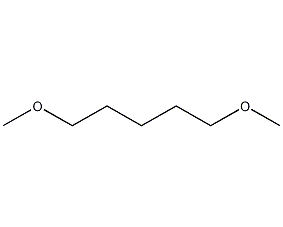
1,5-dimethoxypentane 1,5-dimethoxypentane

1,5-dimethoxypentane structural formula

1,5-dimethoxypentane structural formula

structural formula

business number 034l
molecular formula c7h16o2
molecular weight 132.20
label

1,5-pentanediol dimethyl ether,

pentaethylene glycol dimethyl ether,

linear compound

numbering system

cas number:111-89-7

mdl number:mfcd03613608

einecs number:none

rtecs number:none

brn number:none

pubchem number:24878765

physical property data

1. character: undetermined

2. density (g/ml,20): 0.843

3. relative vapor density (g/ml,air =1): undetermined

4. melting point (ºc): undetermined

5. boiling point (ºc,normal pressure):161

6. boiling point (ºc,5.2kpa): not determined

7. refractive index: 1.408

8. flashpoint (ºc): undetermined

9. specific rotation (º): undetermined

10. autoignition point or ignition temperature (ºc): undetermined

11. vapor pressure (mmhg,25ºc): undetermined

12. saturated vapor pressure (kpa, ºc): undetermined

13. heat of combustion (kj/mol): undetermined

14. critical temperature (ºc): undetermined

15. critical pressure (kpa): undetermined

16. oil and water (octanol/log value of the partition coefficient for water: undetermined

17. explosion upper limit (%,v/v): undetermined

18. lower explosion limit (%,v/v): undetermined

19. solubility: undetermined

toxicological data

none

ecological data

none

molecular structure data

5. molecular property data:

1. molar refractive index: 37.96

2. molar volume (m3/mol):156.8

3. isotonic specific volume (90.2k):349.9

4. surface tension (dyne/cm):24.8

5. polarizability10-24cm3):15.05

compute chemical data

1. reference value for hydrophobic parameter calculation (xlogp): 1

2. number of hydrogen bond donors: 0

3. number of hydrogen bond acceptors: 2

4. number of rotatable chemical bonds: 6

5. number of tautomers: none

6. topological molecule polar surface area 18.5

7. number of heavy atoms: 9

8. surface charge: 0

9. complexity: 40.2

10. number of isotope atoms: 0

11. determine the number of atomic stereocenters: 0

12. uncertain number of atomic stereocenters: 0

13. determine the number of chemical bond stereocenters: 0

14. number of uncertain chemical bond stereocenters: 0

15. number of covalent bond units: 1

properties and stability

none

storage method

none

synthesis method

none

purpose

none

span lang=en-us style=”font-size: 9pt; font-family: arial”>24.8

5. polarizability10-24cm3):15.05

compute chemical data

1. reference value for hydrophobic parameter calculation (xlogp): 1

2. number of hydrogen bond donors: 0

3. number of hydrogen bond acceptors: 2

4. number of rotatable chemical bonds: 6

5. number of tautomers: none

6. topological molecule polar surface area 18.5

7. number of heavy atoms: 9

8. surface charge: 0

9. complexity: 40.2

10. number of isotope atoms: 0

11. determine the number of atomic stereocenters: 0

12. uncertain number of atomic stereocenters: 0

13. determine the number of chemical bond stereocenters: 0

14. number of uncertain chemical bond stereocenters: 0

15. number of covalent bond units: 1

properties and stability

none

storage method

none

synthesis method

none

purpose

none

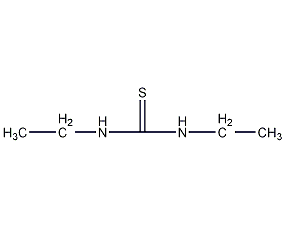
1,3-diethylthiourea 1,3-diethylthiourea

1,3-diethylthiourea structural formula

structural formula

business number 02rw
molecular formula c5h12n2s
molecular weight 132.23
label

1,3-diethyl-2-thiourea,

n,n’-diethylthiourea,

accelerator detu,

1,3-diethyl-2-thiourea,

n, n’-diethyl thiourea,

thiourea accelerator,

organic corrosion inhibitor

numbering system

cas number:105-55-5

mdl number:mfcd00004925

einecs number:203-308-5

rtecs number:ys9800000

brn number:773905

pubchem number:24893318

physical property data

1. properties: white to light yellow flaky crystals.

2. relative density (g/ml, 25℃): 1.100

3. melting point (ºc): 74~ 76

4. refractive index: 1.4000

5. flash point (ºc): 186

6. solubility: easily soluble in ethanol , acetone, soluble in water, insoluble in gasoline.

toxicological data

1, acute toxicity: oral administration to ratsld50316mg/kg; mouse orally lclo62 mg/kg; span> mouse peritoneal cavitylc50:500mg/kg; 2. chronic toxicity/carcinogenicity: rat oral tdlo: 11mg/kg/2y-c; span> 3. mutagenicity: in mammalian somatic cells medium mutation test: mouse lymphocytes, 1500mg/l;                                                                                                                          550mg/l;

ecological data

general remarks

water hazard level 1 (german regulations) (self-assessment via list) this substance is slightly hazardous to water.

do not allow undiluted or large amounts of product to come into contact with groundwater, waterways or sewage systems.

do not discharge materials into the surrounding environment without government permission.

molecular structure data

1. molar refractive index: 39.69

2. molar volume (cm3/mol): 133.6

3. isotonic specific volume (90.2k ): 333.5

4. surface tension (dyne/cm): 38.7

5. dielectric constant:

6. dipole moment (10-24cm3):

7. polarizability: 15.73

compute chemical data

1. reference value for hydrophobic parameter calculation (xlogp): none

2. number of hydrogen bond donors: 2

3. number of hydrogen bond acceptors: 1

4. number of rotatable chemical bonds: 2

5. number of tautomers: 2

6. topological molecule polar surface area 56.2

7. number of heavy atoms: 8

8. surface charge: 0

9. complexity: 64.8

10. number of isotope atoms: 0

11. determine the number of atomic stereocenters: 0

12. uncertain number of atomic stereocenters: 0

13. determine the number of chemical bond stereocenters: 0

14. number of uncertain chemical bond stereocenters: 0

15. number of covalent bond units: 1

properties and stability

avoid contact with oxidants. easily soluble in ethanol and acetone, soluble in water, and insoluble in gasoline. hygroscopic.

storage method

1. store in a cool, ventilated warehouse. keep away from fire and heat sources. should be kept away from oxidizer, do not store together.

2. equip with corresponding varieties and quantities of fire-fighting equipment. the storage area should be equipped with emergency release equipment and suitable containment materials.

synthesis method

1. obtained from the reaction of ethylamine and carbon disulfide. first, add ethylamine to the reaction kettle, heat to 35-40°c while stirring, then add carbon disulfide dropwise while stirring, and complete the dropwise addition within 40-45 minutes. then the temperature was raised to 95°c and the reaction was maintained for 3 hours. then the temperature is lowered to 50°c and the material is discharged. the product is cooled, filtered, washed and dried to obtain the finished product. the product content is 92% and the yield is 80%.

2.ethylamine aqueous solution reacts with carbon disulfide at 20~30℃ to generate ethylamine salt of ethyldithiocarbamate. the substance decomposes at 96-100°c and releases hydrogen sulfide gas, and then undergoes separation, washing, crystallization, crushing and drying to obtain the finished product.

purpose

1. it can be used as thiourea accelerator. this product is also an accelerator for butyl rubber and a vulcanization activator for epdm rubber.

2. chloroprene vulcanized rubber with good properties such as tensile strength, hardness, and compression permanent deformation can be produced. compared with na-22 (ethylene thiourea), this product scorches and vulcanizes faster, but has better vulcanization flatness. this product is easy to disperse and does not bloom. when the dosage is large, high-temperature and high-speed vulcanization can be performed, and it is especially suitable for continuous vulcanization of extruded products. this product is also an accelerator for butyl rubber and a vulcanization activator for epdm rubber. it can activate thiazole and sulfenamide accelerators in natural and styrene-butadiene rubber. it has antioxidant effects on natural rubber, chloroprene rubber, nitrile rubber and styrene-butadiene rubber. generally used to manufacture industrial rubber products, special wires, sponge products, etc. the general dosage in chloroprene rubber is 0.25 to 1 part. the dosage in natural rubber and styrene-butadiene rubber is 0.3 to 1.5 parts, and is combined with 0.3 to 1.5 parts of accelerator dm. this product is also used to prepare corrosion inhibitor rodine 31a.
3.highly efficient corrosion inhibitor, it can be added to acid solution alone as a corrosion inhibitor for ferrous metals, or it can be combined with sulfamic acid and citric acid. made into solid cleaning agent. also used as copper dissolution accelerator.

4.used as an accelerator for chloroprene rubber and styrene-butadiene rubber adhesives. the vulcanization and scorching are faster than accelerator na-22. when the dosage is large, it can perform high-temperature rapid vulcanization. it is especially suitable for continuous vulcanization of extruded products. the products have small compression deformation and good aging resistance. also used as vulcanization activator for epdm rubber. it has antioxidant effects on natural rubber, nitrile rubber, styrene-butadiene rubber and chloroprene rubber. it is easy to disperse during operation and does not spray frost. it is generally used in industrial products, sponge products and special wires. also used as raw material for preparing corrosion inhibitors.

small shape and good aging resistance. also used as vulcanization activator for epdm rubber. it has antioxidant effects on natural rubber, nitrile rubber, styrene-butadiene rubber and chloroprene rubber. it is easy to disperse during operation and does not spray frost. it is generally used in industrial products, sponge products and special wires. also used as raw material for preparing corrosion inhibitors.

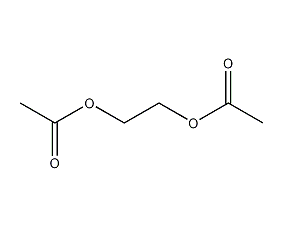
1,2-ethylene glycol diacetate 1,2-diacetoxybutane

1,2-Ethylene glycol diacetate structural formula

1,2-ethylene glycol diacetate structural formula

structural formula

business number 033s
molecular formula c6h10o4
molecular weight 146.14
label

ethylene glycol diacetate,

ethylene diacetate,

1,2-ethanediol diacetate,

aliphatic compounds

numbering system

cas number:111-55-7

mdl number:mfcd00008718

einecs number:203-881-1

rtecs number:kw4025000

brn number:1762308

pubchem number:24874480

physical property data

1. properties: colorless liquid

2. density (g/ml, 20/20℃): 1.1043

3. relative vapor density (g/ml, air =1): 5.04

4. melting point (ºc): -31

5. boiling point (ºc, normal pressure): 185~190

6. relative density (20℃, 4℃): 1.1052

7. refractive index (20ºc): 1.4162

8. flash point (ºc, opening): 96

9. viscosity (mpa·s, 20ºc): 3.13

10. flash point (ºc): 635

11. relative density (25℃, 4℃): 1.094930

12. saturated vapor pressure (kpa, 20ºc): 0.033

13. heat of evaporation (kj/mol): 50.7

14. normal temperature refractive index (n20): 1.4159

15. liquid phase standard hot melt (j·mol-1·k-1): 263.6

16. body expansion coefficient (k-1): 0.00106

17. explosion upper limit (%, v/v): 8.4

18. lower explosion limit (%, v/v): 1.6

19. solubility: easily soluble in alcohol and ether, difficult to dissolve in petroleum systems aliphatic hydrocarbons. oils and fats, except castor oil, are insoluble. it dissolves 21.3% in water at 20℃; water dissolves 21.2% in ethylene glycol diacetate.

20. solubility parameter (j·cm-3)0.5: 20.532

21. van der waals area ( cm2·mol-1): 1.134×10¹⁰

22. van der waals volume (cm3·mol-1): 78.200

toxicological data

1. acute toxicity: guinea pig oral ld50: 4940mg/kg; rat oral ld50: 6850mg/kg; rabbit dermal ld50: 8480mg/kg.

2. it is slightly toxic. the toxicity is similar to that of ethylene glycol. if consumed accidentally, it can cause vomiting, drowsiness, difficulty breathing, convulsions, kidney damage, and further lead to uremia and death. mild irritation to eyes.

ecological data

this substance is slightly hazardous to water.

molecular structure data

1. molar refractive index: 33.39

2. molar volume (cm3/mol): 134.5

3. isotonic specific volume (90.2k): 320.3

4. surface tension (dyne/cm): 32.1

5. polarizability (10 -24cm3): 13.23

compute chemical data

1. reference value for hydrophobic parameter calculation (xlogp): 0

2. number of hydrogen bond donors: 0

3. number of hydrogen bond acceptors: 4

4. number of rotatable chemical bonds: 5

5. number of tautomers: none

6. topological molecule polar surface area 52.6

7. number of heavy atoms: 10

8. surface charge: 0

9. complexity: 114

10. number of isotope atoms: 0

11. determine the number of atomic stereocenters: 0

12. uncertain number of atomic stereocenters: 0

13. determine the number of chemical bond stereocenters: 0

14. number of uncertain chemical bond stereocenters: 0

15. number of covalent bond units: 1

properties and stability

1. avoid contact with alkali, acid, oxidizing agent and reducing agent. it is a flammable liquid and non-corrosive to metals. it can be stored in iron, mild steel or aluminum containers, but copper containers are not suitable because the acetic acid produced by decomposition is corrosive to copper.

2. chemical properties: it has the general chemical properties of ester. it is easily hydrolyzed in the presence of caustic alkali and inorganic acid to produce ethylene glycol and acetic acid. alcoholysis reactions are also prone to occur.

3. exist in mainstream smoke.

4. orally administered ld506.86g/kg to mice

storage method

store in a cool, dry, well-ventilated warehouse. keep away from fire and heat sources. protect from direct sunlight. keep container tightly sealed. they should be stored separately from alkalis, oxidants, alcohols, etc. and avoid mixed storage. equipped with the appropriate variety and quantity of fire equipment. the storage area should be equipped with emergency release equipment and suitable containment materials.

synthesis method

1. obtained from the reaction of 1,2-dibromoethane and potassium acetate.

2. manufactured by the reaction of ethylene glycol and acetic anhydride. the main impurity is ethylene glycol monoacetate. during refining, it is dried with calcium chloride and anhydrous potassium carbonate, and then distilled under reduced pressure.

3. preparation method:

in a reaction bottle equipped with a stirrer and a reflux condenser, add 30 ml of glacial acetic acid and 93 g of 1,2-dibromoethane (2) (0.5 mol), 98 g of newly calcined potassium acetate (1.0 mol), 1.5 g of pyridine, and heat to reflux for 3 hours while stirring. change to a distillation device to steam out the volatile part until the distillation is complete. add 2 ml of glacial acetic acid, 93 g (0.5 mol) of 1,2-dibromoethane (2), 98 g (1.0 mol) of newly calcined potassium acetate, and 1.5 g of pyridine to the distillate, and then heat to reflux for 3 hours while stirring. change to a distillation device for distillation and collect the following various fractions: ① the fraction before 140°c; ② the fraction between 140 and 170°c (30-39g); ③ the fraction between 170 and 190°c (70-78g). redistill the 140-170°c fraction and collect the 170-190°c fraction (10-16g). combine the fractions at 170 to 190°c, perform distillation, and collect the fractions at 180 to 190°c to obtain 80 to 90 g of ethylene glycol diacetate (1), collecting 55% to 61%. [1]

purpose

used as a solvent in nitrocellulose spray paint, printing ink, cellulose esters, fluorescent coatings and the manufacture of explosives.

1,4-benzenedimethanethiol 1,4-benzenedimethanethiol

1,4-benzenedimethanethiol structural formula

1,4-benzenedimethanethiol structural formula

structural formula

business number 02ra
molecular formula c8h10s2
molecular weight 170.30
label

p-dimethylmercaptobenzene,

1,4-bis(mercaptomethyl)benzene,

α,α’-dimercapto-p-xylene

numbering system

cas number:105-09-9

mdl number:mfcd00004872

einecs number:203-269-4

rtecs number:none

brn number:none

pubchem number:24848812

physical property data

1. properties: light yellow crystal.

2. density (g/ml, 25℃): undetermined

3. relative vapor density (g/ml, air=1): undetermined

4. melting point (ºc): 45-46

5. boiling point (ºc, normal pressure): undetermined

6. boiling point (ºc, kpa): undetermined

7. refractive index: undetermined

8. flash point (ºc): undetermined

9. specific rotation (º): undetermined

p>

10. autoignition point or ignition temperature (ºc): not determined

11. vapor pressure (mmhg, 20ºc): not determined

12. saturated vapor pressure (kpa, ºc): undetermined

13. heat of combustion (kj/mol): undetermined

14. critical temperature (ºc): undetermined

15. critical pressure (kpa): undetermined

16. log value of oil-water (octanol/water) distribution coefficient: undetermined

17. explosion upper limit (%, v /v): undetermined

18. lower explosion limit (%, v/v): undetermined

19. solubility: undetermined

toxicological data

none

ecological data

none

molecular structure data

1. molar refractive index: 51.87

2. molar volume (cm3/mol): 150.1

3. isotonic specific volume (90.2k ): 384.6

4. surface tension (dyne/cm): 43.0

5. dielectric constant:

6. dipole moment (10-24cm3):

7. polarizability: 20.56

compute chemical data

1. reference value for hydrophobic parameter calculation (xlogp): 2.1

2. number of hydrogen bond donors: 2

3. number of hydrogen bond acceptors: 2

4. number of rotatable chemical bonds: 2

5. number of tautomers: none

6. topological molecule polar surface area 2

7. number of heavy atoms: 10

8. surface charge: 0

9. complexity: 73.3

10. number of isotope atoms: 0

11. determine the number of atomic stereocenters: 0

12. uncertain number of atomic stereocenters: 0

13. determine the number of chemical bond stereocenters: 0

14. number of uncertain chemical bond stereocenters: 0

15.number of covalent bond units: 1

properties and stability

none

storage method

none

synthesis method

none

purpose

none

bdmaee:bis (2-dimethylaminoethyl) ether

cas no:3033-62-3

china supplier

for more information, please contact the following email:

email:sales@newtopchem.com

email:service@newtopchem.com

email:technical@newtopchem.com

BDMAEE Manufacture !