1,2-epoxypropane 1,2-epoxypropane
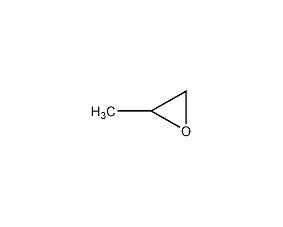
1,2-propylene oxide structural formula

1,2-propylene oxide structural formula

structural formula

business number 01jr
molecular formula c3h6o
molecular weight 58.08
label

propylene oxide,

epoxy propylene,

propylene oxide,

propylene oxide,

methyl ethylene oxide,

propylene oxide,

aliphatic alcohols, ethers and their derivatives

numbering system

cas number:75-56-9

mdl number:mfcd00005126

einecs number:200-879-2

rtecs number:tz2975000

brn number:79763

pubchem number:24880314

physical property data

1. properties: colorless liquid with an ether-like odor. [1]

2. melting point (℃): -112[2]

3. boiling point (℃): 34[3]

4. relative density (water = 1): 0.83[4]

5. relative vapor density (air=1): 2.0[5]

6. saturated vapor pressure (kpa): 71.7 (25℃)[6]

7. heat of combustion (kj/mol): -1755.8[7]

8. critical temperature (℃): 209.1[8]

9. critical pressure (mpa): 4.93[9]

10. octanol/water partition coefficient: 0.03 [10]

11. flash point (℃): -37 (cc); -28.8 (oc) [11]

12. ignition temperature (℃): 449[12]

13. explosion upper limit (%): 36.0[13]

14. lower explosion limit (%): 2.3[14]

15. solubility: soluble in water, miscible in methanol, ether, acetone, benzene, tetracycline most organic solvents such as carbon chloride. [15]

16. viscosity (mpa·s, 0ºc): 0.410

17. viscosity (mpa·s, 20ºc): 0.327

18. heat of fusion (kj/mol): 6.5

19. specific heat capacity (kj/(kg·k), 15ºc, constant pressure): 1.95

20 .body expansion coefficient (k-1, liquid): 0.00213

21. combustion range in air (ml/100ml): 2.1~2.15

22 .critical density (g·cm-3): 0.305

23. critical volume (cm3·mol-1): 190

24. critical compression factor: 0.245

25. eccentricity factor: 0.271

26. lennard-jones parameter (a): 4.8515

27. lennard-jones parameter (k): 239.00

28. solubility parameter (j·cm-3)0.5: 19.110

29. van der waals area (cm2·mol-1): 4.640×10⁹

30. van der waals volume (cm3·mol-1): 34.400

31. gas phase standard heat of combustion (enthalpy) (kj·mol-1): -1943.34

32. the gas phase standard claims heat (enthalpy) (kj·mol-1) : -94.68

33. gas phase standard entropy (j·mol-1·k-1): 281.15

34 .gas phase standard free energy of formation (kj·mol-1): -25.1

35. gas phase standard hot melt (j·mol-1· k-1): 72.55

36. liquid phase standard combustion heat (enthalpy) (kj·mol-1): -1915.44

37. liquid phase standard claims heat (enthalpythe conditions are reaction temperature 121°c and pressure 4.1 mpa. it was carried out in the presence of molybdenum catalyst, the reaction time was 0.5 h, the yield of propylene oxide was 88% (calculated as peroxide), and the selectivity was 81%. this method can co-produce tert-butyl alcohol with a yield of about 60%.

purpose

1. propylene oxide is an important organic chemical raw material and the third largest product of the propylene series. its largest use is to make polyether polyols and then polyurethane. in the distribution of uses in the united states and western europe, this use accounting for more than 60% and 70% respectively. used in the manufacture of nonionic surfactants and propylene alcohol, propylene glycol, alcohol ethers, propylene carbonate, isopropanolamine, propionaldehyde, synthetic glycerin, organic acids, synthetic resins, foam plastics, plasticizers, emulsifiers, and wetting agents , detergents, bactericides, fumigants, etc. fine chemicals derived from propylene oxide are used in almost all industrial sectors and in daily life. in addition, propylene oxide is also used in small amounts in coatings, brake fluids, antifreeze, jet engine fuel additives, floor polishes, printing inks, electronic chemicals, cleaners, mineral processing agents, leather processing, photosensitive fluids for ps plates, short-acting plasticizers, dyes, non-ionic surfactants, oil field demulsifiers, flame retardants, pesticide emulsifiers and wetting agents and other industries. also used in organic synthesis. it is used as a solvent for nitrocellulose, cellulose acetate, and various resins, a stabilizer for vinyl chloride resin and chlorine-containing solvents, and a fading inhibitor for nitrocellulose spray paint. it is also used in the manufacture of surfactants (wetting agents, detergents, emulsifiers, etc.) as well as medicines, pesticides, spices, and artificial leather.

2. used to prepare modified epoxy resin curing agent, synthetic resin and reactive diluent as epoxy resin adhesive. it is also used in the production of propylene glycol, propylene alcohol, propionaldehyde, polyether, isopropanolamine, higher fatty acid ester surfactants, plasticizers, medicines, pesticides, spices, and foam products. it is also a solvent for various resins, cellulose acetate, nitrocellulose, etc., a stabilizer for vinyl chloride resin and chlorine-containing solvents, a fading preventer for nitro spray paint, and can also be used as a bactericide, fumigant, wetting agent, etc. it is a broad-spectrum disinfectant that can kill bacterial propagules, spores, fungi and viruses. the general sterilization concentration is 800~2000mg/l.

3. it is an important raw material for organic synthesis. it is used to synthesize lubricants, surfactants, detergents, manufacture pesticides, and produce polyurethane foams and resins. [31]
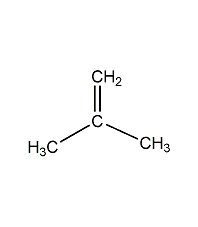
1,1-dichloroethylene 1,1-dichloroethylene

1,1-dichloroethylene structural formula

1,1-dichloroethylene structural formula

structural formula

business number 01jk
molecular formula c2h2cl2
molecular weight 97
label

vinylidene chloride,

vinylidene chloride

numbering system

cas number:75-35-4

mdl number:mfcd00011653

einecs number:200-864-0

rtecs number:yz8061000

brn number:1733365

pubchem number:24872048

physical property data

1. properties: colorless liquid with unpleasant odor. [1]

2. melting point (℃): -122.6[2]

3. boiling point (℃): 31.7[3]

4. relative density (water = 1): 1.21[4]

5. relative vapor density (air=1): 3.3[5]

6. saturated vapor pressure (kpa): 66.5 (20℃)[6]

7. heat of combustion (kj/mol): -1095.9[7]

8. critical temperature (℃): 220.8[8]

9. critical pressure (mpa): 5.21[9]

10. octanol/water partition coefficient: 2.13 [10]

11. flash point (℃): -19 (cc); -15 (oc) [11]

12. ignition temperature (℃): 570[12]

13. explosion upper limit (%): 16[13]

14. lower explosion limit (%): 5.6[14]

15. solubility: insoluble in water. [15]

16. viscosity (mpa·s, 20ºc): 0.3302

17. flash point (ºc): 570

18. heat of evaporation (kj/mol, b.p.): 26.197

19. heat of fusion (kj/mol): 6.519

20. heat of formation (kj/mol, 25ºc, liquid): 25.1

21. specific heat capacity (kj/(kg·k), 25.15ºc, constant pressure): 1.155

22. heat of polymerization (kj/mol): 60.7

23. relative density (25℃, 4℃): 1.4249

24. solubility parameter (j·cm-3)0.5: 16.813

25. van der waals area (cm2·mol-1): 6.110×10⁹ sup>

26. van der waals volume (cm3·mol-1): 41.430

27. liquid phase standard claimed heat (enthalpy) (kj·mol-1): -23.9

28. liquid phase standard hot melt (j·mol-1 ·k-1): 112.4

29. gas phase standard claims heat (enthalpy) (kj·mol-1): 2.4

30. gas phase standard entropy (j·mol-1·k-1): 287.98

31. gas phase standard free energy of formation ( kj·mol-1): 25.4

32. gas phase standard hot melt (j·mol-1·k-1):66.93

toxicological data

1. acute toxicity[12]

ld50: 200mg/kg (rat oral)

lc50: 6350ppm (rat inhalation, 4h)

2. irritation no data available

3. asia acute and chronic toxicity[13]

animal exposure 0.379g/m3 and 0.199g/ m3, 8 hours a day, 5 days a week, liver and kidney damage will occur after a few months. exposure below 0.099g/m3 will cause mild liver and kidney disease.

4. mutagenic[14]

microbial mutagenicity: salmonella typhimurium 5%�this method can be divided into two types. one is that all reactions are carried out in a continuous reactor, the batching ratio (naoh:ch2clchcl2) is (1-1.2:1), and the content of sodium hydroxide is 10%-20%. the reaction temperature is 50-70°c, the product content is 94%, and the yield is 93.9%. the second method is to use sodium chloride-containing sodium hydroxide and 1,1,2-trichloroethane to convert into vinylidene chloride. this method directly uses electrolyte, and the sodium chloride generated after dehydrochlorination can be returned to the electrolysis system for recycling. therefore, it is most suitable for the production of vinylidene chloride in chlor-alkali plants.
②calcium hydroxide method: this method can be divided into four types. first, the raw material calcium hydride concentration is 200g/l, the calcium carbonate concentration is <20g/l, the calcium hydroxide excess is 50%, and the system temperature is 80°c at the beginning of the reaction, and then rises to 90-92°c. the crude vinylidene chloride obtained after the reaction is purified by distillation, and the yield can reach more than 80%. secondly, since the control step of the reaction to generate vinylidene chloride is material transfer at the interface, a small amount of surfactant and water should be added to improve the contact effect. third, in order to simplify the process, the reaction and distillation are combined in one tower. fourth, first carry out the addition reaction of vinyl chloride and chlorine through the reactor, and then add 10% calcium hydroxide to convert 1,1,2-trichloroethane into vinylidene chloride. after refining, the product vinylidene chloride is obtained. ethylene dichloride.
③ammonium hydroxide method: xudao company proposed to use ammonium hydroxide to replace sodium hydroxide and calcium hydroxide. the feed ratio is nh4oh:ch2clchcl2=2:1 (mol), the reaction temperature is 120℃, and the pressure is about 0.86mpa, conversion rate 52.1%, ammonium chloride, ammonia and unreacted 1,1,2-trichloroethane can be recycled. the chlorination reaction is carried out in a tower reactor. the tower is filled with trichloroethane. iron rings are stacked in the tower as a catalyst. chlorine and vinyl chloride are introduced from the bottom of the tower in a ratio of 1.05:1 (mol). the reaction temperature is controlled at 35-45℃. since the reaction liquid of vinyl chloride and chlorine gas can circulate naturally depending on the temperature difference, it can also be forced to circulate using a pump. the reaction temperature is about 75°c and the pressure is normal pressure. the generated vinylidene chloride passes through the rough separation tower on the kettle and then through the rectification tower to purify and refine the product vinylidene chloride. at present, all domestic factories use kettle-type alkaline hydrolysis reactors, most of which operate intermittently. in the past, some people used 2.5%-3.0% milk of lime as alkali solution, but later switched to dilute sodium hydrochloride solution due to clogging of equipment. in the intermittent operation, the reaction temperature was raised to 85°c in the later stage of alkaline hydrolysis. as a result, the impurities in the crude vinylidene chloride increased significantly, which made refining difficult.

2. alkaline chlorination method of ethyl chloride: this method uses 1,2-dichloroethane as raw material, and chlorides it into 1,1, 2-trichloroethane, in addition to 1,2-dichloroethane and chlorine, 12% ethylene is also added to the reactants to accelerate the chlorination reaction of dichloroethane. trichloroethane is purified through a low-boiling tower and a high-boiling tower and then reacts with a dilute alkali to remove a molecule of hydrogen chloride to obtain vinylidene chloride; crude vinylidene chloride is refined through a low-boiling tower and a high-boiling tower to obtain pure vinylidene chloride. ethylene products. the chlorination yield of the above process is 95.4%, the alkaline hydrolysis yield is 99.8%, and the product purity is as high as 99.9%.

3. methyl chloroform thermal cracking hydrogen chloride method: this method uses vinyl chloride as raw material, and is added with hydrogen chloride to generate 1,1-dichloroethane; dichloroethane is chlorinated at a high temperature of 480°c , the chlorinated liquid products obtained mainly include vinylidene chloride, methyl chloroform (1,1,1-trichloroethane) and vinyl chloride. by-products include trichlorethylene, cis-dichloroethylene, trans-dichloroethylene, polychlorethane and hydrogen chloride. the chlorinated liquid is distilled to separate the above products, vinyl chloride and hydrogen chloride are returned to the addition process, trichlorethylene is sold as a commodity, methyl chloroform is cracked into vinylidene chloride by high temperature, the cracked mixture and the chlorinated liquid are combined and separated by distillation. polymerization inhibitor is added to vinylidene chloride for sale as a commodity. 1,1-dichloroethane and 1,2-dichloroethylene are chlorinated in liquid phase at low temperature to form 1,1-dichloroethane and tetrachloroethane, and then sent to enter the high temperature chlorinator.

4. ethane chlorination and thermal cracking to remove hydrogen chloride: this method uses ethane as raw material, which is chlorinated at a high temperature of 426.6°c into hydrogen chloride, vinyl chloride, vinylidene chloride, ethyl chloride, a mixture of 1,1-dichloroethane and methyl chloroform is used to separate the above product by fractional distillation. hydrogen chloride is used in the vinyl chloride hydrochlorination reactor; methyl chloroform is cracked at high temperature to decompose a molecule of hydrogen chloride to generate vinylidene chloride, which is combined with the chlorinated liquid for separation and purification to obtain the high-purity product vinylidene chloride.

5. high-temperature thermal dehydrochlorination method: first, preheat 1,1,2-trichloroethane to 250°c, and then pass it into a tubular reactor for decomposition reaction. the reaction temperature is 350-500°c. the advantage of this method is that the decomposition product hydrogen chloride can be utilized, but the by-product 1,2-dichloroethylene is more.

purpose

1. this product is a copolymer based on (containing at least 80%), which can produce polyvinylidene with fire resistance. various synthetic resins can be produced by copolymerizing 1,1-dichloroethylene with acrylonitrile, butadiene, acrylate, styrene, etc. vinylidene chloride resin can be processed into fibers or films and used for surface coatings on paper or plastic films. polyvinylidene chloride fiber can be used to produce fabrics, tents, insect nets, car seat cushions, etc. polyvinylidene chloride film has lower air permeability and moisture permeability than other plastic films, and is suitable for food packaging. copolymers with methacrylic acid, methyl methacrylate, etc. can be used in the film industry. mainly used as raw material for the manufacture of vinylidene chloride resin and 1,1,1-trichloroethane. because of its high volatility, it is usually not used as a solvent.

2. used in manufacturing various copolymers, synthetic fibers, adhesives and in organic synthesis. [26]

synthesis. [26]

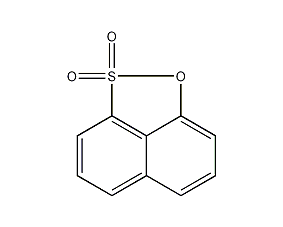
1,8-naphthosulfone 1,8-naphthosulftone

1,8-Naphthyl sulfone structural formula

1,8-naphthyl sulfone structural formula

structural formula

business number 01tm
molecular formula c10h6o3s
molecular weight 206.22
label

1,8-naphthalenesultone,

1-naphthol-8-sulfonic acid sultone,

8-hydroxynaphthalene-1-sulfonic acid sultone

numbering system

cas number:83-31-8

mdl number:mfcd00005937

einecs number:201-468-0

rtecs number:none

brn number:9381

pubchem number:24859025

physical property data

1. character:light yellow needle-shaped crystal

2. density (g/ml,25/4℃): unsure

3. relative vapor density (g /ml,air= 1): unsure

4. melting point (ºc):154-161

5. boiling point (ºc,normal pressure): unsure

6. boiling point (ºc,5.2kpa): unsure

7. refractive index: uncertain

8. flashpoint (ºc): unsure

9. specific optical rotation (º): unsure

10. autoignition point or ignition temperature (ºc): unsure

11. vapor pressure (kpa,25ºc): unsure

12. saturated vapor pressure (explosion limit ( %,v/v): unsure

18. lower explosion limit (%,v/v): unsure

19. solubility: uncertain.

toxicological data

none

ecological data

none

molecular structure data

1. molar refractive index:52.81

2. molar volume (m3/mol):132.5

3. isotonic specific volume (90.2k):374.4

4. surface tension (dyne/cm):63.7

5. polarizability10-24cm3):20.93

compute chemical data

1. reference value for hydrophobic parameter calculation (xlogp): 2.3

2. number of hydrogen bond donors: 0

3. number of hydrogen bond acceptors: 3

4. number of rotatable chemical bonds: 0

5. number of tautomers: none

6. topological molecule polar surface area 51.8

7. number of heavy atoms: 14

8. surface charge: 0

9. complexity: 330

10. number of isotope atoms: 0

11. determine the number of atomic stereocenters: 0

12. uncertain number of atomic stereocenters: 0

13. determine the number of chemical bond stereocenters: 0

14. number of uncertain chemical bond stereocenters: 0

15. number of covalent bond units: 1

properties and stability

none

storage method

stored in a sealed, cool and dark place.

synthesis method

none

purpose

for organic synthesis. organic synthesis intermediates.

n>

4. surface tension (dyne/cm):63.7

5. polarizability10-24cm3):20.93

compute chemical data

1. reference value for hydrophobic parameter calculation (xlogp): 2.3

2. number of hydrogen bond donors: 0

3. number of hydrogen bond acceptors: 3

4. number of rotatable chemical bonds: 0

5. number of tautomers: none

6. topological molecule polar surface area 51.8

7. number of heavy atoms: 14

8. surface charge: 0

9. complexity: 330

10. number of isotope atoms: 0

11. determine the number of atomic stereocenters: 0

12. uncertain number of atomic stereocenters: 0

13. determine the number of chemical bond stereocenters: 0

14. number of uncertain chemical bond stereocenters: 0

15. number of covalent bond units: 1

properties and stability

none

storage method

stored in a sealed, cool and dark place.

synthesis method

none

purpose

for organic synthesis. organic synthesis intermediates.

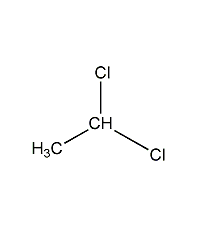
1,1-dichloroethane 1,1-dichloroethane

1,1-dichloroethane structural formula

1,1-dichloroethane structural formula

structural formula

business number 01jj
molecular formula c2h4cl2
molecular weight 98.96
label

ethylene dichloride,

ethylidene dichloride,

1,1-ethylenedichloride,

ethylidene dichloride,

ethylidene chloride,

as-dichloroethane,

ch3chcl2,

low toxicity solvent,

heat-sensitive extractants

numbering system

cas number:75-34-3

mdl number:mfcd00013673

einecs number:200-863-5

rtecs number:ki0175000

brn number:1696901

pubchem number:24863006

physical property data

1. properties: colorless oily liquid with an ether smell and a saccharine sweetness. [1]

2. melting point (℃): -97[2]

3. boiling point (℃): 57.3[3]

4. relative density (water = 1): 1.17[4]

5. relative vapor density (air=1): 3.92[5]

6. saturated vapor pressure (kpa): 24.34 (20℃)[6]

7. heat of combustion (kj/mol): -1098.4[7]

8. critical temperature (℃): 261.5[8]

9. critical pressure (mpa): 5.05[9]

10. octanol/water partition coefficient: 1.8 [10]

11. flash point (℃): -17 (cc); 14 (oc) [11]

12 .ignition temperature (℃): 458[12]

13. explosion upper limit (%): 11.4[13]

14. lower explosion limit (%): 5.6[14]

15. solubility: insoluble in water, soluble in most organic solvents. [15]

16. viscosity (mpa·s, 20ºc): 0.4983

17. flash point (ºc): 457.8

18. heat of evaporation (kj/mol, b.p.): 28.60

19. heat of fusion (kj/mol): 7.88

20. heat of formation (kj/mol, 20ºc, liquid): 152.4

21. heat of combustion (kj/mol, 20ºc, liquid): 118.3

22. specific heat capacity (kj/(kg·k), 20ºc, liquid, constant pressure): 1.28

23. conductivity (s/m, 25ºc): <1.7×10⁻⁸

24. relative density (25℃ , 4℃): 1.1679

25. refractive index at room temperature (n25): 1.4138

26. critical density (g·cm– 3): 0.42

27. critical volume (cm3·mol-1): 236

28. critical compression factor: 0.275

29. eccentricity factor: 0.244

30. lennard-jones parameter (a): 8.628

31. lennard-jones parameter (k): 241.2

32. solubility parameter (j·cm-3)0.5: 18.330

33 .van der waals area (cm2·mol-1): 6.330×10⁹

34.van der waals volume (cm3·mol-1): 44.930

35. gas phase standard claims heat (enthalpy) (kj·mol– 1): -130.1

36. gas phase standard entropy (j·mol-1·k-1) ���305.17

37. gas phase standard formation free energy (kj·mol-1): -73.2

38. gas phase standard hot melt (j· mol-1·k-1): 76.32

39. liquid phase standard claims heat (enthalpy) (kj·mol-1 ): -160.92

40. liquid phase standard entropy (j·mol-1·k-1): 211.75 p>

41. liquid phase standard free energy of formation (kj·mol-1): -76.32

42. liquid phase standard hot melt (j·mol-1·k-1): 126.27

toxicological data

1. acute toxicity[16]

ld50: 725mg/kg (rat oral)

lc50: 16000ppm (rat inhalation, 4h)

2. irritation no data available

3. asia acute and chronic toxicity[17] rats and guinea pigs inhaled 1000ppm, 6 hours a day, 5 days a week, 3 months, renal damage, increased urea nitrogen .

4. mutagenicity[18] sex chromosome deletion and non-disjunction: aspergillus nidulans 2000ppm. unprogrammed dna synthesis: rat liver 13mmol/l

5. teratogenicity[19] rat pregnancy inhalation of the lowest toxic dose (tclo) of 6000ppm (7h) 6 to 15 days later can cause developmental malformations of the musculoskeletal system.

ecological data

1. ecotoxicity[20]

lc50: 550ppm (96h) (bluegill sunfish, static); 480ppm (96h) (moonfish, static)

2. biodegradability[21]

aerobic biodegradation (h): 768~3696

anaerobic biodegradation (h): 3072~14784

3. abiotic degradability[22] photooxidation half-life in air – high (h): 247~2468

4. other harmful effects[23]

this substance may be harmful to the environment and bioaccumulates in food chains important to humans, especially in aquatic organisms.

molecular structure data

1. molar refractive index: 20.97

2. molar volume (cm3/mol): 84.6

3. isotonic specific volume (90.2k ): 185.9

4. surface tension (dyne/cm): 23.2

5. polarizability (10-24cm3): 8.31

compute chemical data

1. reference value for hydrophobic parameter calculation (xlogp): 1.9

2. number of hydrogen bond donors: 0

3. number of hydrogen bond acceptors: 0

4. number of rotatable chemical bonds: 0

5. number of tautomers: none

6. topological molecule polar surface area 0

7. number of heavy atoms: 4

8. surface charge: 0

9. complexity: 11.5

10. number of isotope atoms: 0

11. determine the number of atomic stereocenters: 0

12. uncertain number of atomic stereocenters: 0

13. determine the number of chemical bond stereocenters: 0

14. number of uncertain chemical bond stereocenters: 0

15. number of covalent bond units: 1

properties and stability

1. the solubility is similar to that of 1,2-dichloroethane, but the solubility of silicone resin in 1,1-dichloroethane is 20 times greater than that of 1,2-dichloroethane at 29°c. a flammable liquid that catches fire more easily than 1,2-dichloroethane and generates highly toxic phosgene when burned.

2. when this product undergoes chlorination reaction according to the free radical process in the liquid phase, 1,1,1-trichloroethane and 1,1,2-trichloroethane are roughly produced in a ratio of 3:1. ethyl chloride. dehydrochlorination produces vinyl chloride. in the presence of chlorine or water vapor, it is heated to above 300°c with metallic sodium to generate ethylene. it reacts with benzene in the presence of aluminum trichloride to produce 1,1-diphenylethane.

3. it is of low toxicity. its toxicity to humans is similar to that of methyl chloride and chloroform, with strong local irritation and damage to the liver. in animal experiments, it was found that the cornea of ​​the eyeball was cloudy. the maximum allowable concentration in the workplace is 400mg/m3 (japan); 820mg/m3 (united states). the oral ld50 in rats is 14.1g/kg.

4. stability[24] stable

5. incompatible substances[25] strong oxidants, acids, alkalis

6. conditions to avoid contact[26] heating

7. polymerization hazard[27] no polymerization

8. decomposition products[28] hydrogen chloride, phosgene

storage method

storage precautions[29] stored in a cool, ventilated warehouse. keep away from fire and heat sources. the storage temperature should not exceed 37°c. keep container tightly sealed. they should be stored separately from oxidants, acids, and alkalis, and avoid mixed storage. use explosion-proof lighting and ventilation facilities. it is prohibited to use mechanical equipment and tools that are prone to sparks. the storage area should be equipped with emergency release equipment and suitable containment materials.

synthesis method

industrially, it is obtained from the liquid phase reaction of vinyl chloride with hydrogen chloride under the catalysis of aluminum chloride, ferric chloride or zinc chloride, using 1,1-dichloroethane as the medium. when 1,2-dichloroethane is produced by chlorination of ethylene, a small amount of 1,1-dichloroethane is also produced as a by-product.

purpose

1. used as an extraction agent for solvents and heat-sensitive substances. it is not as widely used in industry as 1,2-dichloroethane. it is a low toxicity solvent. used as raw material for manufacturing 1,1,1-trichloroethane.

2. used as solvent, fumigant and intermediate in the manufacture of 1,1,1-trichloroethane. [30]

ethyl chloride is widely used. it is a low toxicity solvent. used as raw material for manufacturing 1,1,1-trichloroethane.

2. used as solvent, fumigant and intermediate in the manufacture of 1,1,1-trichloroethane. [30]

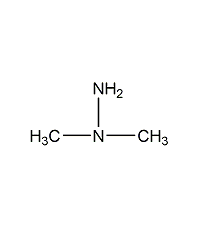
1,1-dimethylhydrazine 1,1-dimethylhydrazine

1,1-dimethylhydrazine structural formula

structural formula

business number 018f
molecular formula c2h8n2
molecular weight 60.08
label

none

numbering system

cas number:57-14-7

mdl number:mfcd00007628

einecs number:200-316-0

rtecs number:mv2450000

brn number:605261

pubchem number:24893497

physical property data

1. properties: colorless liquid with ammonia odor, hygroscopic. [1]

2. melting point (℃): -58[2]

3. boiling point (℃): 63.9[3]

4. relative density (water=1): 0.78 (25℃)[4]

5. relative vapor density (air = 1): 2.1[5]

6. saturated vapor pressure (kpa): 16.4 (20℃)[6]

7. heat of combustion (kj/mol): -1979[7]

8. critical temperature (℃): 250[8]

9. critical pressure (mpa): 5.42[9]

10. octanol/water partition coefficient: -1.19[10]

11. flash point (℃): -15 (cc) [11]

12 .ignition temperature (℃): 249[12]

13. explosion limit (%): 95[13]

14. lower explosion limit (%): 2.0[14]

15. solubility: miscible with water, miscible with dimethylformamide, ethanol, and ether ,hydrocarbon. [15]

16. refractive index (25ºc): 1.4508

17. ignition point (ºc): 249

18. heat of evaporation (kj/mol): 35.02

19. heat of fusion (kj/mol): 10.08

20. heat of generation (kj/mol): 49.37

toxicological data

1. acute toxicity[16]

ld50: 122mg/kg (rat oral); 1060mg/kg (rabbit dermal )

lc50: 252ppm (rat inhalation, 4h)

2. irritation no information available

3 .subacute and chronic toxicity [17] dogs inhaled 12.5mg/m3, 6 hours a day, 5 times/week, 26 weeks, weight loss and lethargy , mild anemia.

4. mutagenicity [18] microbial mutagenicity: salmonella typhimurium 42 μmol/dish. dna repair: e. coli 600μg/dish. dna damage: human fibroblasts 300 μmol/l.

5. carcinogenicity [19] iarc carcinogenicity comment: g2b, suspected carcinogen in humans.

ecological data

1. ecotoxicity[20]

lc50: 11.35mg/l (96h) (channel catfish); 7.85mg/l ( 96h) (fathead minnow, 30d); 38mg/l (24h) (water fleas)

2. biodegradability[21]

aerobic biodegradation (h): 192~528

anaerobic biodegradation (h): 768~2112

3. abiotic degradation properties[22]

photooxidation half-life in air (h): 0.8~7.7

molecular structure data

1. molar refractive index: 18.57

2. molar volume (cm3/mol): 72.4

3. isotonic specific volume (90.2k ): 166.4

4. surface tension (dyne/cm): 27.8

5. polarizability (10-24cm3): 7.36

compute chemical data

1. reference value for hydrophobic parameter calculation (xlogp): -0.5

2. number of hydrogen bond donors: 1

3. number of hydrogen bond acceptors: 2

p>

4. number of rotatable chemical bonds: 0

5. number of tautomers: none

6. topological molecule polar surface area 29.3

7. number of heavy atoms: 4

8. surface charge: 0

9. complexity: 11.5

10. number of isotope atoms: 0

11. determine the number of atomic stereocenters: 0

12. uncertain number of atomic stereocenters: 0

13. determine the number of chemical bond stereocenters: 0

14. number of uncertain chemical bond stereocenters: 0

15. number of covalent bond units: 1

properties and stability

1. chemical properties: it has strong reducing properties. contact with any oxidizing agent will cause combustion and explosion. strongly hygroscopic. it reacts with acid to form salt; reacts with nitrous acid to form dimethylamine; reacts with aldehydes and ketones to form hydrazone.

2. highly toxic and can cause cancer. after vapor inhalation, irritation symptoms of the nasal cavity and throat, difficulty breathing, nausea, severe vomiting and neurological symptoms, neurasthenia, unsteady gait, convulsions, coma, etc. may occur. eye manifestations include mild conjunctivitis. the oral ld50 of white mice is 265mg/kg. the time-weighted average allowable concentration of toxic substances in the air in the workplace is 0.5mg/m3; the allowable concentration for short-term exposure is 1.5mg/m3. there is no specific antidote for poisoning, only symptomatic treatment. the u.s. occupational safety and health administration stipulates that the maximum allowable exposure concentration in the air is 1mg/m3.

3. stability[23] stable

4. incompatible substances[24] oxidants, copper and its alloys, aluminum, iron, iron salts

5. conditions to avoid contact [25] heating

6. polymerization hazard[26] no polymerization

storage method

storage precautions[27] store in a cool, well-ventilated special warehouse, and implement the “two people to send and receive, and two people to keep” system. keep away from fire and heat sources. the storage temperature should not exceed 37°c. keep container tightly sealed. they should be stored separately from oxidants, metal powders, and food chemicals, and avoid mixed storage. use explosion-proof lighting and ventilation facilities. it is prohibited to use mechanical equipment and tools that are prone to sparks. the storage area should be equipped with emergency release equipment and suitable containment materials.

synthesis method

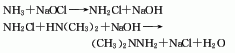
1. this product can be synthesized by reacting ammonia, amine chloride and dimethylamine as raw materials. first, ammonia water and sodium hypochlorite are respectively sent to the one-step reactor for reaction to generate chlorinated amine, and then the chlorinated amine is sent to the two-step reactor to be synthesized with the dimethylamine aqueous solution to generate an aqueous solution of undimethylhydrazine, and then the synthetic liquid is sent to enter a series of distillation towers for further distillation and distillation to remove excess ammonia, dimethylamine and partial hydrazone. after adding alkali for concentration and degassing, the finished product is obtained.

2. preparation of n, n-dimethylhydrazine
in a 5-liter round-bottomed flask equipped with a mechanical stirrer, dropping funnel and thermometer, add 200 grams (2.7 moles) of nitrosodimethylamine, 3 liters of water and 650 grams (10 grams of atoms) 100% zinc powder. the reaction mixture was heated in a water bath to maintain the temperature at 25-30°c, and 1 liter (14 moles) of 85% acetic acid was added dropwise with stirring for about 2 hours. then heat at 60°c for 1 hour, cool, filter out excess zinc powder, wash the combined aqueous solution with a small amount of water, place it in a 12-liter flask for steam distillation, install a dropping funnel on the flask, and add 1000 grams of hydroxide from the funnel the concentrated sodium solution makes the aqueous solution obviously alkaline, and steam distillation is carried out until the distillate has only a weak reducing effect on fehling’s solution. about 5 to 6 liters of distillate is enough to completely take out dimethylhydrazine.
after the distillate is treated with 650 ml of concentrated hydrochloric acid, it is concentrated under reduced pressure and on a steam bath until the residue becomes slurry. the slurry is dropped onto a large excess of solid sodium hydroxide, and then distilled until the temperature rises to 100°c, a concentrated aqueous solution of dimethylhydrazine can be obtained. if potassium hydroxide is added to the concentrated aqueous solution of dimethylhydrazine, left to dry, and distilled again, the distillate is collected in a receiver containing barium hydroxide, left for a few days, and then distilled to collect the 62~65°c/765mm fraction. that is anhydrous dimethylhydrazine. if the slurry is treated with absolute ethanol, white crystals of dimethylhydrazine hydrochloride can be obtained.

purpose

1. this product is used to produce plant growth regulators, and its phenolate can reduce the deposition of lubricating salts. it can also be used to absorb acidic gases, and can also be used as analytical reagents, high-energy fuels, and solvents.

2. carbonyl protecting reagent. used in numerous ring-enlarging reactions, alkylation of n, n-dimethylhydrazone, monoalkylation of α, β-unsaturated ketones and conversion of aldehydes into nitriles.

3. used in chemical synthesis, as a stabilizer of organic peroxides, acid gas absorbent, and also used in photography and agriculture. [28]

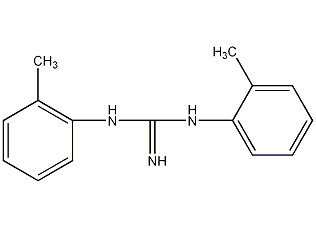
1,3-di-o-tolylguanidine 1,3-di(o-tolyl)guanidine

1,3-di-o-tolylguanidine structural formula

structural formula

business number 02c3
molecular formula c15h17n3
molecular weight 239.32
label

di-o-toluene guanidine,

2 o-toluene guanidine,

guanidine vulcanization accelerator

numbering system

cas number:97-39-2

mdl number:mfcd00008513

einecs number:202-577-6

rtecs number:mf1400000

brn number:none

pubchem number:24852467

physical property data

1. properties: white crystalline powder, odorless, slightly bitter, non-toxic.

2. relative density (g/ml, 20℃): 1.10-1.02

3. melting point (ºc): 178~179

4. boiling point (ºc, kpa):

5. critical temperature (ºc): 141℃

6. solubility: soluble in chloroform, acetone, ethanol, slightly soluble in benzene, insoluble in water, gasoline and carbon tetrachloride.

toxicological data

acute toxicity: rat oral ld50:500mg /kg; mouse peritoneal cavityld5025mg/kg; rabbit orally ldl080mg/kg; breastfeeding orally administered to animals ldl0120mg /kg;

ecological data

this substance is slightly hazardous to water.

molecular structure data

1. molar refractive index: 74.22

2. molar volume (cm3/mol): 221.5

3. isotonic specific volume (90.2k ): 555.5

4. surface tension (dyne/cm): 38.5

5. dielectric constant:

6. dipole moment (10-24cm3):

7. polarizability: 29.42

calculate chemical data

1. reference value for hydrophobic parameter calculation (xlogp): 3.1

2. number of hydrogen bond donors: 2

3. number of hydrogen bond acceptors: 1

4. number of rotatable chemical bonds: 3

5. mutual interactions number of isomers: 2

6. topological molecule polar surface area 50.4

7. number of heavy atoms: 18

8. surface charge: 0

9. complexity: 288

10. number of isotope atoms: 0

11. determine the number of atomic stereocenters: 0

12. the number of uncertain stereocenters of atoms: 0

13. the number of determined stereocenters of chemical bonds: 0

14. the number of uncertain stereocenters of chemical bonds: 0

15. number of covalent bond units: 1

properties and stability

avoid contact with strong oxidizing agents.

this product has low toxicity, slightly bitter taste and no odor.

it is very active at vulcanization temperature, especially when it is higher than the critical temperature, and has good vulcanization flatness.

soluble in chloroform, acetone, ethanol, slightly soluble in benzene, insoluble in gasoline and water.

storage method

stored in a cool, ventilated warehouse. keep away from fire and heat sources. keep container tightly sealed. should be kept away from oxidizer, do not store together. equipped with the appropriate variety and quantity of fire equipment. the storage area should be equipped with emergency release equipment and suitable containment materials.

synthesis method

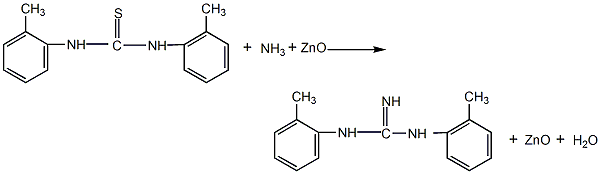
it can be obtained by the reaction of cyanogen chloride and o-toluidine and then hydrolysis, or by the reaction of o-toluidine and carbon disulfide to form di-o-toluidine thiourea , obtained by desulfurizing with lead oxide in ammonia water.

purpose

can be used for natural rubber and diene synthetic rubber.

this product is an important active agent for acidic accelerators, especially thiazole and sulfenamide accelerators. it has a super accelerator effect when used together with accelerator m. mainly used for thick-walled products, tread rubber, buffer layer, rubber roller covering rubber, etc.

1,3-diphenyl-1,1,3,3-tetramethyldisiloxane 1,3-diphenyl-1,1,3,3-tetramethyldisiloxane

1,3-diphenyl-1,1,3,3-tetramethyldisiloxane  Structural formula

1,3-diphenyl-1,1,3,3-tetramethyldisiloxane  structural formula

structural formula

business number 017e
molecular formula c16h22osi2
molecular weight 286.52
label

1,1,3,3-tetramethyl-1,3-diphenyldisiloxane

numbering system

cas number:56-33-7

mdl number:none

einecs number:200-265-4

rtecs number:jm9236000

brn number:none

pubchem id:none

physical property data

none yet

toxicological data

1, reproductive toxicity: oral administration to male rats tdlo: 700mg/kg7days before mating;

ecological data

none yet

molecular structure data

5. molecular property data:

1. molar refractive index: 89.23

2. molar volume (m3/mol):293.3

3. isotonic specific volume (90.2k):678.1

4. surface tension (dyne/cm):28.5

5. polarizability10-24cm3): 35.37

calculate chemical data

1. reference value for hydrophobic parameter calculation (xlogp): none

2. number of hydrogen bond donors: 0

3. number of hydrogen bond acceptors: 1

4. number of rotatable chemical bonds: 4

5. number of tautomers: none

6. topological molecule polar surface area 9.2

7. number of heavy atoms: 19

8. surface charge: 0

9. complexity: 249

10. number of isotope atoms: 0

11. determine the number of atomic stereocenters: 0

12. uncertain number of atomic stereocenters: 0

13. determine the number of chemical bond stereocenters: 0

14. number of uncertain chemical bond stereocenters: 0

15. number of covalent bond units: 1

properties and stability

none yet

storage method

none yet

synthesis method

none yet

purpose

none yet

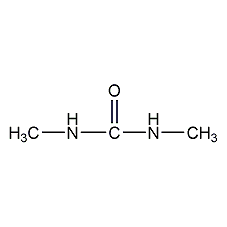
1,3-dimethylurea 1,3-dimethylurea

1,3-dimethylurea structural formula

structural formula

business number 02ax
molecular formula c3h8n2o
molecular weight 88.11
label

n,n’-dimethylurea,

n,n′-dimethylurea,

(ch3nh)2co

numbering system

cas number:96-31-1

mdl number:mfcd00008286

einecs number:202-498-7

rtecs number:ys9868000

brn number:1740672

pubchem id:none

physical property data

1. character: white crystal

2. density (g/ml, 20℃): 1.142

3. relative vapor density (g/ml, air=1) : undetermined

4. melting point (ºc): 106

5. boiling point (ºc, normal pressure): 268-270

6. boiling point (ºc , kpa): not determined

7. refractive index: not determined

8. flash point (ºc): 157

9. specific rotation (º ): undetermined

10. autoignition point or ignition temperature (ºc): undetermined

11. vapor pressure (mmhg,ºc): undetermined

12. saturated vapor pressure (kpa, ºc): undetermined

13. heat of combustion (kj/mol): undetermined

14. critical temperature (ºc): undetermined

15. critical pressure (kpa): undetermined

16. log value of oil-water (octanol/water) partition coefficient: undetermined

17. explosion upper limit (%, v/v): undetermined

18. explosion lower limit (%, v/v): undetermined

19. solubility: soluble in water, ethanol , acetone, benzene and ethyl acetate, etc., are insoluble in ether and gasoline.

toxicological data

1. acute toxicity: rat ld50: >2mg/kg; mouse intraperitoneal ldlo: 4962mg/kg;

2. reproductive toxicity

rat oral tdlo : 2mg/kg (12 days after conception in female rats); oral tdlo in mice: 2mg/kg (10 days after conception in female rats);

3. mutagenicity

chlamydia gene mutation: 400mmol/l;

dna suppression of human lymphocytes: 40mmol/l;

ecological data

general remarks

water hazard class 1 (german regulations) (self-assessment via list) the substance is slightly hazardous to water.

do not allow undiluted or large amounts of product to come into contact with groundwater, waterways or sewage systems.

even extremely small amounts of product seeping into the ground can pose a hazard to drinking water

do not discharge materials into the surrounding environment without government permission.

molecular structure data

1. molar refractive index: 23.16

2. molar volume (cm3/mol): 92.8

3. isotonic specific volume (90.2k ): 212.4

4. surface tension (dyne/cm): 27.4

5. polarizability (10-24cm3): 9.18

compute chemical data

1. reference value for hydrophobic parameter calculation (xlogp): none

2. number of hydrogen bond donors: 2

3. number of hydrogen bond acceptors: 1

4. number of rotatable chemical bonds: 0

5. number of tautomers: 2

6. topological molecule polar surface area 41.1

7. number of heavy atoms: 6

8. surface charge: 0

9. complexity: 46.8

10. number of isotope atoms: 0

11. determine the number of atomic stereocenters: 0

12. uncertain number of atomic stereocenters: 0

13. determine the number of chemical bond stereocenters: 0

14. number of uncertain chemical bond stereocenters: 0

15. number of covalent bond units: 1

properties and stability

1. avoid contact with oxides.

2.this product is slightly toxic. packed in paper bags, 45kg per bag. store and transport as general chemicals.

storage method

store in a cool, ventilated warehouse. keep away from fire and heat sources. keep container tightly sealed. should be kept away from oxidizer, do not store together. equipped with the appropriate variety and quantity of fire equipment. the storage area should be equipped with emergency release equipment and suitable containment materials.

synthesis method

purpose

pharmaceutical intermediates, also used in the production of fiber treatment agents. it is used in medicine to synthesize theophylline, caffeine and nifekaran hydrochloride.

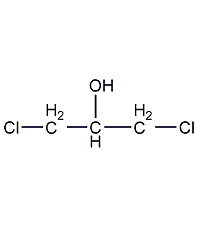
1,3-dichloro-2-propanonl 1,3-dichloro-2-propanonl

1,3-dichloro-2-propanol structural formula

structural formula

business number 02as
molecular formula c3h6cl2o
molecular weight 128.99
label

α,γ-dichloroglycerol,

ch2clch(oh)ch2cl,

glycerol-α,γ-dichlorohydrin,

sym-dichloroisopropyl alcohol,

dichlorohydroxypropane,

solvents for nitrocellulose spray paints, paints and varnishes,

celluloid adhesive

numbering system

cas number:96-23-1

mdl number:mfcd00000951

einecs number:202-491-9

rtecs number:ub1400000

brn number:1732063

pubchem number:24862332

physical property data

1. properties: colorless and transparent liquid with ether smell.

2. density (g/ml, 25/4℃): 1.3587

3. relative vapor density (g/ml, air=1): 4.45

4. melting point (ºc): -4

5. boiling point (ºc, normal pressure): 176

6. refractive index (n20ºc): 1.4837

7. flash point (ºc): 73.9

8. vapor pressure (kpa, 28ºc): 0.13

9. solubility: 11% dissolved in water at 19℃. miscible with alcohol and ether. soluble in vegetable oils and most organic solvents.

10. relative density (20℃, 4℃): 1.3638

11. refractive index at room temperature (n25): 1.4817

12. the liquid phase standard claims heat (enthalpy) (kj·mol-1): -385.3

toxicological data

1. skin/eye irritation: open irritation test: rabbit, skin contact: 10mg/24h, severity of reaction: mild.

2. acute toxicity: rat oral ld50: 110mg/kg; rat inhalation lclo: 125ppm/4h; mouse oral ld50: 25mg/kg; rabbit skin contact ld50: 800μl/ kg;

3. chronic toxicity/carcinogenicity: rat oral tdlo: 4550mg/kg/2y-c;

4. mutagenicity: microbial salmonella typhimurium mutation: 1μmol/plate; e. coli mutation: 30μmol/tube;

                                                                                                           . mouse meridian lung sister chromosome exchange: 250 μmol/l;

5. it is a moderately toxic species and can easily invade the body through the respiratory tract and skin. acute poisoning may occurdizziness, drunkenness, and drowsiness. a few hours later, epigastric pain, vomiting, increased body temperature, confusion, and decreased urine output occurred. symptoms such as nasal and oral mucosa and subcutaneous bleeding, mild yellowing of the skin all over the body, fast and thin pulse, and drop in blood pressure may subsequently occur. tj 36-79 stipulates that the maximum allowable concentration in workshop air is 5 mg/m3.

ecological data

this substance is slightly hazardous to water.

molecular structure data

1. molar refractive index: 27.13

2. molar volume (cm3/mol): 98.7

3. isotonic specific volume (90.2k ): 242.5

4. surface tension (dyne/cm): 36.4

5. dielectric constant:

6. dipole moment (10-24cm3):

7. polarizability: 10.75

compute chemical data

1. reference value for hydrophobic parameter calculation (xlogp): 0.8

2. number of hydrogen bond donors: 1

3. number of hydrogen bond acceptors: 1

4. number of rotatable chemical bonds: 2

5. number of tautomers: none

6. topological molecule polar surface area 20.2

7. number of heavy atoms: 6

8. surface charge: 0

9. complexity: 28

10. number of isotope atoms: 0

11. determine the number of atomic stereocenters: 0

12. uncertain number of atomic stereocenters: 0

13. determine the number of chemical bond stereocenters: 0

14. number of uncertain chemical bond stereocenters: 0

15. number of covalent bond units: 1

properties and stability

avoid contact with strong acids, strong oxidants, strong reducing agents, acid chlorides, and acid anhydrides. in case of fire, it produces highly toxic phosgene. it is highly hygroscopic and releases hydrogen chloride quickly when it comes into contact with water. non-corrosive to metals when dry.

chemical properties: 1,3-dichloro-2-propanol rapidly removes hydrogen chloride in alkaline solution to generate 3-chloro-1,2-epoxypropane. oxidation with sodium dichromate and sulfuric acid produces α, α′-dichloroacetone. oxidation with concentrated sulfuric acid produces chloroacetic acid. heating in excess ethanol and sodium hydroxide solution produces 1,3-diethoxy-2-propanol.

storage method

store in a cool, ventilated warehouse. keep away from fire and heat sources. they should be stored separately from oxidants, reducing agents, acids, and food chemicals, and avoid mixed storage. equipped with the appropriate variety and quantity of fire equipment. the storage area should be equipped with emergency release equipment and suitable containment materials.

synthesis method

1. obtained from the reaction of propylene chloride and hypochlorous acid.

2. obtained from the reaction of glycerol and hydrogen chloride in the presence of glacial acetic acid. raw material consumption quota: glycerol 796kg/t, hydrogen chloride 781.2kg/t, glacial acetic acid 66.2kg/t.

refining method: refined by vacuum distillation.

3. preparation method:

add 90% glycerol (2) 500g (4.9mol) and 10g acetic acid into the weighed reaction bottle, install a vent tube deep into the bottom of the bottle, heat the oil bath, and control the temperature of the oil bath to 100 ~110℃. dry hydrogen chloride gas (prepared by the reaction of ammonium chloride and sulfuric acid) is introduced. hydrogen chloride gas is absorbed quickly at the beginning, and gradually slows n over time. when the mass increases by about 440g, stop passing hydrogen chloride gas. after cooling, the hydrogen chloride is extracted under reduced pressure. slowly add solid sodium carbonate to neutralize the acid in the reaction system until it becomes weakly alkaline. water can be added appropriately to facilitate the reaction with sodium carbonate, about 200ml of water. the water layer was separated, and then distilled under reduced pressure to collect the fraction below 68°c/1.65kpa (about 110g) and the fraction between 68 and 75/1.65kpa (about 385g). the water in the first fraction is removed and re-distilled, and the 68-75/1.65kpa fraction is collected to obtain about 50g of product. the product of this fraction was re-distilled, and the fraction of 70~73/1.65kpa was collected to obtain 350g of 1,3-dichloro-2-propanol (1), with a yield of 55%. note: ① 1,3-dichloro-2-propanol can also be prepared by reacting allyl chloride and hypochlorous acid. the reaction formula is as follows. [1]

purpose

used in the synthesis of the antiviral drug ganciclovir, used as a solvent for cellulose acetate and ethyl fiber, and also used in the manufacture of epoxy resin, ion exchange resin, etc. used as solvent for nitrocellulose spray paint, paint, varnish, and celluloid adhesive. also used to prepare ion exchange resin and 3-chloro-1,2-epoxypropane, etc.

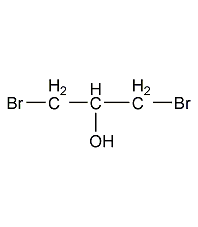
1,3-dibromo-2-propanol 1,3-dibromo-2-propanol

1,3-dibromo-2-propanol structural formula

1,3-dibromo-2-propanol structural formula

structural formula

business number 02aq
molecular formula c3h6br2o
molecular weight 217.89
label

1,3-dibromoisopropanol,

1,3-dibromo-2-hydroxypropane,

1,3-dibromo-2-hydroxypropane,

1,3-dibromo-isopropylalcohol,

multifunctional solvents,

raw materials for organic synthesis

numbering system

cas number:96-21-9

mdl number:mfcd00000216

einecs number:202-489-8

rtecs number:ub0200000

brn number:none

pubchem number:24863033

physical property data

1. properties: colorless oily liquid with special odor.

2. density (g/ml, 25/4℃): 2.1202

3. boiling point (ºc, normal pressure): 219 (partially decomposed)

4. boiling point (ºc, 5kpa): 124

5. boiling point (ºc, 0.9kpa): 82~83

6. refractive index (25ºc): 1.5495

7. flash point (ºc): 46

8. solubility: soluble in alcohol and ether, insoluble in water.

9. relative density (20℃, 4℃): 2.1364

10. refractive index at room temperature (n20): 1.5531

toxicological data

1. acute toxicity: mouse intraperitoneal ld50: 150mg/kg;

2. mutagenicity: microbial salmonella typhimurium mutation: 100μmol/plate; cellular dna inhibition: 1600μmol/l;

ecological data

none

molecular structure data

1. molar refractive index: 32.90

2. molar volume (cm3/mol): 102.3

3. isotonic specific volume (90.2k ): 269.8

4. surface tension (dyne/cm): 48.4

5. dielectric constant:

6. dipole moment (10-24cm3):

7. polarizability: 13.04

compute chemical data

1. reference value for hydrophobic parameter calculation (xlogp): 1.1

2. number of hydrogen bond donors: 1

3. number of hydrogen bond acceptors: 1

4. number of rotatable chemical bonds: 2

5. number of tautomers: none

6. topological molecule polar surface area 20.2

7. number of heavy atoms: 6

8. surface charge: 0

9. complexity: 28

10. number of isotope atoms: 0

11. determine the number of atomic stereocenters: 0

12. uncertain number of atomic stereocenters: 0

13. determine the number of stereocentersnumber of � bond stereocenters: 0

14. number of uncertain chemical bond stereocenters: 0

15. number of covalent bond units: 1

properties and stability

irritating. it will oxidize and turn yellow if left in the air for a long time.

storage method

none

synthesis method

obtained from the reaction of glycerin with red phosphorus and bromine. mix glycerol and red phosphorus evenly, add bromine dropwise while stirring, and cause an exothermic reaction with a temperature of about 80°c. after the addition of bromine, leave it overnight and distill under reduced pressure. the distillate is washed twice with 10% sea wave, dried with anhydrous sodium carbonate, filtered off the desiccant and then fractionated. the 110-112°c (2.66kpa) fraction is collected. finished product.

purpose

used as solvent and organic synthesis intermediate.

bdmaee:bis (2-dimethylaminoethyl) ether

cas no:3033-62-3

china supplier

for more information, please contact the following email:

email:sales@newtopchem.com

email:service@newtopchem.com

email:technical@newtopchem.com

BDMAEE Manufacture !