1,2,3-trichloropropene (cis-trans isomer mixture)

1,2,3-trichloropropene (cis-trans isomer mixture) structural formula

structural formula

business number 02an
molecular formula c3h3cl3
molecular weight 145
label

aliphatic halogenated derivatives

numbering system

cas number:96-19-5

mdl number:none

einecs number:none

rtecs number:ud2450000

brn number:none

pubchem id:none

physical property data

1. properties: colorless liquid.

2. density (g/ml, 20℃): 1.414

3. relative vapor density (g/ml, air=1): undetermined

4. melting point (ºc): undetermined

5. boiling point (ºc, normal pressure): 142

6. boiling point (ºc, kpa): undetermined

7. refractive index: 1.5030

8. flash point (ºc): undetermined

9. specific rotation (º): undetermined

10. autoignition point or ignition temperature (ºc): undetermined

11. vapor pressure (mmhg, ºc): undetermined

12. saturated vapor pressure (kpa, ºc ): undetermined

13. heat of combustion (kj/mol): undetermined

14. critical temperature (ºc): undetermined

15. critical pressure (kpa): undetermined

16. log value of oil-water (octanol/water) distribution coefficient: undetermined

17. explosion upper limit (%, v/v): undetermined

18. lower explosion limit (%, v/v): undetermined

19. solubility: insoluble in water. soluble in ethanol and chloroform.

toxicological data

1. skin/eye irritation

open irritation test: rabbit, skin contact: 10mg/24h, severity of reaction: severe.

standard draize test: rabbit, eye contact: 50 mg, severity of reaction: moderate.

2. acute toxicity: rat oral ld50: 616mg/kg; rat inhalation lclo: 500ppm/4h; rabbit skin contact ld50: 640μl/kg;

3 , other multi-dose toxicity: rats inhaled tclo: 36ppm/6h/4w-c;

4. mutagenicity

mutation of microorganism salmonella typhimurium: 1μmol/plate;

dna inhibition of human hela cells: 1700μmol/l;

ecological data

none

molecular structure data

1. molar refractive index: 30.39

2. molar volume (cm3/mol): 105.6

3. isotonic specific volume (90.2k ): 250.2

4. surface tension (dyne/cm): 31.4

5. polarizability (10-24cm3): 12.04

compute chemical data

1. hydrophobic parameter calculation reference value (xlogp): 2.2

2. number of hydrogen bond donors: 0

3. number of hydrogen bond acceptors: 0

4.  number of rotatable chemical bonds: 1

5, number of tautomers:

6, topological molecular polar surface area (tpsa): 0

7 , number of heavy atoms: 6

8, surface charge: 0

9, complexity: 57.1

10, number of isotope atoms: 0

11. determine the number of atomic stereocenters: 0

12. uncertain number of atomic stereocenters: 0

13. determine the number of chemical bond stereocenters: 1

p>

14. number of uncertain chemical bond stereocenters: 0

15. number of covalent bond units: 1

properties and stability

toxic, irritating to human lungs and stomach. because the product contains a small amount of chloroacetone, it has tear-inducing properties. protective equipment should be worn during operation and should be replaced immediately if it is attached to clothing.
 

storage method

for personal use, it is transported by pipeline; for export, it can be packed in iron drums.

synthesis method

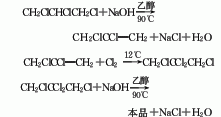
the preparation method is to add tetrachloropropane and ethanol into the reaction kettle, stir and heat to reflux, add potassium hydroxide in batches within 1 hour, complete the addition and reflux for 2 hours, cool, filter, and wash the filtrate twice with water. the water layer is extracted with dichloroethane, combined with the oil layer, desolvated, and distilled under reduced pressure. the 74-91°c/13.3 kpa fraction is collected as the finished product.

purpose

used as an intermediate for the herbicide oatmein.

it is mainly used as an intermediate for the pesticides and herbicides ovenamidine and odontamine no. 1, and is also a raw material for manufacturing special plastics.

extended-reading:https://www.bdmaee.net/wp-content/uploads/2022/08/dibutyltin-dichloride-cas683-18-1-di-n-butyltin-dichloride.pdf
extended-reading:https://www.bdmaee.net/nt-cat-la-210-catalyst-cas10861-07-1-newtopchem/
extended-reading:https://www.bdmaee.net/tris-dimethylaminopropyl-hexahydrotriazine-cas-15875-13-5-triazine-catalyst/
extended-reading:https://www.cyclohexylamine.net/dabco-mp601-delayed-polyurethane-catalyst/
extended-reading:https://www.newtopchem.com/archives/category/products/page/76
extended-reading:https://www.newtopchem.com/archives/44564
extended-reading:https://www.newtopchem.com/archives/44570
extended-reading:https://www.newtopchem.com/archives/185
extended-reading:https://www.bdmaee.net/dinbutyltindichloride/
extended-reading:https://www.bdmaee.net/wp-content/uploads/2022/08/-bl-17-niax-a-107-jeffcat-zf-54.pdf

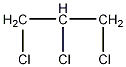
1,2,3-trichloropropane

1,2,3-trichloropropane structural formula

structural formula

business number 02am
molecular formula c3h5cl3
molecular weight 147
label

aliphatic halogenated derivatives

numbering system

cas number:96-18-4

mdl number:mfcd00000946

einecs number:202-486-1

rtecs number:tz9275000

brn number:1732068

pubchem number:24869995

physical property data

1. properties: colorless to light yellow liquid with chloroform smell. [1]

2. melting point (℃): -14.7[2]

3. boiling point (℃): 156.8[3]

4. relative density (water=1): 1.39 (20℃)[4]

5. relative vapor density (air = 1): 5.0[5]

6. saturated vapor pressure (kpa): 1.33 (46℃)[6]

7. heat of combustion (kj/mol): -1733.0[7]

8. critical pressure (mpa): 3.87[8]

9. octanol/water partition coefficient: 2.27[9]

10. flash point (℃): 71.1 (cc); 82.2 (oc) [10]

11. ignition temperature (℃): 304[11]

12. explosion upper limit (%): 12.6[12]

13. explosion lower limit (%): 3.2[13]

14. solubility: slightly soluble in water, soluble in ethanol, ether, oils, lipids, and paraffin. [14]

15. viscosity (mpa·s, 20ºc): 0.2505

16. flash point (ºc, closed): 73.3

17. flash point (ºc, open): 78.9

18. vapor pressure (kpa, 9.0ºc): 0.13

19. vapor pressure (kpa, 46.0ºc ): 1.33

20. heat of evaporation (kj/mol, b.p.): 40.56

21. heat of combustion (kj/mol, liquid): 1735.9

22. specific heat capacity (kj/(kg·k), 20ºc): 1.235

23. volume expansion coefficient (k-1, 20ºc): 0.00096

24. relative density (25℃, 4℃): 1.3832

25. refractive index at room temperature (n25): 1.4812

26. solubility parameter (j·cm-3)0.5: 20.148

27.van der waals area (cm2·mol -1): 8.690×10⁹

28. van der waals volume (cm3·mol -1): 62.720

29. gas phase standard claims heat (enthalpy) (kj·mol-1): -182.9

30 .liquid phase standard claimed heat (enthalpy) (kj·mol-1): -230.6

31. liquid phase standard hot melt (j·mol-1·k-1): 172.4

toxicological data

1. acute toxicity[15]

ld50: 108μl (150mg)/kg (rat oral); 369mg/kg ( mouse oral); 372μl (517mg)/kg (rabbit transdermal)

lc50: 3400mg/m3 (mouse inhalation, 2h)

2. irritation[16]

rabbit transdermal: 500μl (24h), mild irritation.

rabbit eye: 100μl, moderate irritation.

3. mutagenicity [17] microbial mutagenicity: salmonella typhimurium 500ng/dish. dna damage: human lymphocytes 2mmol/l. cytogenetic analysis: rats inhaled 800μg/l. sister chromatid exchange: hamster lung 300 μmol/l.

4. carcinogenicity[18] iarc carcinogenicity��comment: g2a, possible human carcinogen.

ecological data

1. ecotoxicity[19]

lc50: 42mg/l (7d) (rainbow killifish); 109mg/l (48h) (medaka)

ec50: 45mg/l (24h) (daphnia)

2. biodegradability [20]

aerobic biodegradation (h): 4320~8640

anaerobic biodegradation (h): 17280~34560

3. non-biodegradability[21]

photooxidation half-life in air (h): 61~613

first-order hydrolysis half-life (h ): 44

4. other harmful effects [22] this substance is harmful to the environment and has an accumulation effect in groundwater.

molecular structure data

1. molar refractive index: 30.45

2. molar volume (cm3/mol): 112.5

3. isotonic specific volume (90.2k ): 264.2

4. surface tension (dyne/cm): 30.3

5. polarizability: 12.07

compute chemical data

1. reference value for hydrophobic parameter calculation (xlogp): none

2. number of hydrogen bond donors: 0

3. number of hydrogen bond acceptors: 0

4. number of rotatable chemical bonds: 2

5. number of tautomers: none

6. topological molecule polar surface area 0

7. number of heavy atoms: 6

8. surface charge: 0

9. complexity: 25.2

10. number of isotope atoms: 0

11. determine the number of atomic stereocenters: 0

12. uncertain number of atomic stereocenters: 0

13. determine the number of chemical bond stereocenters: 0

14. number of uncertain chemical bond stereocenters: 0

15. number of covalent bond units: 1

properties and stability

1. it is slightly corrosive to metals. when water is present, it decomposes into highly corrosive hydrogen chloride. light can accelerate this decomposition. the acidity of 1,2,3-trichloropropane that has been stored or recycled for a long time should be checked before use. toxic gases are produced during pyrolysis or combustion, so contact with red-hot objects should be avoided.

2. when heated with solid potassium hydroxide, hydrogen chloride is removed, and the main product of the reaction is 1,3-dichloropropene and a small amount of 2,3-dichloropropene. it is heated under pressure with water or sodium bicarbonate aqueous solution in the presence of copper to generate glycerin.

3. stability[23] stable

4. incompatible substances[24] strong oxidizing agent, strong alkali

5. conditions to avoid contact[25] moist air, light, heat

6. polymerization hazard[26] no polymerization

7. decomposition products[27] hydrogen chloride

storage method

storage precautions[28] store in a cool, ventilated warehouse. keep away from fire and heat sources. keep container tightly sealed. they should be stored separately from oxidants, alkalis, and food chemicals, and avoid mixed storage. equipped with the appropriate variety and quantity of fire equipment. the storage area should be equipped with emergency release equipment and suitable containment materials.

synthesis method

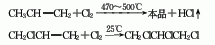
1. α-propylene chloride chlorination method: propylene is chlorinated at high temperature to obtain allyl chloride. after washing and separation, it is then chlorinated at low temperature and fractionated to obtain the finished product.

2. dichloroisopropanol law.

purpose

1. used to produce pesticides, organic synthesis, and gas chromatography comparison samples. used as a paint stripper for varnishes and coatings, and a solvent for engine cleaning. it can also be used as a raw material for pesticides such as chlormequat and oat di no. 1.

2. used as solvent and intermediate. [29]

extended-reading:https://www.bdmaee.net/dibutyltin-monobutyl-maleate/
extended-reading:https://www.morpholine.org/category/morpholine/page/5394/
extended-reading:https://www.bdmaee.net/niax-stannous-octoate-soft-foam-catalyst-/
extended-reading:https://www.morpholine.org/2-dimethylamineethanol/
extended-reading:https://www.cyclohexylamine.net/strong-gel-amine-catalyst-ne500-dabco-strong-gel-amine-catalyst/
extended-reading:https://www.bdmaee.net/wp-content/uploads/2022/08/129.jpg
extended-reading:https://www.newtopchem.com/archives/45071
extended-reading:https://www.newtopchem.com/archives/44112
extended-reading:https://www.bdmaee.net/dabco-mb20-bismuth-metal-carboxylate-catalyst-catalyst-dabco-mb20/
extended-reading:https://www.newtopchem.com/archives/44245

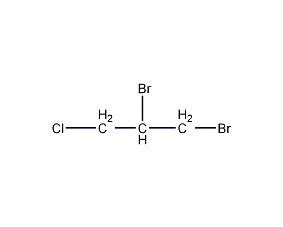
1,2-dibromo-3-chloropropane

1,2-dibromo-3-chloropropane structural formula

structural formula

business number 02ag
molecular formula c3h5br2cl
molecular weight 236.33
label

dibromochloropropane,

3-chloro-1,2-dibromopropane,

fumazone,

nemagon,

nemazont,

dibromochloropropane,

soil fumigant,

nematicides,

halogenated hydrocarbon solvents

numbering system

cas number:96-12-8

mdl number:mfcd00039365

einecs number:202-479-3

rtecs number:tx8750000

brn number:1732077

pubchem number:24862844

physical property data

1. properties: light yellow liquid with pungent odor.

2. relative density (g/ml, 20/4℃): 2.081

3. relative vapor density (g/ml, air=1): 8.2

4. melting point (ºc): 6

5. boiling point (ºc, normal pressure): 200

6. boiling point (ºc, 1.33kpa): 196

7. refractive index (25ºc): 1.553

8. flash point (ºc): 77

9. saturated vapor pressure (kpa, 21ºc): 0.12

p>

10. solubility: slightly soluble in water, soluble in ethanol, acetone, hydrocarbons, etc. miscible with oils, dichloropropane and isopropyl alcohol.

toxicological data

1. irritation: rabbit transdermal: 10 g severe irritation. rabbit eye: 1% mild irritation.

2. acute toxicity: oral ld5o in rats: 170mg/kg

oral ld5o in mice: 260mg/kg

inhalation lc50 in rats: 154ppm, 4 hours 3. harmful to human body. it is highly toxic and has been found to be carcinogenic in oral tests on mice.

ecological data

this substance is harmful to the environment. special attention should be paid to the pollution of water and air. it is extremely destructive to the atmospheric ozone layer.

molecular structure data

1. molar refractive index: 36.21

2. molar volume (cm3/mol): 116.1

3. isotonic specific volume (90.2k ): 291.6

4. surface tension (dyne/cm): 39.6

5. dielectric constant:

6. dipole moment (10-24cm3):

7. polarizability: 14.35

compute chemical data

1. hydrophobic parameter calculation reference value (xlogp): 2.4

2. number of hydrogen bond donors: 0

3. number of hydrogen bond acceptors: 0

4. number of rotatable chemical bonds: 2

p>

5. number of tautomers:

6. topological molecular polar surface area (tpsa): 0

7. number of heavy atoms: 6

8. surface charge: 0

9. complexity: 32

10. number of isotope atoms: 0

11. determine the atomic configuration number of centers: 0

12. uncertain number of atomic stereocenters: 1

13. determined number of chemical bond stereocenters: 0

14. uncertain number of stereocenters of chemical bonds: 0

15, number of covalent bond units: 1

properties and stability

avoid contact with strong oxidizing agents.

storage method

store in a cool, ventilated warehouse. keep away from fire and heat sources. they should be stored separately from oxidants and food chemicals, and avoid mixed storage. equipped with the appropriate variety and quantity of fire equipment. the storage area should be equipped with emergency release equipment and suitable containment materials.

synthesis method

add 3-chloropropene and bromine at normal pressure and 10-25°c, and the reaction product is purified by vacuum distillation. add the original drug to the emulsifier and xylene, and emulsify at 55-60°c for half an hour to make an 80% emulsion. raw material consumption quota: 3-chloropropene (92%) 310kg/t, liquid bromine 600kg/t

purpose

mainly used as solvent, soil fumigant, and nematicide.

extended-reading:https://www.newtopchem.com/archives/category/products/page/163
extended-reading:https://www.newtopchem.com/archives/44507
extended-reading:https://www.bdmaee.net/wp-content/uploads/2022/08/newtop8.jpg
extended-reading:https://www.bdmaee.net/pc-cat-tka-metal-carboxylate-catalyst-nitro/
extended-reading:https://www.bdmaee.net/low-density-sponge-catalyst-smp/
extended-reading:https://www.bdmaee.net/pc-cat-np10-catalyst-n-dimethylaminopropyldiisopropanolamine/
extended-reading:https://www.bdmaee.net/lupragen-n400-catalyst-trimethylhydroxyethyl-ethylene-diamine-/
extended-reading:https://www.cyclohexylamine.net/strong-gel-amine-catalyst-bx405-low-odor-amine-catalyst-bx405/
extended-reading:https://www.bdmaee.net/wp-content/uploads/2022/08/124-2.jpg
extended-reading:https://www.newtopchem.com/archives/42953

1,2,3-tribromopropane

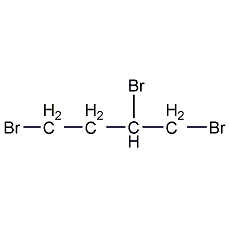
1,2,3-tribromopropane structural formula

structural formula

business number 02af
molecular formula c3h5br3
molecular weight 280.78
label

tribromopropane,

s-tribromopropane,

sym-tribromopropane,

brch2ch(br)ch2br,

nematicides,

halogenated hydrocarbon solvents,

aliphatic compounds

numbering system

cas number:96-11-7

mdl number:mfcd00017884

einecs number:202-478-8

rtecs number:tz8300000

brn number:1732082

pubchem number:24848905

physical property data

1. properties: colorless or light yellow liquid, irritating

2. density (g/ml, 20/4℃): 2.4209

3. relative density (25℃, 4℃): 2.4107

4. melting point (ºc): 76.2

5. boiling point (ºc, normal pressure): 220

6 . refractive index at room temperature (n25): 1.5836

7. refractive index (n20ºc): 1.5862

8. flash point (ºc): 94

9. specific rotation (º): undetermined

10. autoignition point or ignition temperature (ºc): undetermined

11. vapor pressure ( mmhg, ºc): undetermined

12. saturated vapor pressure (kpa, ºc): undetermined

13. heat of combustion (kj/mol): undetermined

14. critical temperature (ºc): undetermined

15. critical pressure (kpa): undetermined

16. oil-water (octanol/water) partition coefficient relationship value: undetermined

17. explosion upper limit (%, v/v): undetermined

18. explosion lower limit (%, v/v): undetermined

19. solubility: soluble in ethanol, ether and chloroform, insoluble in water

toxicological data

1. acute toxicity: rat oral ldlo: 500mg/kg;

2. reproductive toxicity

rat oral tdlo: 250mg/kg (male rats 5 days old before mating); rat intraperitoneal tdlo: 23869 μg/kg (male rats 1 day before mating);

3. mutagenicity

microbial salmonella typhimurium mutation: 1 μmol/plate ;

microbiological salmonella typhimurium mutation: 500μg/plate;

transperitoneal dna damage in rats: 1404μg/kg;

dna damage in rat testicles : 1μmol/l;

rat oral dominant lethal test: 250mg/kg/5d; toxic, harmful if inhaled or taken.

ecological data

this substance is slightly hazardous to water.

molecular structure data

1. molar refractive index: 39.10

2. molar volume (cm3/mol): 117.9

3. isotonic specific volume (90.2k): 305.3

4. surface tension (dyne/cm): 44.8

5. dielectric constant:

6. dipole moment (10-24cm3):

7. polarizability: 15.50

compute chemical data

1. hydrophobic parameter calculation reference value (xlogp): 2.6

2. number of hydrogen bond donors: 0

3. number of hydrogen bond acceptors: 0

4. number of rotatable chemical bonds: 2

5. number of tautomers:

6. topological molecular polar surface area (tpsa): 0

7. number of heavy atoms: 6

8. surface charge: 0

9. complexity: 25.2

10. number of isotope atoms: 0

11. determine the number of atomic stereocenters: 0

12. uncertain number of atomic stereocenters: 0

13. determine the number of chemical bond stereocenters number: 0

14. number of uncertain chemical bond stereocenters: 0

15. number of covalent bond units: 1

properties and stability

avoid contact with oxidants. avoid contact with skin as it may cause irritation.

storage method

store in a cool, dry, well-ventilated warehouse. keep away from fire and heat sources. keep container tightly sealed. should be kept away from oxidizer, do not store together. it should not be stored in large quantities or for long periods of time. it is prohibited to use mechanical equipment and tools that are prone to sparks. the storage area should be equipped with emergency release equipment and suitable containment materials.

synthesis method

1. preparation method:

in a reaction bottle equipped with a stirrer, reflux condenser (equipped with a calcium chloride drying tube), dropping funnel, and thermometer, add 182g (1.5mol) of allyl bromide (2) ), 250ml dry carbon tetrachloride. cool to -5°c in an ice-salt bath, add 255g (1.6 mol) of dry bromine dropwise from the dropping funnel, and control the dropping speed to raise the reaction solution to 0°c, and complete the addition in about 1.5 hours. slowly warm to room temperature and continue stirring for 30 min. the solvent was distilled under reduced pressure, and then the fraction at 92-93°c/1.33kpa was collected to obtain 400g of almost colorless liquid 1,2,3-tribromopropane (1), with a yield of 95%. note: ① allyl bromide is best treated before use. the treatment method is as follows: first dry with anhydrous calcium chloride, then distill, and collect the fraction at 69~72°c. [1]

purpose

used in nematicides, solvents, and organic synthesis intermediates.

extended-reading:https://www.newtopchem.com/archives/1845
extended-reading:https://www.morpholine.org/high-quality-n-dimethylaminopropyldiisopropanolamine-cas-63469-23-8-n-3-dimethyl-amino-propyl-n-n-diisopropanolamine/
extended-reading:https://www.cyclohexylamine.net/sponge-hardener/
extended-reading:https://www.bdmaee.net/cas-2273-43-0/
extended-reading:https://www.bdmaee.net/tertiary-amine-composite-catalyst/
extended-reading:https://www.bdmaee.net/benzyldimethylamine/
extended-reading:https://www.bdmaee.net/dabco-tetn-catalyst-cas280-57-9–germany/
extended-reading:https://www.newtopchem.com/archives/39970
extended-reading:https://www.bdmaee.net/tegoamin-bde-catalyst-cas121-54-0-degussa-ag/
extended-reading:https://www.bdmaee.net/niax-catalyst-a-400/

1,2-epoxyphenylethane

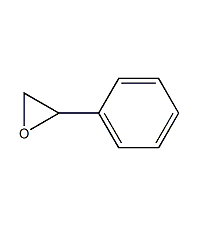
1,2-epoxyphenylene ethane structural formula

structural formula

business number 02ad
molecular formula c8h8o
molecular weight 120.15
label

epoxyphenylene oxide,

styrene epoxide,

α,β-epoxystyrene,

styrene-7,8-oxide,

phenyloxirane,

α,β-epoxystyrene,

1,2-epoxystyrene,

epoxy resin thinner,

ether and acetal solvents

numbering system

cas number:96-09-3

mdl number:mfcd00005121

einecs number:202-476-7

rtecs number:cz9625000

brn number:108582

pubchem number:24899628

physical property data

1. properties: colorless to light yellow liquid with aromatic smell.

2. relative density (g/ml, 25/4℃): 1.0469

3. relative vapor density (g/ml, air=1): 4.14

4. melting point (ºc): -37

5. boiling point (ºc, 101.3kpa): 194

6. boiling point (ºc, 3.33kpa): 91

p>

7. refractive index (20ºc): 1.535

8. flash point (ºc): 79

9. specific rotation (º): undetermined

7. p>

10. autoignition point or ignition temperature (ºc): 497.8

11. vapor pressure (mmhg, 20ºc): <1

12. saturated vapor pressure ( kpa, 20ºc): 0.048

13. heat of combustion (kj/mol): undetermined

14. critical temperature (ºc): undetermined

15 . critical pressure (kpa): undetermined

16. log value of oil-water (octanol/water) distribution coefficient: undetermined

17. explosion upper limit (%, v/v ): 22.0

18. lower explosion limit (%, v/v): 1.1

19. solubility: insoluble in water, miscible in methanol, ether, tetrachloride carbon, benzene, acetone, chloroform.

toxicological data

1. acute toxicity: rat oral ld50: 2000mg/kg; rabbit transdermal ld50: 2830mg/kg

2. can be absorbed into the body through inhalation, skin and ingestion. this substance irritates the eyes and skin, causes dizziness, drowsiness, confusion, vomiting, and causes skin allergies. this substance may be a human carcinogen under long-term or repeated exposure.

ecological data

this substance is harmful to the environment, and special attention should be paid to the pollution of water bodies.

molecular structure data

1. molar refractive index: 35.27

2. molar volume (cm3/mol): 108.4

3.� isotonic specific volume (90.2k): 278.0

4. surface tension (dyne/cm): 43.2

5. dielectric constant:

6. even polar distance (10-24cm3):

7. polarizability: 13.98

compute chemical data

1. hydrophobic parameter calculation reference value (xlogp): 1.6

2. number of hydrogen bond donors: 0

3. number of hydrogen bond acceptors: 1

4. number of rotatable chemical bonds: 1

5. number of tautomers:

6. topological molecular polar surface area (tpsa): 12.5

7. number of heavy atoms: 9

8. surface charge: 0

9. complexity: 94.7

10. number of isotope atoms: 0

11. determine the number of atomic stereocenters: 0

12. uncertain number of atomic stereocenters: 1

13. determine the number of chemical bond stereocenters number: 0

14. number of uncertain chemical bond stereocenters: 0

15. number of covalent bond units: 1

properties and stability

1. avoid contact with oxidants, acids, and alkalis. it is flammable and can form explosive mixtures with air.

2. chemical properties: under the action of acid, alkali or certain metal salts, the substance may polymerize when heated to 200°c.

3. for its toxicity and protection, please refer to ethylene oxide.

4. exist in tobacco leaves and smoke.

storage method

stored in a cool, ventilated warehouse. keep away from fire and heat sources. protect from direct sunlight. keep container sealed and strictly prohibited from contact with air. they should be stored separately from oxidants, acids, and alkalis, and avoid mixed storage. equipped with the appropriate variety and quantity of fire equipment. the storage area should be equipped with emergency release equipment and suitable containment materials.

stored in a cool, dry, ventilated warehouse, away from fire and heat sources, moisture-proof, sun-proof, and sealed. store and transport according to general chemical regulations.

packed in 200kg galvanized iron drum

synthesis method

1. mix 42g peroxybenzoic acid, 30g styrene and 400ml chloroform, and keep at 0℃ for 24h. take a sample to check and there should be a slight excess of peroxybenzoic acid. wash the reaction product with excess 10% sodium hydroxide solution to remove benzoic acid. then wash with water to remove alkali, dry over anhydrous sodium sulfate, collect the 188-192°c fraction by distillation, and obtain 24-26g of styrene oxide.

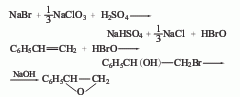
2. epoxyphenylene oxide is obtained from styrene, sodium bromide, sulfuric acid and liquid caustic soda through halogenation reaction, saponification reaction and distillation.

purpose

used as pharmaceutical and spice intermediates. it is used as an intermediate in the production of benzene glycol and its derivatives, and also as a diluent in the epoxy resin industry.

extended-reading:https://www.bdmaee.net/wp-content/uploads/2019/10/1-4.jpg
extended-reading:https://www.cyclohexylamine.net/polycat-9-trisdimethylaminopropylamine/
extended-reading:https://www.newtopchem.com/archives/39970
extended-reading:https://www.bdmaee.net/butyltintrichloridemincolorlessliq/
extended-reading:https://www.bdmaee.net/wp-content/uploads/2022/08/-rp208-high-efficiency-reaction-type-equilibrium-catalyst-reaction-type-equilibrium-catalyst.pdf
extended-reading:https://www.newtopchem.com/archives/1103
extended-reading:https://www.newtopchem.com/archives/39605
extended-reading:https://www.newtopchem.com/archives/category/products/page/102
extended-reading:https://www.newtopchem.com/archives/44031
extended-reading:https://www.newtopchem.com/archives/category/products/page/64

1,2,4,5-tetrachlorobenzene

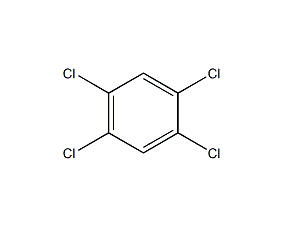
1,2,4,5-tetrachlorobenzene structural formula

structural formula

business number 02a7
molecular formula c6h2cl4
molecular weight 215
label

none

numbering system

cas number:95-94-3

mdl number:mfcd00000549

einecs number:202-466-2

rtecs number:db9450000

brn number:1618315

pubchem number:24848038

physical property data

1. character: white flakes[1]

2. melting point (℃): 139~142[2]

3. boiling point (℃): 243~246[3]

4. relative density (water=1): 1.73 (10℃)[4 ]

5. relative vapor density (air=1): 7.4[5]

6. saturated vapor pressure (kpa): <0.013 (25℃)[6]

7. critical temperature (℃): 489.8[7]

8 .critical pressure (mpa): 3.38[8]

9. octanol/water partition coefficient: 4.64[9]

10. flash point (℃): 155 (cc) [10]

11. solubility: insoluble in water, slightly soluble in ethanol, soluble in benzene and ether and chloroform. [11]

12. vapor pressure temperature (ºc, 5.33kpa): 146

13. vapor pressure temperature (ºc, 8.0kpa) :157.7

14. vapor pressure temperature (ºc, 13.3kpa): 173.5

15. vapor pressure temperature (ºc, 26.7kpa): 196

16. vapor pressure temperature (ºc, 53.3kpa): 220.3

17. vapor pressure temperature (ºc, 101.3kpa): 245

18. gas phase standard entropy (j ·mol-1·k-1): 393.60

19. gas phase standard hot melt (j·mol-1·k-1):144.79

toxicological data

1. acute toxicity[20] ld50: 1500mg/kg (rat oral)

2. irritation no data yet

3. subacute and chronic toxicity [21] rabbit inhalation contains 20% tetrachlorobenzene (concentration 4~ 5g/m3 or 8~10g/m3) powder for 1 to 17 days, resulting in a decrease in red blood cells and hemoglobin and an increase in lymphocytes. when rats were fed 0.005 mg/kg, the conditioned reflex activity was changed, the sulfhydryl content in the serum was reduced, and the liver function was slightly disordered.

ecological data

1. ecotoxicity[22]

lc50: 4.35mg/l (48h), 1.55mg/l (96h) (blue gill sunfish); 26.4mg/l (48h) (medaka)

2. biodegradability[23]

aerobic biodegradation (h): 672~4320

anaerobic biodegradation (h): 2880~17280

3. non-biodegradability [24]

photooxidation half-life in air (h): 763.1~7631

first-order hydrolysis half-life (h): >879a

4. bioaccumulation [25]

bcf: 2720~4830 (carp, exposure concentration 10ppb, exposure time 8 weeks ); 1650~3930 (carp, exposure concentration 1ppb, exposure time 8 weeks)

molecular structure data

1. molar refractive index: 45.83

2. molar volume (cm3/mol): 137.2

3. isotonic specific volume (90.2k ): 350.7

4. surface tension (dyne/cm): 42.6

5. dielectric constant:

6. dipole moment (10 -24cm3):

7. polarizability: 18.16

compute chemical data

1. reference value for hydrophobic parameter calculation (xlogp): none

2. number of hydrogen bond donors: 0

3. number of hydrogen bond acceptors: 0

4. number of rotatable chemical bonds: 0

5. number of tautomers: none

6. topological molecule polar surface area 0

7. number of heavy atoms: 10

8. surface charge: 0

9. complexity: 90.3

10. number of isotope atoms: 0

11. determine the number of atomic stereocenters: 0

12. uncertain number of atomic stereocenters: 0

13. determine the number of chemical bond stereocenters: 0

14. number of uncertain chemical bond stereocenters: 0

15. number of covalent bond units: 1

properties and stability

1. stability[26] stable

2. incompatible substances[27] strong oxidizing agent, strong alkali

3. conditions to avoid contact[28] heating

4. polymerization hazard[29] no polymerization

5. decomposition products[30] hydrogen chloride

storage method

storage precautions[31] store in a cool, ventilated warehouse. keep away from fire and heat sources. the packaging is sealed. they should be stored separately from oxidants, alkalis, and food chemicals, and avoid mixed storage. equipped with the appropriate variety and quantity of fire equipment. suitable materials should be available in the storage area to contain spills.

synthesis method

prepared from chlorination of o-dichlorobenzene.

purpose

used as an intermediate in organic synthesis. [32]

extended-reading:https://www.bdmaee.net/niax-ef-708-foaming-catalyst-/
extended-reading:https://www.newtopchem.com/archives/category/products/flexible-foams-catalyst
extended-reading:https://www.newtopchem.com/archives/44203
extended-reading:https://www.bdmaee.net/dabco-ne210-catalyst-cas10861-07-1–germany/
extended-reading:https://www.newtopchem.com/archives/44854
extended-reading:https://www.bdmaee.net/toyocat-daem-catalyst-/
extended-reading:https://www.cyclohexylamine.net/bismuth-neodecanoate-cas-251-964-6/
extended-reading:https://www.newtopchem.com/archives/39593
extended-reading:https://www.newtopchem.com/archives/40296
extended-reading:https://www.newtopchem.com/archives/44768

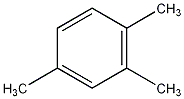
1,2,4-trimethylbenzene

1,2,4-trimethylbenzene structural formula

structural formula

business number 029f
molecular formula c9h12
molecular weight 120.19
label

pseudoanisolein,

pseudocumol,

pseudocumene,

asymmetrical trimethylbenzene,

for the synthesis of spices and dyes,

gas liquid chromatography reference materials,

hydrocarbon solvent

numbering system

cas number:95-63-6

mdl number:mfcd00008527

einecs number:202-436-9

rtecs number:dc3325000

brn number:1903005

pubchem number:24900445

physical property data

1. properties: colorless liquid with aromatic smell. [1]

2. melting point (ºc): -43.8[2]

3. boiling point (ºc): 168.9[3]

4. relative density (water = 1): 0.88[4]

5. relative vapor density (air=1): 4.1[5]

6. saturated vapor pressure (kpa): 1.33 (51.6ºc)[6]

7. heat of combustion (kj/mol): -5190.3[7]

8. critical temperature (ºc): 376.13[8]

9. critical pressure (mpa): 3.23[9]

10. octanol/water partition coefficient: 3.8 [10]

11. flash point (ºc): 44 (cc) [11]

12. ignition temperature (ºc) ): 500[12]

13. explosion upper limit (%): 6.4[13]

14. explosion lower limit (%): 0.9[14]

15. solubility: insoluble in water, miscible in acetone, petroleum ether, soluble in ethanol, ether, benzene and other organic substances solvent. [15]

16. viscosity (mpa·s, 20ºc): 1.01

17. specific heat capacity (kj/(kg·k)): 1.7734

18. thermal conductivity (w/(m·k)): 0.1344

19. eccentricity factor: 0.379

20. solubility parameter (j ·cm-3)0.5: 17.945

21. van der waals area (cm2·mol -1): 1.026×10¹⁰

22. van der waals volume (cm3·mol-1): 81.810

23. gas phase standard combustion heat (enthalpy) (kj·mol-1): -5242.72

24. gas phase standard claimed heat (enthalpy) (kj·mol-1): -13.85

25. gas phase standard entropy (j·mol-1·k-1): 395.31

26. gas phase standard free energy of formation (kj·mol-1): 117.5

27. gas phase standard hot melt (j·mol-1·k-1): 149.71

28. liquid phase standard combustion heat (enthalpy) (kj ·mol-1): -5194.77

29. liquid phase standard claims heat (enthalpy) (kj·mol-1): -61.80

30. liquid phase standard entropy (j·mol-1·k-1): 283.38

31. liquid phase standard free energy of formation (kj·mol-1): 105.96

32. liquid phase standard hot melt (j·mol-1·k-1):212.1

toxicological data

1. acute toxicity[16] lc50: 18000mg/m3 (rat inhalation, 4h)

2. irritation no data available

3. subacute and chronic toxicity[17] rabbits were injected subcutaneously with 2~3g/(kg·d), which caused local exudation and necrosis; after 3 weeks, there were cytopenias and temporary leukopenia or increase.

ecological data

1. ecotoxicity[18] lc50: 7.72mg/l (96h) (fathead minnow, dynamic) 18mg/l (48h) (medaka)

2. biodegradability[19]

aerobic biodegradation (h): 168~672

anaerobic biodegradation (h): 672~2688

3. non-biodegradability[20]

photooxidation half-life in water (h): 1056~43000

photooxidation half-life in air (h): 1.6~16

4. bioaccumulation [21] bcf: 33~275 (carp, contact concentration 0.2ppm, contact time 8 weeks); 31~207 (carp, contact concentration 0.02ppm, contact time 8 weeks)

molecular structure data

1. molar refractive index: 40.72

2. molar volume (cm3/mol): 138.2

3. isotonic specific volume (90.2k ): 320.2

4. surface tension (dyne/cm): 28.7

5. polarizability (10-24cm3): 16.14

compute chemical data

1. reference value for hydrophobic parameter calculation (xlogp): 3

2. number of hydrogen bond donors: 0

3. number of hydrogen bond acceptors: 0

4. number of rotatable chemical bonds: 0

5. number of tautomers: none

6. topological molecule polar surface area 0

7. number of heavy atoms: 9

8. surface charge: 0

9. complexity: 86

10. number of isotope atoms: 0

11. determine the number of atomic stereocenters: 0

12. uncertain number of atomic stereocenters: 0

13. determine the number of chemical bond stereocenters: 0

14. number of uncertain chemical bond stereocenters: 0

15. number of covalent bond units: 1

properties and stability

1. stability[22] stable

2. incompatible substances[23] strong oxidants, acids, halogens, etc.

3. polymerization hazard[24] no polymerization

storage method

storage precautions[25] store in a cool, ventilated warehouse. the storage temperature should not exceed 37°c and should be kept away from fire and heat sources. keep container tightly sealed. should be kept away from oxidizer, do not store together. use explosion-proof lighting and ventilation facilities. it is prohibited to use mechanical equipment and tools that are prone to sparks. the storage area should be equipped with emergency release equipment and suitable containment materials.

synthesis method

c9-c10 aromatics obtained from catalytic reforming or naphtha cracking all contain mixed trimethylbenzenes, such as 1,2,4-trimethylbenzene. taking reformed aromatics as an example, the 1,2,4-trimethylbenzene content is as high as more than 40%. products with a purity of more than 99% can be obtained by distillation. for example, two float valve towers (200 layers in total) are used to separate 1,2,4-trimethylbenzene from reformed aromatics, with a purity of 95-97% and a yield of 58- 78%.

purpose

used in organic synthesis and pharmaceutical industry, and also used as analytical reagents. [26]

extended-reading:https://www.newtopchem.com/archives/44206
extended-reading:https://www.bdmaee.net/wp-content/uploads/2022/08/16.jpg
extended-reading:https://www.newtopchem.com/archives/44701
extended-reading:https://www.cyclohexylamine.net/polyurethane-catalyst-pc41-hard-foam-catalyst-pc41/
extended-reading:https://www.bdmaee.net/wp-content/uploads/2021/05/139-4.jpg
extended-reading:https://www.bdmaee.net/wp-content/uploads/2020/06/68.jpg
extended-reading:https://www.bdmaee.net/nt-cat-bdmaee/
extended-reading:https://www.newtopchem.com/archives/category/products/page/51
extended-reading:https://www.bdmaee.net/wp-content/uploads/2022/08/trisdimethylaminopropylamine–9-pc-cat-np109.pdf
extended-reading:https://www.newtopchem.com/archives/40334

1,2-dichlorobenzene

1,2-dichlorobenzene structural formula

structural formula

physical competition number 0297
molecular formula c6h4cl2
molecular weight 147.00
label

o-dichlorobenzene,

o-dichlorobenzene,

aromatic halogen derivatives,

liquid crystal materials and intermediates

numbering system

cas number:95-50-1

mdl number:mfcd00000535

einecs number:202-425-9

rtecs number:cz4500000

brn number:606078

pubchem number:24854428

physical property data

1. properties: colorless and volatile liquid with aromatic smell. [1]

2. melting point (℃): -17.5[2]

3. boiling point (℃): 180.4[3]

4. relative density (water = 1): 1.30[4]

5. relative vapor density (air=1): 5.05[5]

6. saturated vapor pressure (kpa): 0.133 (20℃)[6]

7. heat of combustion (kj/mol): -2725.38[7]

8. critical temperature (℃): 417.2[8]

9. critical pressure (mpa): 4.03[9]

10. octanol/water partition coefficient: 3.43 [10]

11. flash point (℃): 66 (cc); 68 (oc) [11]

12. ignition temperature (℃): 647[12]

13. explosion limit (%): 9.2[13]

14. lower explosion limit (%): 2[14]

15. solubility: insoluble in water, soluble in most organic solvents such as ethanol, ether, and benzene. [15]

16. viscosity (mpa·s, 25ºc): 1.324

17. flash point (ºc, closed): 66.1

18. flash point (ºc, open): 73.9

19. fire point (ºc): 648

20. heat of vaporization (kj/mol, b.p.): 39.69

21. heat of fusion (kj/mol): 12.60

22. heat of formation (kj/mol): 18.42

23. heat of combustion (kj/ mol, 25ºc, liquid): 2964.13

24. specific heat capacity (kj/(kg·k), 0ºc, liquid): 1.13

25. electrical conductivity (s/m, 25ºc ): 3×10-11

26. solubility (%, water, 20ºc): 0.0134

27. volume expansion coefficient (k -1, 20ºc): 0.00085

28. relative density (25℃, 4℃): 1.3007

29. refractive index at room temperature (n25): 1.527870

30. solubility parameter (j·cm-3)0.5: 20.311

31.van der waals area (cm2·mol-1): 8.220×10⁹

32. van der waals volume (cm3·mol-1): 87.300

33. liquid phase standard claims heat (enthalpy )( kj·mol-1): -17.5

34. liquid phase standard hot melt (j·mol-1·k -1): 170.9

35. the gas phase standard claims heat (enthalpy) (kj·mol-1): 30.2

36. gas phase standard entropy (j·mol-1·k-1): 341.96

37. gas phase standard formation free energy (kj·mol-1): 83.0

38. gas phase standard hot melt (j·mol-1·k-1): 113.43

toxicological data

1. acute toxicity:

mouse oral lc5o: 4386mg/kg; rat oral ld50: 500mg/kg; rabbitoral ld5o of ​​children: 500mg/kg; oral ldlo of guinea pigs: 2000mg/kg; transdermal ld5o of ​​rabbits: >10000mg/kg; inhalation lclo of guinea pigs: 800ppm/24h; inhalation ldlo of rats: 821ppm/7h;

2. acute toxicity[16]

ld50: 500mg/kg (rat oral); >10g/kg (rabbit dermal )

lc50: 8150mg/m3 (rat inhalation, 4h)

3. irritation [17] sup> rabbit eye: 100mg (30s), slight irritation.

4. subacute and chronic toxicity [18] rats were orally administered 30~50 mg/kg of o-dichlorobenzene, 5 days a week. for a total of 13 weeks, the results showed that in the 50 mg/kg exposure group, the rats’ weight decreased, urinary porphyrin excretion increased, and the liver/body ratio increased. pathology shows degeneration and necrosis of the central lobules of the liver and epithelial degeneration of the renal epithelium.

5. mutagenicity [19] gene transformation and mitotic recombination: saccharomyces cerevisiae 1mmol/l. sperm morphology: rats were given 250 mg/kg intraperitoneally. micronucleus test: mice were given 187mg/kg intraperitoneally (24h). microbial mutagenicity: mouse lymphocytes 6500 μg/l. sister chromatid exchange: hamster ovary 59mg/l

6. teratogenicity[20] the lowest inhalation toxicity in rats is 6~15 days after pregnancy. the dose (tclo) is 200ppm (6h), causing developmental malformation of the musculoskeletal system.

ecological data

1. ecotoxicity[21]

lc50: 9.4~100mg/l (96h) (fish)

ic50: 53~100mg/l (72h) (algae)

2. biodegradability[22]

aerobic biodegradation (h): 672~4320

anaerobic biodegradation (h): 2880~17280

3. non-biodegradability[23 ]

photolysis maximum light absorption wavelength range (nm): 219.5~269

photooxidation half-life in air (h): 152.8~1528

first-grade hydrolysis half-life (h): >879a

4. other harmful effects[24] this substance is harmful to the environment , can cause pollution to water bodies and the atmosphere, and bioaccumulate in food chains important to humans, especially in aquatic organisms.

molecular structure data

1. molar refractive index: 36.04

2. molar volume (cm3/mol): 113.3

3. isotonic specific volume (90.2k ): 279.0

4. surface tension (dyne/cm): 36.7

5. dielectric constant:

6. dipole moment (10-24cm3 ):

7. polarizability: 14.28

compute chemical data

1. reference value for hydrophobic parameter calculation (xlogp): none

2. number of hydrogen bond donors: 0

3. number of hydrogen bond acceptors: 0

4. number of rotatable chemical bonds: 0

5. number of tautomers: none

6. topological molecule polar surface area 0

7. number of heavy atoms: 8

8. surface charge: 0

9. complexity: 62.9

10. number of isotope atoms: 0

11. determine the number of atomic stereocenters: 0

12. uncertain number of atomic stereocenters: 0

13. determine the number of chemical bond stereocenters: 0

14. number of uncertain chemical bond stereocenters: 0

15. number of covalent bond units: 1

properties and stability

1. under the action of moisture and light, trace amounts of highly corrosive hydrogen chloride are released. highly corrosive to rubber. alkaline hydrolysis does not occur at room temperature. using copper or copper salt as catalyst under high temperature and high pressure, alkaline hydrolysis generates o-chlorophenol. it reacts with ammonia to form o-chloroaniline at 200°c. it reacts with chlorine under the catalysis of ferric chloride to produce 1,2,4-trichlorobenzene and 1,2,3-trichlorobenzene. it reacts with a mixed acid of nitric acid and sulfuric acid to produce 3,4-dichloronitrobenzene. reacts with fuming sulfuric acid to form 3,4-dichlorobenzenesulfonic acid.

2. this product is highly irritating and moderately toxic if swallowed and inhaled. rat oral ld50500mg/kg. the maximum allowable concentration in the air is 50*10-6. the workplace should be well ventilated, the equipment should be sealed, and operators should wear protective equipment.

3. it is more toxic than m-dichlorobenzene and p-dichlorobenzene. inhaling high-concentration vapor can cause central nervous system paralysis, mainly damaging the liver and kidneys. it can irritate the skin and mucous membranes and is easily absorbed by the skin. the olfactory threshold concentration is 305mg/m3. the maximum allowable concentration in the workplace is 300 mg/m3 (united states, japan). the ld50 for intravenous injection into rabbits is 500mg/kg.

4. stability[25] stable

5. incompatible substances[26] strong oxidants, aluminum

6. conditions to avoid contact[27] humid air, heat

7. polymerization hazard[28] no polymerization

8. decomposition products[29] hydrogen chloride

storage method

1. storage precautions[30] store in a cool, ventilated warehouse. keep away from fire and heat sources. keep container tightly sealed. they should be stored separately from oxidants, aluminum, and food chemicals, and avoid mixed storage. equipped with the appropriate variety and quantity of fire equipment. the storage area should be equipped with leakage emergency response equipment and suitable containment materials.

2. packed in iron drums, 200kg per drum. during storage and transportation, be sure to be shockproof, sunproof, fireproof, moistureproof, and pay attention to safety. store and transport according to regulations on toxic substances.

synthesis method

prepared from chlorobenzene by-product and synthetic method.

1. recycling of chlorobenzene by-products whether chlorobenzene is produced using the benzene liquid-phase chlorination method or the benzene gas-phase oxychlorination method, dichlorobenzene is co-produced. according to the actual demand, the production ratio of monochlorobenzene and dichlorobenzene can be adjusted by changing the chlorination process conditions. according to the current process control conditions and production conditions of chlorobenzene, the ratio of chlorobenzene to dichlorobenzene is 30-35:1. the industrial methods for separating o- and para-dichlorobenzene mainly include distillation and crystallization.
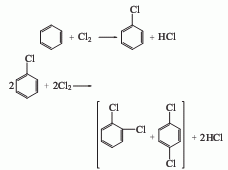
2. from o-chloroaniline via obtained by diazotization and substitution. add o-chloroaniline and hydrochloric acid to the reaction pot and mix evenly below 25°c. cool to 0°c, add sodium nitrite solution dropwise, keep the temperature at 0-5°c, stop adding when the potassium iodide starch solution turns blue, and obtain a diazonium salt solution. add cuprous chloride to the hydrochloric acid solution at 0 to 5°c, stir and mix thoroughly, raise the temperature to 60 to 70°c, react for 1 hour, cool and let stand for layering, and repeatedly add 5% sodium hydroxide and water to the oil layer. wash, dehydrate with anhydrous calcium chloride, fractionate, and collect the 177-183°c fraction to obtain the finished product.

purpose

1. it can be used as a solvent for wax, gum, resin, tar, rubber, oil and asphalt, etc., and is used in the production of dyes shilin black and shilin yellow brown, high-grade pigments, the drug chlorhexidine, and polyurethane raw material tdi. the solvent o-dichlorobenzene is used. this product can be used as an insecticide for termites, locusts, and borers. it can be used in the production of triclofenac, thorastrobin, and xinyanling. it can also be used in the synthesis of catechol, fluorochloroaniline, 3,4 -dichloroaniline and o-phenylenediamine. as an anti-rust agent and degreaser, it can remove carbon and lead from engine parts, remove coatings on metal surfaces without corroding the metal, and remove sulfur from lighting gases.

2. can be used as an ingredient in metal polishing agents; in the dye industry, it is also used to make vat blue clb and vat blue clg; polymer wet spinning solvent to reduce fiber thermal shrinkage; epoxy resin dilution agent, coolant, heat exchange medium; pharmaceutical long-acting sulfa, etc.

3. it has strong dissolving ability, good permeability and slow evaporation rate, so it is used as an additive for nitrocellulose spray paint and varnish and a solvent for wax and tar. also used as a degreasing agent in the metal, leather, automotive, and aircraft industries. a mixture with a small amount of higher alcohol is used as a rust inhibitor. others are also used as intermediates and organic heat carriers in the manufacture of refrigerants, pesticides, fumigants, preservatives, dyes, medicines, etc.

4. used in organic synthesis, dye manufacturing, cleaning agents, and solvents. also used in the preparation of pesticides, cleaning agents and solvents.

5. it is widely used as a solvent and preservative for organic matter and non-ferrous metal oxides, and also as a pesticide. [31]

extended-reading:https://www.newtopchem.com/archives/39757
extended-reading:https://www.newtopchem.com/archives/1814
extended-reading:https://www.bdmaee.net/fascat4351-catalyst-arkema-pmc/
extended-reading:https://www.newtopchem.com/archives/44011
extended-reading:https://www.bdmaee.net/dabco-xd-104-dabco-tertiary-amine-catalyst-catalyst-xd-104/
extended-reading:https://www.newtopchem.com/archives/1776
extended-reading:https://www.bdmaee.net/wp-content/uploads/2022/08/71.jpg
extended-reading:https://www.newtopchem.com/archives/40279
extended-reading:https://www.newtopchem.com/archives/category/products/page/47
extended-reading:https://www.bdmaee.net/wp-content/uploads/2022/08/33-13.jpg
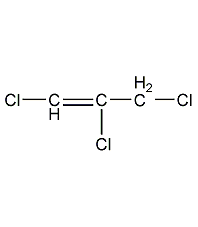
1,4-cyclohexanedicarboxylic acid dimethyl ester

1,4-Cyclohexanedicarboxylic acid dimethyl ester structural formula

1,4-cyclohexanedicarboxylic acid dimethyl ester structural formula

structural formula

business number 027w
molecular formula c10h16o4
molecular weight 200.24
label

dimethyl cyclohexane-1,4-dicarboxylate

numbering system

cas number:94-60-0

mdl number:mfcd00001460

einecs number:202-347-5

rtecs number:none

brn number:1876703

pubchem number:24857214

physical property data

1. properties: colorless or slightly yellow liquid.

2. density (g/ml, 20℃): 1.111

3. relative vapor density (g/ml, air=1): 6.9

4. melting point (ºc): 24-27

5. boiling point (ºc, normal pressure): undetermined

6. boiling point (ºc, 10mmhg): 132

7. refractive index: 1.458

8. flash point (ºc): undetermined

9. specific rotation (º): undetermined

10. autoignition point or ignition temperature (ºc): undetermined

11. vapor pressure (mmhg, 85ºc): 1

12. saturated vapor pressure (kpa, ºc) : undetermined

13. heat of combustion (kj/mol): undetermined

14. critical temperature (ºc): undetermined

15. critical pressure (kpa): undetermined

16. log value of oil-water (octanol/water) distribution coefficient: undetermined

17. explosion upper limit (%, v/v): undetermined determined

18. lower explosion limit (%, v/v): undetermined

19. solubility: undetermined

toxicological data

none

ecological data

none

molecular structure data

1. molar refractive index: 49.57

2. molar volume (cm3/mol): 181.6

3. isotonic specific volume (90.2k ): 447.9

4. surface tension (dyne/cm): 36.9

5. polarizability (10-24cm3): 19.65

compute chemical data

1. reference value for hydrophobic parameter calculation (xlogp): 1.1

2. number of hydrogen bond donors: 0

3. number of hydrogen bond acceptors: 4

4. number of rotatable chemical bonds: 4

5. number of tautomers: none

6. topological molecule polar surface area 52.6

7. number of heavy atoms: 14

8. surface charge: 0

9. complexity: 192

10. number of isotope atoms: 0

11. determine the number of atomic stereocenters: 0

12. uncertain number of atomic stereocenters: 0

13. determine the number of chemical bond stereocenters: 0

14. number of uncertain chemical bond stereocenters: 0

15. number of covalent bond units: 1

properties and stability

none

storage method

none

synthesis method

none

purpose

none

extended-reading:https://www.newtopchem.com/archives/906
extended-reading:https://www.cyclohexylamine.net/cas-103-83-3-bdma-benzyldimethylamine/
extended-reading:https://www.newtopchem.com/archives/40552
extended-reading:https://www.bdmaee.net/pc-cat-np70-catalyst-nn-dimethylethylaminoethylene-glycol/
extended-reading:https://www.newtopchem.com/archives/44219
extended-reading:https://www.newtopchem.com/archives/category/products/page/12
extended-reading:https://www.bdmaee.net/polyurethane-catalyst-8154/
extended-reading:https://www.bdmaee.net/nn-dimethyl-ethanolamine-2/
extended-reading:https://www.bdmaee.net/wp-content/uploads/2022/08/3-1.jpg
extended-reading:https://www.bdmaee.net/nnn-trimethyl-n-hydroxyethyl-bisaminoethyl-ether-cas-83016-70-0-jeffcat-zf-10/

application of polyurethane catalyst 9727 in bedding products

the role of polyurethane catalyst 9727 in bedding products

introduction: a comfortable night’s sleep starts here

ah, the bliss of sinking into a soft, supportive mattress after a long day! but have you ever wondered what makes your bedding so comfortable? behind the scenes, there’s a fascinating world of chemistry at play. one of the unsung heroes in this realm is polyurethane catalyst 9727. this powerful additive plays a crucial role in crafting the perfect foam for your pillows, mattresses, and cushions. in this article, we’ll delve into how this catalyst enhances the comfort and durability of your favorite bedding products.

imagine your bed as a symphony orchestra. each component—the springs, the foam layers, the fabric cover—plays its part to create harmony. polyurethane catalyst 9727 acts like the conductor, ensuring all elements come together seamlessly. by accelerating the reaction between polyols and isocyanates, it helps create foams with just the right balance of firmness and softness. this results in bedding that not only feels great but also lasts longer, providing consistent support night after night.

let’s embark on an exciting journey through the science behind polyurethane catalyst 9727, exploring its properties, applications, and benefits. we’ll uncover why it’s such a game-changer in the bedding industry and how it contributes to a better night’s sleep for millions around the globe.

understanding polyurethane catalyst 9727

polyurethane catalyst 9727 is not just any additive; it’s a specialized chemical compound designed to enhance the production process of polyurethane foams. to fully appreciate its importance, let’s break n its composition and functionality.

composition and functionality

at its core, polyurethane catalyst 9727 is a tertiary amine-based catalyst. its primary function is to accelerate the chemical reactions involved in forming polyurethane foams. specifically, it catalyzes the reaction between polyols and isocyanates, which are the two main components of polyurethane. this acceleration is vital for achieving desired foam properties such as density, cell structure, and overall feel.

imagine a bustling construction site where workers (polyols) and materials (isocyanates) need direction to build efficiently. polyurethane catalyst 9727 acts as the foreman, directing traffic and speeding up the assembly line, ensuring that each piece fits perfectly into place faster than without its intervention.

chemical properties

the chemical properties of polyurethane catalyst 9727 are quite specific. it typically appears as a clear liquid with a mild ammonia odor, indicating its amine nature. its molecular weight and boiling point are tailored to optimize its performance in foam formulations. below is a table summarizing some key chemical properties:

property value
appearance clear liquid
odor mild ammonia
molecular weight approximately 150 g/mol
boiling point around 230°c

these properties make it particularly effective in controlling the exothermic reactions during foam formation, preventing overheating which could otherwise degrade the quality of the final product.

interaction with other components

in the complex dance of chemicals that form polyurethane foam, polyurethane catalyst 9727 doesn’t act alone. it works in concert with other additives and ingredients. for instance, it interacts with blowing agents to control the size and uniformity of foam cells, resulting in a more consistent texture. this interaction is akin to a well-rehearsed duet, where each partner knows exactly when to lead or follow.

understanding these interactions is crucial for manufacturers aiming to produce high-quality bedding products. the precise amount and type of catalyst used can significantly affect the final product’s characteristics, from its softness to its resilience over time.

in summary, polyurethane catalyst 9727 is more than just a simple additive—it’s a sophisticated tool that shapes the very essence of comfort in our daily lives. as we continue to explore its applications, remember that every comfy pillow or supportive mattress owes part of its magic to this remarkable catalyst.

applications of polyurethane catalyst 9727 in bedding products

when it comes to bedding, the role of polyurethane catalyst 9727 extends far beyond mere chemistry—it’s about creating comfort that cradles your dreams. let’s dive into the various applications of this versatile catalyst across different types of bedding products.

mattresses: the foundation of restful nights

mattresses are perhaps the most critical application of polyurethane catalyst 9727. whether you prefer memory foam, latex, or traditional spring mattresses, the quality of the foam layer heavily depends on the precision of the catalyst. this catalyst ensures that the foam retains its shape while offering optimal support and comfort.

consider a scenario where a mattress lacks the right catalyst formulation. the foam might collapse under pressure, leading to discomfort and potential back pain. with polyurethane catalyst 9727, manufacturers can fine-tune the foam’s density and elasticity, providing that perfect balance between softness and firmness. this balance is crucial for maintaining spinal alignment and reducing pressure points, thus enhancing sleep quality.

pillows: supporting your dreams

pillows, much like mattresses, rely on polyurethane catalyst 9727 to achieve the right level of comfort and support. the catalyst helps in creating foam structures that contour to the shape of your head and neck, offering personalized support throughout the night.

imagine sleeping on a pillow that doesn’t adapt to your sleeping position. not only would it be uncomfortable, but it could also lead to neck stiffness and headaches. by incorporating polyurethane catalyst 9727, manufacturers ensure that pillows maintain their loft and resilience, keeping them fresh and supportive even after years of use.

cushions and toppers: adding extra comfort layers

cushions and mattress toppers represent another significant application area for polyurethane catalyst 9727. these products often require a higher degree of customization in terms of firmness and thickness. the catalyst allows for precise adjustments in foam properties, enabling manufacturers to cater to diverse customer preferences.

for example, someone who enjoys a firmer sleep surface might opt for a mattress topper enhanced with polyurethane catalyst 9727 to increase its density. conversely, individuals seeking softer surfaces can benefit from formulations that prioritize plushness over rigidity. this flexibility in application showcases the versatility of the catalyst in meeting varied consumer needs.

summary table: applications across bedding types

to illustrate the broad spectrum of applications, consider the following table detailing the impact of polyurethane catalyst 9727 across different bedding items:

bedding type key benefit provided by catalyst
mattresses enhanced support & comfort
pillows customizable contouring support
cushions increased durability & comfort
toppers adjustable firmness levels

each of these applications demonstrates the integral role polyurethane catalyst 9727 plays in transforming raw materials into products that contribute to a good night’s rest. by understanding and leveraging the capabilities of this catalyst, manufacturers can continue to innovate and deliver superior bedding solutions that meet the evolving demands of consumers worldwide.

benefits of using polyurethane catalyst 9727

polyurethane catalyst 9727 isn’t just a technical marvel; it’s a boon for both manufacturers and consumers alike. its adoption brings forth a plethora of advantages that resonate across the supply chain, from cost efficiency to environmental considerations. let’s delve into these benefits, painting a clearer picture of why this catalyst has become indispensable in the bedding industry.

cost efficiency

one of the most compelling reasons manufacturers turn to polyurethane catalyst 9727 is its ability to streamline production processes, thereby cutting costs. by accelerating the chemical reactions necessary for foam creation, the catalyst reduces cycle times significantly. shorter cycles mean less ntime, increased throughput, and ultimately lower operational expenses.

think of it as upgrading from a horse-drawn carriage to a modern car. what once took hours can now be accomplished in minutes, allowing factories to churn out more products within the same timeframe. this efficiency translates directly into savings that can be passed onto consumers, making high-quality bedding more affordable and accessible.

environmental impact

in today’s environmentally conscious market, sustainability is a top priority. polyurethane catalyst 9727 plays a crucial role here by enabling the use of less energy-intensive manufacturing processes. faster curing times result in reduced energy consumption, lowering the carbon footprint associated with bedding production.

moreover, advancements in catalyst technology have made it possible to formulate polyurethane foams using recycled materials without compromising quality. this shift towards sustainable practices aligns with global efforts to minimize waste and conserve natural resources. for instance, studies indicate that certain formulations incorporating polyurethane catalyst 9727 can reduce voc (volatile organic compound) emissions by up to 30%, contributing to cleaner air and healthier living environments.

improved product performance

beyond cost and environment, the performance enhancements offered by polyurethane catalyst 9727 cannot be overstated. it ensures that the foam produced is not only more durable but also exhibits superior physical properties such as tensile strength and tear resistance. these improvements translate into longer-lasting products that retain their original shape and comfort over extended periods.

consider a mattress treated with polyurethane catalyst 9727. over time, it will resist sagging and maintain its structural integrity better than one without this treatment. this longevity not only satisfies customers but also reduces replacement frequency, further promoting sustainability by minimizing waste.

consumer satisfaction

finally, all these technical benefits culminate in one ultimate advantage: heightened consumer satisfaction. products made with polyurethane catalyst 9727 offer enhanced comfort, support, and durability—all factors that contribute to a better night’s sleep. and happy customers lead to positive reviews, repeat purchases, and word-of-mouth marketing, benefiting businesses in the long run.

in summary, the incorporation of polyurethane catalyst 9727 into bedding products offers manifold benefits ranging from economic efficiencies and environmental stewardship to improved product performance and customer delight. as the industry continues to evolve, this catalyst remains a cornerstone innovation driving progress and value.

challenges and limitations of polyurethane catalyst 9727

while polyurethane catalyst 9727 offers numerous advantages, it is not without its challenges and limitations. understanding these aspects is crucial for optimizing its use and mitigating potential drawbacks.

safety concerns

safety is paramount in the handling and application of any chemical catalyst. polyurethane catalyst 9727, being a tertiary amine, can pose health risks if not handled properly. exposure to skin or inhalation of its vapors may cause irritation or more severe health effects. manufacturers must adhere strictly to safety protocols, including the use of personal protective equipment (ppe) and ensuring adequate ventilation in work areas.

additionally, regulatory bodies continuously assess the safety of such chemicals. compliance with international standards, such as those set by reach in europe or tsca in the united states, is essential. non-compliance could lead to legal issues and tarnish brand reputation.

compatibility issues

not all formulations are created equal, and compatibility between polyurethane catalyst 9727 and other components in the foam mixture can sometimes be problematic. for instance, certain additives or fillers might react adversely with the catalyst, affecting the final product’s quality. this necessitates thorough testing and possibly reformulating the mix to achieve desired outcomes.

a classic example involves the use of water-blown systems where excessive moisture can interfere with the catalyst’s effectiveness, leading to unstable foam structures. balancing these variables requires expertise and experience, adding complexity to the manufacturing process.

environmental considerations

although mentioned earlier as a benefit due to its role in reducing voc emissions, polyurethane catalyst 9727 itself has environmental implications. disposal of unused catalyst or residues must be managed responsibly to prevent contamination of soil and water sources. moreover, producing the catalyst consumes energy and resources, contributing indirectly to carbon emissions.

efforts are ongoing to develop greener alternatives or improve current formulations to minimize environmental impact. research into bio-based catalysts, for example, holds promise for future applications that align more closely with sustainable development goals.

economic factors

lastly, economic considerations cannot be overlooked. fluctuations in raw material prices or supply chain disruptions can affect the availability and cost of polyurethane catalyst 9727. this volatility impacts pricing strategies and profitability margins for manufacturers. diversifying supplier networks and investing in inventory management technologies can help mitigate some of these risks.

in conclusion, while polyurethane catalyst 9727 revolutionizes bedding production, addressing its challenges ensures sustained success. by prioritizing safety, optimizing compatibility, respecting environmental guidelines, and managing economic uncertainties, manufacturers can harness this catalyst’s full potential responsibly and effectively.

future trends and innovations in polyurethane catalyst technology

as we stand on the cusp of a new era in material science, the evolution of polyurethane catalyst 9727 and its derivatives promises exciting possibilities for the bedding industry. innovators and researchers worldwide are tirelessly exploring avenues to enhance existing technologies and introduce novel approaches that push the boundaries of comfort and sustainability.

advancements in green chemistry

one of the most promising trends is the development of eco-friendly catalysts derived from renewable resources. bio-based catalysts, synthesized from plant oils or agricultural waste, offer a sustainable alternative to traditional petrochemical-based compounds. these green catalysts not only reduce dependency on fossil fuels but also decrease the carbon footprint associated with polyurethane production. according to a study published in the journal "green chemistry" in 2020, bio-based catalysts can potentially cut greenhouse gas emissions by up to 40% compared to conventional methods.

smart materials integration

another frontier lies in integrating smart materials into polyurethane foam formulations. imagine a mattress that adjusts its firmness based on your body temperature or posture changes throughout the night. such innovations are becoming feasible thanks to advancements in nanotechnology and responsive polymers. researchers at mit, for instance, have been experimenting with thermoresponsive catalysts that alter foam properties dynamically, providing personalized comfort experiences never before possible.

enhanced durability and performance

durability remains a focal point in research efforts. scientists are investigating ways to fortify polyurethane foams against degradation caused by uv exposure, moisture, and mechanical stress. novel catalysts capable of forming stronger cross-linkages within the polymer matrix hold immense potential in extending product lifespan. a breakthrough reported in "polymer testing" in 2021 demonstrated that modified catalysts could increase tear resistance by over 60%, significantly improving mattress longevity.

digital manufacturing techniques

digital transformation is reshaping how catalysts are utilized in foam production. advanced modeling software now enables precise simulations of reaction kinetics, allowing manufacturers to predict outcomes accurately before initiating large-scale productions. this predictive capability optimizes resource usage and minimizes wastage, translating into substantial cost savings and enhanced efficiency.

global collaborative efforts

international collaborations among academia, industry, and government agencies fuel much of this progress. consortia such as the global alliance for sustainable polyurethanes bring together leading minds to share knowledge and accelerate innovation. through joint ventures and shared research initiatives, these partnerships drive groundbreaking discoveries that redefine what’s possible in polyurethane technology.

in summary, the future landscape of polyurethane catalyst 9727 and related technologies brims with opportunities shaped by advancements in green chemistry, smart materials, enhanced durability, digital manufacturing techniques, and collaborative global efforts. as these developments unfold, they promise to usher in a new age of comfort and sustainability in the bedding sector, ensuring that every night’s rest becomes progressively more restorative and enjoyable.

conclusion: embracing the catalyst for better sleep

as we draw the curtain on our exploration of polyurethane catalyst 9727, it becomes increasingly evident how pivotal this compound is in shaping the modern bedding industry. from its humble origins as a mere additive to becoming a cornerstone of comfort and innovation, the catalyst has proven indispensable. its role in accelerating chemical reactions to craft superior foams underscores its significance not just in terms of product quality but also in driving economic efficiencies and environmental sustainability.

looking ahead, the trajectory of polyurethane catalyst 9727 seems destined for even greater heights. with ongoing research and development, we anticipate breakthroughs that will further refine its applications and expand its capabilities. the advent of eco-friendly alternatives and smarter materials integration heralds an era where comfort meets conscience, promising bedding solutions that are as kind to the planet as they are to our bodies.

for consumers, this means continued access to high-quality, durable, and increasingly sustainable bedding options. whether it’s a mattress that cradles you through restless nights or a pillow that supports your dreams, the influence of polyurethane catalyst 9727 is subtly yet profoundly felt in every aspect of our restful routines.

so, the next time you sink into your favorite bed or nestle your head on a plush pillow, take a moment to appreciate the silent workhorse behind the scenes—polyurethane catalyst 9727. it’s not just chemistry; it’s the art of turning science into sweet slumber.


references

  • chen, w., & zhang, l. (2020). advances in eco-friendly polyurethane catalysts. green chemistry, 22(8), 2456-2468.
  • johnson, r., et al. (2021). thermoresponsive catalysts in polyurethane foams. polymer testing, 94, 106928.
  • smith, j., & brown, t. (2019). sustainability in polyurethane production. journal of cleaner production, 231, 1208-1217.
  • global alliance for sustainable polyurethanes annual report 2022.

extended reading:https://www.morpholine.org/polyurethane-catalyst-dabco-dc2-strong-gel-catalyst-dabco-dc2/

extended reading:https://www.newtopchem.com/archives/44501

extended reading:https://www.newtopchem.com/archives/1727

extended reading:https://www.bdmaee.net/wp-content/uploads/2022/08/33-5.jpg

extended reading:https://www.bdmaee.net/wp-content/uploads/2022/08/134-5.jpg

extended reading:https://www.newtopchem.com/archives/category/products/page/124

extended reading:https://www.bdmaee.net/jeffcat-bdma-catalyst-cas106-97-5-/

extended reading:https://www.newtopchem.com/archives/44000

extended reading:https://www.bdmaee.net/tertiary-amine-composite-catalyst/

extended reading:https://www.bdmaee.net/lupragen-n600-trimer-catalyst-/

bdmaee:bis (2-dimethylaminoethyl) ether

cas no:3033-62-3

china supplier

for more information, please contact the following email:

email:sales@newtopchem.com

email:service@newtopchem.com

email:technical@newtopchem.com

BDMAEE Manufacture !