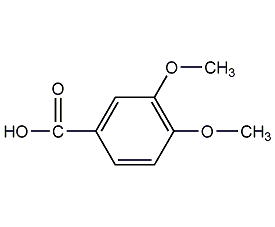
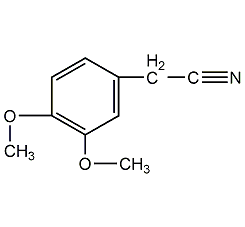
3,4-dimethoxyphenylacetonitrile

3,4-dimethoxyphenylacetonitrile structural formula

structural formula

business number 025y
molecular formula c10h11no2
molecular weight 177.20
label

(3,4-dimethoxyphenyl)acetonitrile,

veratrum nitrile,

3,4-dimethoxybenzonitrile,

3,4-dimethoxy-benzeneacetonitril,

3,4-dimethoxybenzyl cyanide

numbering system

cas number:93-17-4

mdl number:mfcd00001911

einecs number:202-225-1

rtecs number:al9325000

brn number:1956100

pubchem number:24847718

physical property data

1. character:solid crystal

2. density (g/ml,25/4):1.053

3. relative vapor density (g/ml,air=1): undetermined

4. melting point (ºc): 64-66

5. boiling point (ºc,normal pressure): undetermined

6. boiling point (ºc,1.33kpa):171-178

7. refractive index: undetermined

8. flashpoint (ºc): 250

9. specific optical rotation (º): undetermined

10. autoignition point or ignition temperature (ºc): undetermined

11. vapor pressure (kpa,25ºc): undetermined

12. saturation vapor pressure (kpa,60ºc): undetermined

13. heat of combustion (kj/mol): undetermined

14. critical temperature (ºc): undetermined

15. critical pressure (kpa): undetermined

16. oil and water (octanol/log value of water) partition coefficient: undetermined

17. explosion limit (%,v/v): undetermined

18. lower explosion limit (%,v/v): undetermined

19. solubility: undetermined

toxicological data

none

ecological data

none

molecular structure data

1. molar refractive index: 49.07

2. molar volume (m3/mol):163.6

3. isotonic specific volume ( 90.2k):405.5

4. surface tension (dyne/cm):37.7

5. polarizability10-24cm3):19.45

compute chemical data

1. reference value for hydrophobic parameter calculation (xlogp): none

2. number of hydrogen bond donors: 0

3. number of hydrogen bond acceptors: 3

4. number of rotatable chemical bonds: 3

5. number of tautomers: none

6. topological molecule polar surface area 42.2

7. number of heavy atoms: 13

8. surface charge: 0

9. complexity: 196

10. number of isotope atoms: 0

11. determine the number of atomic stereocenters: 0

12. uncertain number of atomic stereocenters: 0

13. determine the number of chemical bond stereocenters: 0

14. number of uncertain chemical bond stereocenters: 0

15. number of covalent bond units: 1

properties and stability

none

storage method

this product should be kept sealed and dry.

synthesis method

from o-dimethoxybenzene ([91-16-7]), via methyl chloride derived from base and cyanide.

purpose

used as an intermediate in organic synthesis.

extended-reading:https://www.bdmaee.net/wp-content/uploads/2022/08/low-odor-reaction-type-9727-catalyst-9727-reaction-type-catalyst-9727.pdf
extended-reading:https://www.bdmaee.net/wp-content/uploads/2022/07/37.jpg
extended-reading:https://www.newtopchem.com/archives/author/newtopchem
extended-reading:https://www.newtopchem.com/archives/category/products/page/165
extended-reading:https://www.newtopchem.com/archives/40028
extended-reading:https://www.bdmaee.net/wp-content/uploads/2022/08/trisdimethylaminopropylamine–9-pc-cat-np109.pdf
extended-reading:https://www.bdmaee.net/dabco-tmeda-catalyst-cas-110-18-9–germany/
extended-reading:https://www.cyclohexylamine.net/category/product/page/25/
extended-reading:https://www.newtopchem.com/archives/category/products/rigid-foams-catalyst
extended-reading:https://www.bdmaee.net/wp-content/uploads/2022/08/n-n-dimethylethanolamine-cas108-01-0-2-dimethylamineethanol.pdf

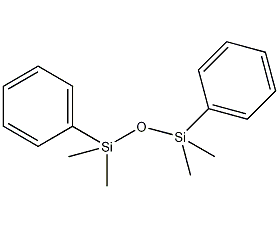
1,3-diphenyl-1,1,3,3-tetramethyldisiloxane

1,3-diphenyl-1,1,3,3-tetramethyldisiloxane  structural formula

structural formula

business number 017e
molecular formula c16h22osi2
molecular weight 286.52
label

1,1,3,3-tetramethyl-1,3-diphenyldisiloxane

numbering system

cas number:56-33-7

mdl number:none

einecs number:200-265-4

rtecs number:jm9236000

brn number:none

pubchem id:none

physical property data

none

toxicological data

1, reproductive toxicity: oral administration to male rats tdlo: 700mg/kg7days before mating;

ecological data

none

molecular structure data

5. molecular property data:

1. molar refractive index: 89.23

2. molar volume (m3/mol):293.3

3. isotonic specific volume (90.2k):678.1

4. surface tension (dyne/cm):28.5

5. polarizability10-24cm3): 35.37

compute chemical data

1. reference value for hydrophobic parameter calculation (xlogp): none

2. number of hydrogen bond donors: 0

3. number of hydrogen bond acceptors: 1

4. number of rotatable chemical bonds: 4

5. number of tautomers: none

6. topological molecule polar surface area 9.2

7. number of heavy atoms: 19

8. surface charge: 0

9. complexity: 249

10. number of isotope atoms: 0

11. determine the number of atomic stereocenters: 0

12. uncertain number of atomic stereocenters: 0

13. determine the number of chemical bond stereocenters: 0

14. number of uncertain chemical bond stereocenters: 0

15. number of covalent bond units: 1

properties and stability

none

storage method

none

synthesis method

none

purpose

none

extended-reading:https://www.bdmaee.net/bismuth-2-ethylhexanoate-2/
extended-reading:https://www.bdmaee.net/catalyst-1028-catalyst-1028-polyurethane-catalyst-1028/
extended-reading:https://www.bdmaee.net/wp-content/uploads/2022/08/-t120-1185-81-5-didodecylthio-dibutyltin.pdf
extended-reading:https://www.bdmaee.net/cas-83016-70-0/
extended-reading:https://www.bdmaee.net/cyclohexylamine-product-series-cyclohexylamine-series-products/
extended-reading:https://www.bdmaee.net/esterification-catalyst/
extended-reading:https://www.bdmaee.net/wp-content/uploads/2022/08/134.jpg
extended-reading:https://www.newtopchem.com/archives/40077
extended-reading:https://www.cyclohexylamine.net/category/product/page/16/
extended-reading:https://www.bdmaee.net/wp-content/uploads/2020/06/59.jpg

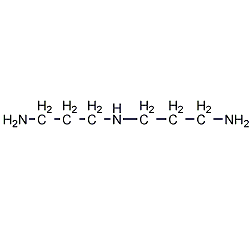
3,3′-diaminodipropylamine

3,3'-diaminodipropylamine structural formula

structural formula

business number 017a
molecular formula c6h17n3
molecular weight 131.22
label

3,3′-iminodipropylamine,

n-(3-aminopropyl)-1,3-propanediamine,

dipropylenetriamine,

norspermidine,

(nh2ch2ch2ch2)2nh

numbering system

cas number:56-18-8

mdl number:mfcd00008214

einecs number:200-261-2

rtecs number:jl9450000

brn number:1071254

pubchem number:24896102

physical property data

1. characteristics: colorless liquid.

2. density ( g/ml,25/4℃) :0.938

3. relative vapor density (g/ml,air=1): undetermined

4. melting point ( ºc): -14

5. boiling point ( ºc,normal pressure): undetermined

6. boiling point ( ºc, 6.67kpa): 151

7. refractive index: 1.4810

8. flash point (ºc):118

9. specific optical rotation (º): undetermined

10. autoignition point or ignition temperature (ºc): not ok

11. vapor pressure (kpa,25ºc): undetermined

12. saturation vapor pressure (kpa,60ºc): undetermined

13. heat of combustion (kj/mol): undetermined

14. critical temperature (ºc): undetermined

15. critical pressure (kpa): undetermined

16. oil and water (octanol/water) partition coefficient pair value: undetermined

17. explosion limit (%,v/v): not ok

18. lower explosion limit (%,v/v): undetermined

19. solubility: soluble in water and polar organic solvents.

toxicological data

1, skin or eyes irritation: rabbit, skin contact, open irritation test, 470mg, moderate reaction; rabbit, eye contact, standard draize test, 47mg, strong reaction
2, acute toxicity: rat oral ld50: 738mg /kg; mouse oral administration ld50: 435mg/kg; rabbit oral administration ld50: 210mg/kg; rabbit, skin contact ld50: 110ul/kg
rat subcutaneous ldlo: 200mg/kg; guinea pig oral ld50258mg/kg

ecological data

none

molecular structure data

5. molecular property data:

1. molar refractive index: 40.51

2.   molar volume (m3 /mol):143.7

3. isotonic specific volume (90.2k):356.8

4. surface tension (dyne/cm):37.9

5. polarizability10-24cm3):16.06

compute chemical data

1. reference value for hydrophobic parameter calculation (xlogp): -1.4

2. number of hydrogen bond donors: 3

3. number of hydrogen bond acceptors: 3

p>

4. number of rotatable chemical bonds: 6

5. number of tautomers: none

6. topological molecule polar surface area 64.1

7. number of heavy atoms: 9

8. surface charge: 0

9. complexity: 41.6

10. number of isotope atoms: 0

11. determine the number of atomic stereocenters: 0

12. uncertain number of atomic stereocenters: 0

13. determine the number of chemical bond stereocenters: 0

14. number of uncertain chemical bond stereocenters: 0

15. number of covalent bond units: 1

properties and stability

none

storage method

this product should be sealed and stored in a dry and dark place .

synthesis method

none

purpose

affinity chromatography analysis of meta-amines. intermediates for the manufacture of soap, dyes, rubber, and chemicals. emulsifier. pesticides and medicines.

extended-reading:https://www.newtopchem.com/archives/39614
extended-reading:https://www.morpholine.org/efficient-reaction-type-equilibrium-catalyst-reactive-equilibrium-catalyst/
extended-reading:https://www.bdmaee.net/wp-content/uploads/2022/08/9.jpg
extended-reading:https://www.bdmaee.net/nt-cat-a-204-catalyst-cas1372-33-9-newtopchem/
extended-reading:https://www.bdmaee.net/fascat4224-catalyst-cas-68298-38-4-dibutyl-tin-bis-1-thioglycerol/
extended-reading:https://www.bdmaee.net/wp-content/uploads/2022/08/-rp205-addocat-9727p-high-efficiency-amine-catalyst.pdf
extended-reading:https://www.bdmaee.net/butyltin-tris2-ethylhexanoate/
extended-reading:https://www.newtopchem.com/archives/943
extended-reading:https://www.bdmaee.net/jeffcat-zf-10-catalyst-cas83016-70-0-/
extended-reading:https://www.bdmaee.net/zinc-neodecanoate-2/

integral skin pin-hole eliminator applications in pu shoe sole manufacturing units

integral skin pin-hole eliminator applications in pu shoe sole manufacturing units

abstract: the manufacture of polyurethane (pu) shoe soles is a complex process susceptible to various defects, with pin-holes being a prevalent issue impacting both the aesthetic appeal and mechanical integrity of the final product. integral skin pu foams, commonly used in shoe soles, require careful control of processing parameters and raw material characteristics to minimize these defects. this article delves into the causes of pin-hole formation in integral skin pu shoe soles and explores the application of integral skin pin-hole eliminators, focusing on their mechanism of action, product parameters, application methods, and benefits in improving the quality and efficiency of pu shoe sole manufacturing. a comprehensive understanding of these aspects is crucial for optimizing the manufacturing process and achieving consistently high-quality pu shoe soles.

keywords: polyurethane, integral skin foam, shoe sole, pin-holes, defect elimination, additives, manufacturing process, quality control.

1. introduction

polyurethane (pu) materials have found widespread application in the footwear industry, particularly in the production of shoe soles. their versatility, durability, and design flexibility make them an ideal choice for various shoe types, from casual sneakers to high-performance athletic footwear. among the different types of pu foams, integral skin foam is particularly favored for shoe soles due to its combination of a dense, tough outer skin and a cellular core, offering excellent abrasion resistance, cushioning, and support [1].

however, the manufacturing of integral skin pu shoe soles is not without its challenges. one of the most common and persistent issues is the formation of pin-holes on the surface of the sole. these small voids can significantly detract from the aesthetic quality of the product and, in severe cases, compromise its structural integrity. the presence of pin-holes can lead to customer dissatisfaction, increased scrap rates, and ultimately, reduced profitability for manufacturers.

therefore, the effective elimination or minimization of pin-holes is a critical objective for pu shoe sole manufacturers. this article focuses on the application of integral skin pin-hole eliminators, a class of chemical additives designed to address this specific problem. the article will explore the underlying causes of pin-hole formation, the mechanisms by which these eliminators work, their key product parameters, and optimal application methods in pu shoe sole manufacturing units.

2. causes of pin-hole formation in integral skin pu shoe soles

pin-holes in integral skin pu foams arise from a complex interplay of factors related to the raw materials, the mixing process, the mold design, and the curing conditions. understanding these factors is crucial for identifying the root causes of pin-hole formation and implementing appropriate corrective measures.

  • 2.1 raw material quality:

    • 2.1.1 moisture content: the presence of moisture in polyols, isocyanates, or other additives can react with the isocyanate component, generating carbon dioxide gas. this gas can become trapped within the foam matrix, leading to the formation of pin-holes. high moisture content is one of the most common causes [2].
    • 2.1.2 impurities: impurities in the raw materials, such as particulate matter or residual solvents, can act as nucleation sites for gas bubbles, promoting pin-hole formation.
    • 2.1.3 component ratio imbalance: an incorrect ratio of polyol to isocyanate can disrupt the proper chemical reaction and gas generation, leading to unstable foam formation and pin-holes.
  • 2.2 mixing and dispensing:

    • 2.2.1 inadequate mixing: insufficient mixing of the raw materials can result in uneven distribution of components, leading to localized areas of high gas concentration and subsequent pin-hole formation.
    • 2.2.2 air entrapment: during mixing or dispensing, air can be inadvertently entrapped within the liquid mixture. these air bubbles can act as nuclei for pin-holes as the foam expands.
    • 2.2.3 machine malfunctions: improperly calibrated mixing heads or dispensing equipment can lead to inaccurate component ratios or uneven mixing, contributing to pin-hole formation.
  • 2.3 mold design and preparation:

    • 2.3.1 inadequate venting: if the mold does not have sufficient venting, the expanding foam can trap air and gases, leading to pin-holes.
    • 2.3.2 surface contamination: contaminants on the mold surface, such as release agents or dust, can interfere with the proper adhesion of the foam to the mold, creating voids and pin-holes.
    • 2.3.3 mold temperature: incorrect mold temperature can affect the reaction kinetics and foam expansion, potentially leading to pin-hole formation.
  • 2.4 curing conditions:

    • 2.4.1 inadequate curing time: insufficient curing time can prevent the complete reaction of the foam, leaving residual gases trapped within the structure.
    • 2.4.2 inappropriate curing temperature: incorrect curing temperature can affect the foam’s expansion and stability, potentially leading to pin-hole formation.
    • 2.4.3 humidity: high humidity can introduce moisture into the curing environment, exacerbating the problem of moisture-induced pin-holes.

3. integral skin pin-hole eliminators: mechanism of action

integral skin pin-hole eliminators are chemical additives specifically formulated to reduce or eliminate pin-holes in integral skin pu foams. these additives typically work through one or more of the following mechanisms:

  • 3.1 surface tension reduction:

    • pin-hole eliminators often contain surface-active agents (surfactants) that reduce the surface tension of the liquid pu mixture. this reduction in surface tension allows the expanding foam to spread more evenly across the mold surface, preventing the formation of air pockets and pin-holes [3].
    • lowering surface tension also facilitates the escape of gases from the foam matrix, reducing the likelihood of gas entrapment.
  • 3.2 foam stabilization:

    • some pin-hole eliminators act as foam stabilizers, increasing the viscosity and elasticity of the foam. this helps to maintain the integrity of the foam structure during expansion and curing, preventing the collapse of bubbles and the formation of pin-holes.
    • these stabilizers can also improve the compatibility between the different components of the pu system, leading to a more homogeneous and stable foam structure.
  • 3.3 gas bubble coalescence:

    • certain pin-hole eliminators promote the coalescence of small gas bubbles into larger ones. this reduces the overall number of bubbles and makes them less likely to form pin-holes on the surface of the foam.
    • the larger bubbles can then more easily migrate to the surface of the mold and escape, further reducing the risk of pin-hole formation.
  • 3.4 improved cell structure:

    • pin-hole eliminators can influence the cell structure of the foam, promoting the formation of a more uniform and closed-cell structure. this can reduce the permeability of the foam and prevent the ingress of air or moisture, minimizing the risk of pin-hole formation.

4. product parameters of integral skin pin-hole eliminators

the effectiveness of a pin-hole eliminator depends on its specific properties and how well it is matched to the particular pu system and manufacturing process. key product parameters to consider include:

parameter description typical values significance
chemical composition specifies the chemical nature of the pin-hole eliminator, including the type of surfactant(s), stabilizers, and other additives. silicone-based, non-silicone based, polyether-modified siloxanes determines the compatibility of the eliminator with the pu system and its effectiveness in reducing surface tension, stabilizing the foam, and promoting gas bubble coalescence.
viscosity measures the resistance of the pin-hole eliminator to flow. 50-500 cp at 25°c affects the ease of handling and mixing of the eliminator with the other pu components. a lower viscosity is generally preferred for easier processing.
density measures the mass per unit volume of the pin-hole eliminator. 0.9-1.1 g/cm³ at 25°c affects the accuracy of dispensing and the overall cost of the additive.
active content represents the percentage of active ingredients in the pin-hole eliminator that contribute to its pin-hole eliminating properties. 20-100% determines the dosage required to achieve the desired effect. a higher active content generally means that a lower dosage is needed.
solubility/compatibility indicates the ability of the pin-hole eliminator to dissolve or disperse uniformly in the polyol or isocyanate component of the pu system. soluble in polyol, dispersible in polyol, limited solubility crucial for ensuring that the eliminator is evenly distributed throughout the pu mixture and can effectively perform its function. poor solubility can lead to localized areas of high concentration and uneven foam properties.
dosage recommendation specifies the recommended amount of pin-hole eliminator to be added to the pu system, typically expressed as a percentage by weight of the polyol component. 0.1-2.0% by weight of polyol critical for achieving optimal pin-hole reduction without negatively affecting other foam properties. overdosing can lead to undesirable effects such as reduced mechanical strength or discoloration.
shelf life indicates the length of time that the pin-hole eliminator can be stored under specified conditions without losing its effectiveness. 6-24 months important for ensuring that the eliminator is used within its optimal performance win.
flash point the lowest temperature at which the vapor of the pin-hole eliminator will ignite in air when exposed to an ignition source. > 60°c (depending on the specific formulation) important for safety considerations during handling and storage. higher flash points indicate lower flammability risk.
appearance describes the physical appearance of the pin-hole eliminator. clear liquid, amber liquid, slightly hazy liquid can provide an indication of the product’s quality and purity.
ph value measures the acidity or alkalinity of the pin-hole eliminator. typically neutral or slightly acidic (ph 6-8) can affect the compatibility of the eliminator with other components of the pu system and its impact on the overall reaction kinetics.
hydroxyl value indicates the number of hydroxyl groups (-oh) present in the pin-hole eliminator, expressed as mg koh/g. this is relevant for polyol-based pin-hole eliminators that participate in the urethane reaction. dependent on chemical structure affects the reactivity of the pin-hole eliminator and its influence on the curing process of the pu foam.

5. application methods of integral skin pin-hole eliminators in pu shoe sole manufacturing

the method of application significantly impacts the effectiveness of a pin-hole eliminator. proper dispersion and uniform distribution throughout the pu mixture are essential for optimal results. common application methods include:

  • 5.1 pre-mixing with polyol:

    • this is the most common and preferred method. the pin-hole eliminator is thoroughly mixed with the polyol component before the addition of the isocyanate. this ensures uniform distribution of the additive throughout the polyol phase, leading to improved foam stabilization and pin-hole reduction.
    • the mixing should be carried out using appropriate mixing equipment to ensure complete homogeneity.
  • 5.2 addition to the mixing head:

    • in some cases, the pin-hole eliminator can be added directly to the mixing head of the pu dispensing machine. this requires precise metering and control to ensure accurate dosage and uniform distribution.
    • this method is typically used when the pin-hole eliminator is incompatible with the polyol or when a very small dosage is required.
  • 5.3 surface treatment of the mold:

    • while less common for pin-hole elimination, some pin-hole eliminators can be applied as a surface treatment to the mold. this creates a barrier that prevents the formation of pin-holes on the surface of the foam.
    • this method is particularly useful for molds with intricate designs or difficult-to-reach areas.

6. benefits of using integral skin pin-hole eliminators in pu shoe sole manufacturing

the application of integral skin pin-hole eliminators offers numerous benefits to pu shoe sole manufacturers:

  • 6.1 reduced pin-hole formation: the primary benefit is the significant reduction or elimination of pin-holes on the surface of the shoe soles, improving their aesthetic appeal and overall quality. this leads to higher customer satisfaction and reduced product returns.
  • 6.2 improved surface finish: pin-hole eliminators can contribute to a smoother and more uniform surface finish on the shoe soles, enhancing their visual appeal and tactile properties.
  • 6.3 reduced scrap rates: by minimizing the occurrence of pin-holes, these additives help to reduce the number of rejected parts, leading to lower scrap rates and improved production efficiency.
  • 6.4 enhanced mechanical properties: some pin-hole eliminators can also improve the mechanical properties of the pu foam, such as tensile strength, tear resistance, and abrasion resistance. this can lead to more durable and longer-lasting shoe soles.
  • 6.5 increased productivity: by reducing the need for rework or secondary finishing operations, pin-hole eliminators can help to increase productivity and reduce manufacturing costs.
  • 6.6 improved process control: the use of pin-hole eliminators can provide greater control over the pu foaming process, allowing manufacturers to consistently produce high-quality shoe soles with minimal defects.
  • 6.7 cost savings: while pin-hole eliminators represent an additional cost, the benefits of reduced scrap rates, improved product quality, and increased productivity can often outweigh the cost of the additive, resulting in overall cost savings.

7. case studies (illustrative examples)

(note: specific case studies would require proprietary data, which is not possible to generate. the following are examples of the type of information that would be included in a real case study).

  • case study 1: improvement of surface aesthetics in high-end sneaker soles: a manufacturer of high-end sneaker soles was experiencing a high rejection rate due to pin-holes on the visible surface of the sole. after implementing a silicone-based pin-hole eliminator at a dosage of 0.5% by weight of polyol, the rejection rate decreased by 75%, and the surface aesthetics of the soles were significantly improved.
  • case study 2: reduction of scrap in automated pu pouring line: a large-scale shoe sole manufacturer using an automated pu pouring line was facing challenges with consistent pin-hole formation, leading to frequent production stops and high scrap rates. by implementing a non-silicone based pin-hole eliminator and optimizing the mixing parameters, the manufacturer was able to reduce scrap rates by 60% and improve the overall efficiency of the production line.
  • case study 3: enhancing abrasion resistance in industrial shoe soles: a manufacturer of industrial shoe soles, where abrasion resistance is critical, found that a specific pin-hole eliminator, besides reducing pin-holes, also improved the abrasion resistance of the pu sole by 15%, extending the lifespan of the product.

8. future trends and developments

the field of integral skin pin-hole eliminators is constantly evolving, with ongoing research and development focused on:

  • 8.1 development of eco-friendly additives: increasing emphasis is being placed on the development of pin-hole eliminators that are based on renewable resources and have a lower environmental impact.
  • 8.2 multifunctional additives: research is focused on developing additives that not only eliminate pin-holes but also provide other benefits, such as improved mechanical properties, flame retardancy, or uv resistance.
  • 8.3 nanomaterial-based additives: nanomaterials, such as nanoparticles and nanotubes, are being explored as potential pin-hole eliminators due to their high surface area and unique properties.
  • 8.4 customized formulations: there is a growing trend towards the development of customized pin-hole eliminator formulations that are specifically tailored to the needs of individual pu systems and manufacturing processes.
  • 8.5 improved monitoring and control: advanced sensors and control systems are being developed to monitor the pu foaming process in real-time and automatically adjust the dosage of pin-hole eliminators to optimize performance.

9. conclusion

pin-hole formation is a significant challenge in the manufacturing of integral skin pu shoe soles. the application of integral skin pin-hole eliminators provides an effective solution to this problem, leading to improved product quality, reduced scrap rates, and increased productivity. by understanding the mechanisms of action of these additives, their key product parameters, and optimal application methods, pu shoe sole manufacturers can optimize their processes and achieve consistently high-quality products. as the industry continues to evolve, ongoing research and development will lead to even more effective and sustainable pin-hole eliminators, further enhancing the performance and competitiveness of pu shoe soles. the strategic implementation of these eliminators is crucial for manufacturers striving for excellence in pu shoe sole production. 💡

references:

[1] hepburn, c. (1991). polyurethane elastomers. springer science & business media.

[2] randall, d., & lee, s. (2002). the polyurethanes book. john wiley & sons.

[3] szycher, m. (2012). szycher’s handbook of polyurethanes. crc press.

[4] oertel, g. (ed.). (1993). polyurethane handbook. hanser gardner publications.

[5] woods, g. (1990). the ici polyurethanes book. john wiley & sons.

[6] prociak, a., ryszkowska, j., & uram, k. (2016). polyurethane foams: properties, manufacture and applications. rapra technology limited.

[7] ashworth, v. (2011). additives for polyurethanes: technology and applications. smithers rapra.

[8] kirillova, a. v., & kalinin, v. n. (2018). polyurethanes: synthesis, properties, and applications. elsevier.

[9] domininghaus, h., & kleemann, m. (1993). plastics for engineers: materials, properties and applications. hanser gardner publications.

sales contact:sales@newtopchem.com

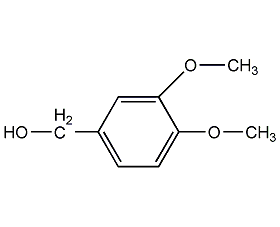
3,4-dimethoxybenzyl alcohol

3,4-dimethoxybenzyl alcohol structural formula

structural formula

business number 025m
molecular formula c9h12o3
molecular weight 168.19
label

3,4-dimethoxybenzyl alcohol,

veratryl alcohol,

ververatrol,

3,4-dimethoxyphenylmethyl alcohol,

(3,4-dimethoxyphenyl)methanol

numbering system

cas number:93-03-8

mdl number:mfcd00004638

einecs number:202-212-0

rtecs number:none

brn number:639388

pubchem number:24893258

physical property data

1. properties: viscous oily liquid.

2. density (g/ml, 25/4℃): 1.157

3. relative vapor density (g/ml, air=1): undetermined

4. melting point (ºc): undetermined

5. boiling point (ºc, normal pressure): 297

6. boiling point (ºc, 5.2kpa): undetermined

7. refractive index: 1.5520

8. flash point (ºc): >112

9. specific rotation (º): undetermined

10. autoignition point or ignition temperature (ºc): undetermined

11. vapor pressure (kpa, 25ºc): undetermined

12. saturated vapor pressure ( kpa, 60ºc): undetermined

13. heat of combustion (kj/mol): undetermined

14. critical temperature (ºc): undetermined

15. critical pressure (kpa): undetermined

16. log value of oil-water (octanol/water) partition coefficient: undetermined

17. explosion upper limit (%, v/ v): undetermined

18. lower explosion limit (%, v/v): undetermined

19. solubility: soluble in organic solvents such as ethanol and ether.

toxicological data

none

ecological data

water hazard level 1 (self-assessment via list) is slightly hazardous to water.

do not allow undiluted or large amounts of product to come into contact with groundwater, waterways, or sewage systems.

do not discharge materials into the surrounding environment without government permission.

molecular structure data

1. molar refractive index: 46.06

2. molar volume (cm3/mol): 151.2

3. isotonic specific volume (90.2k ): 374.1

4. surface tension (dyne/cm): 37.4

5. polarizability (10-24cm3): 18.26

compute chemical data

1. hydrophobic parameter calculation reference value (xlogp): 0.6

2. number of hydrogen bond donors: 1

3. number of hydrogen bond acceptors: 3

4. number of rotatable chemical bonds: 3

5. mutual number of isomers:

6. topological molecular polar surface area (tpsa): 38.7

7. number of heavy atoms: 12

8. surface charge : 0

9. complexity: 127

10. number of isotope atoms: 0

11. determine the number of atomic stereocenters: 0

12. the number of uncertain atomic stereocenters: 0

13. the number of determined chemical bond stereocenters: 0

14. the number of uncertain chemical bond stereocenters: 0

15. number of covalent bond units: 1

properties and stability

none

storage method

this product should be kept sealed.

synthesis method

none

purpose

used in organic synthesis as a protective group for guanosine residues in oligonucleotide synthesis.

extended-reading:https://www.newtopchem.com/archives/1157
extended-reading:https://www.bdmaee.net/low-atomization-catalyst-9727/
extended-reading:https://www.newtopchem.com/archives/44203
extended-reading:https://www.bdmaee.net/ethanedioicacid-2/
extended-reading:https://www.bdmaee.net/di-n-butyl-tin-diisooctoate-cas2781-10-4-fascat4208-catalyst/
extended-reading:https://www.bdmaee.net/wp-content/uploads/2022/08/40.jpg
extended-reading:https://www.bdmaee.net/dibutyl-tin-oxide-food-grade/
extended-reading:https://www.newtopchem.com/archives/44236
extended-reading:https://www.bdmaee.net/fentacat-26-catalyst-cas111542-55-9-solvay/
extended-reading:https://www.bdmaee.net/rc-catalyst-104-cas112-05-6-rhine-chemistry/

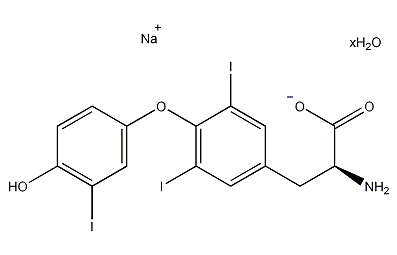
3,3′,5-triiodo-l-thyronine sodium salt

3,3',5-triiodo-l-thyronine sodium salt structural formula

structural formula

business number 016q
molecular formula c15h12i3no4na
molecular weight 672.96
label

triiodothyronine sodium salt,

liothyronine,

t3, o-(4-hydroxy-3-iodophenyl)-3,5-diiodo-l-tyrosine sodium salt

numbering system

cas number:55-06-1

mdl number:mfcd00002594

einecs number:200-223-5

rtecs number:none

brn number:8179867

pubchem number:24889594

physical property data

1. character:crystal.

2. density (g/ml,25/4): undetermined

3. relative vapor density (g/ml,air=1): undetermined

4. melting point (ºc): undetermined

5. boiling point (ºc,normal pressure): undetermined

6. boiling point (ºc,5.2kpa): undetermined

7. refractive index: undetermined

8. flashpoint (ºc): 205

9. specific optical rotation (º): undetermined

10. autoignition point or ignition temperature (ºc): undetermined

11. vapor pressure (kpa,25ºc): undetermined

12. saturation vapor pressure (kpa,60ºc): undetermined

13. heat of combustion (kj/mol): undetermined

14. critical temperature (ºc): undetermined

15. critical pressure (kpa): undetermined

16. oil and water (octanol/log value of partition coefficient (water): undetermined

17. explosion upper limit (%,v/v): undetermined

18. lower explosion limit (%,v/v): undetermined

19. solubility: undetermined.

toxicological data

none

ecological data

none

molecular structure data

none

compute chemical data

1. reference value for hydrophobic parameter calculation (xlogp):

2. number of hydrogen bond donors: 2

3. number of hydrogen bond acceptors: 5

4. number of rotatable chemical bonds: 5

5. number of tautomers: 3

6. topological molecular polar surface area (tpsa):95.6

7. number of heavy atoms: 24

8. surface charge: 0

9. complexity: 408

10. number of isotope atoms: 0

11. determine the number of atomic stereocenters: 1

12. the number of uncertain atomic stereocenters: 0

13. determine the number of stereocenters of chemical bonds: 0

14. uncertain number of chemical bond stereocenters: 0

15. number of covalent bond units: 2

properties and stability

none

storage method

this product should be sealed in0save in a dry place and away from light.

synthesis method

none

purpose

biochemical research. tissue culture media.

extended-reading:https://www.newtopchem.com/archives/category/products/page/112
extended-reading:https://www.bdmaee.net/fomrez-ul-32-catalyst-bisdodecylthioctyltin-/
extended-reading:https://www.cyclohexylamine.net/semi-hard-foam-catalyst-tmr-3-hard-foam-catalyst-tmr-3/
extended-reading:https://www.bdmaee.net/dibutyltin-dichloride/
extended-reading:https://www.cyclohexylamine.net/light-foam-catalyst-polyurethane-heat-sensitive-delay-catalyst/
extended-reading:https://www.newtopchem.com/archives/44742
extended-reading:https://www.bdmaee.net/wp-content/uploads/2020/07/newtop7.jpg
extended-reading:https://www.cyclohexylamine.net/pc-cat-tka-polyurethane-metal-carboxylate-catalyst-polycat-46/
extended-reading:https://www.newtopchem.com/archives/40069
extended-reading:https://www.newtopchem.com/archives/44570

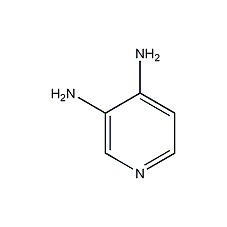
3,4-diaminopyridine

3,4-diaminopyridine structural formula

structural formula

business number 016p
molecular formula c5h7n3
molecular weight 109.13
label

none

numbering system

cas number:54-96-6

mdl number:mfcd00006401

einecs number:200-220-9

rtecs number:us7600000

brn number:110232

pubchem number:24894084

physical property data

1. character:colorless needle-like crystals. sensitive to air.

2. density (g/ml,25/4): undetermined

3. relative vapor density (g/ml,air=1): undetermined

4. melting point (ºc): 218~219 -font-kerning: 0pt”>

5. boiling point (ºc,normal pressure): undetermined

6. boiling point (ºc, 1.60kpa): undetermined.

7 . refractive index: undetermined

8. flashpoint (ºc): undetermined

9. specific optical rotation (º): undetermined

10. autoignition point or ignition temperature (ºc): undetermined

11. vapor pressure (kpa,25ºc): undetermined

12. saturated vapor pressure (kpa,60ºc): undetermined

13. heat of combustion (kj/mol): undetermined

14. critical temperature (ºc): undetermined

15. critical pressure (kpa): undetermined

16. oil and water (octanol/log value of partition coefficient (water): undetermined

17. explosion limit (%,v/v): undetermined

18. lower explosion limit (%,v/v): undetermined

19. solubility:easily soluble in water and ethanol, slightly soluble in ether.

toxicological data

1, acute toxicity: mouse abdominal cavity ld50: 20mg/kg; mouse subcutaneous ld50: 35mg/kg; mouse intravenousld50: 13mg/kg; wild birds ld50: 75mg/kg

ecological data

none

molecular structure data

5. molecular property data:

1. molar refractive index: 32.81

2. molar volume (m3/mol):87.2

3. isotonic specific volume (90.2k):253.0

4. surface tension (dyne/cm):70.9

5. polarizability10-24cm3):13.00

compute chemical data

1. reference value for hydrophobic parameter calculation (xlogp): -0.5

2. number of hydrogen bond donors: 2

3. number of hydrogen bond acceptors: 3

p>

4. number of rotatable chemical bonds: 0

5. number of tautomers: 6

6. topological molecule polar surface area 64.9

7. number of heavy atoms: 8

8. surface charge: 0

9. complexity: 74.1

10. number of isotope atoms: 0

11. determine the number of atomic stereocenters: 0

12. uncertain number of atomic stereocenters: 0

13. determine the number of chemical bond stereocenters: 0

14. number of uncertain chemical bond stereocenters: 0

15. number of covalent bond units: 1

properties and stability

none

storage method

this product should be sealed and stored with argon gas.

synthesis method

none

purpose

organic synthesis.

extended-reading:https://www.bdmaee.net/lupragen-n301-catalyst-pentamethylenediethylenetriamine-/
extended-reading:https://www.bdmaee.net/wp-content/uploads/2022/08/7-1.jpg
extended-reading:https://www.cyclohexylamine.net/bis2dimethylaminoethylether-22%e2%80%b2-oxybisnn-dimethylethylamine/
extended-reading:https://www.newtopchem.com/archives/category/products/page/125
extended-reading:https://www.bdmaee.net/nt-cat-ea-103-catalyst-cas10027-40-8-newtopchem/
extended-reading:https://www.bdmaee.net/fomrez-sul-11a-catalyst-/
extended-reading:https://www.bdmaee.net/tin-chloride-anhydrous%ef%bc%8ctiniv-chloride/
extended-reading:https://www.newtopchem.com/archives/44507
extended-reading:https://www.bdmaee.net/wp-content/uploads/2021/05/2-6.jpg
extended-reading:https://www.cyclohexylamine.net/cas-33568-99-9-dioctyl-dimaleate-di-n-octyl-tin/

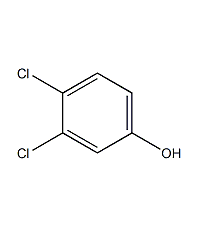
3,4-dichlorophenol

3,4-dichlorophenol structural formula

structural formula

business number 029t
molecular formula c6h4cl2o
molecular weight 163.00
label

3,4-dichlorophenol,

3,4-dichlorophenol,

3,4-dichloro-hydroxybenzene,

cl2c6h3oh

numbering system

cas number:95-77-2

mdl number:mfcd00002258

einecs number:202-450-5

rtecs number:sk8800000

brn number:1907693

pubchem number:24894075

physical property data

1. properties: needle-like crystals.

2. gas phase standard claims heat (enthalpy) (kj·mol-1): -194.4

3. relative vapor density (g/ml, air=1): undetermined

4. melting point (ºc): 68

5. boiling point (ºc, normal pressure): 145-146

6 . boiling point (ºc, kpa): not determined

7. refractive index: undetermined

8. flash point (ºc): 252-255

9 . specific rotation (º): undetermined

10. autoignition point or ignition temperature (ºc): undetermined

11. vapor pressure (mmhg,ºc): undetermined

12. saturated vapor pressure (kpa, ºc): undetermined

13. heat of combustion (kj/mol): undetermined

14. critical temperature (ºc): undetermined

15. critical pressure (kpa): undetermined

16. log value of oil-water (octanol/water) partition coefficient: undetermined

17. explosion upper limit (%, v/v): undetermined

18. explosion lower limit (%, v/v): undetermined

19. solubility : soluble in ethanol, ether and benzene.

toxicological data

1. acute toxicity: mouse oral ld50: 1685mg/kg;

ecological data

this substance is harmful to the environment, and special attention should be paid to the pollution of water bodies.

molecular structure data

1. molar refractive index: 37.92

2. molar volume (cm3/mol): 111.7

3. isotonic specific volume (90.2k ): 294.0

4. surface tension (dyne/cm): 47.8

5. polarizability (10-24cm3): 15.03

compute chemical data

1. reference value for hydrophobic parameter calculation (xlogp): none

2. number of hydrogen bond donors: 1

3. number of hydrogen bond acceptors: 1

4. number of rotatable chemical bonds: 0

5. number of tautomers: 3

6. topological molecule polar surface area 20.2

7. number of heavy atoms: 9

8. surface charge: 0

9. complexity: 97.1

10. number of isotope atoms: 0

11. determine the number of atomic stereocenters: 0

12. uncertain number of atomic stereocenters: 0

13. determine the number of chemical bond stereocentersnumber: 0

14. number of uncertain chemical bond stereocenters: 0

15. number of covalent bond units: 1

properties and stability

avoid contact with oxidants, acid anhydrides, and acid chlorides.

storage method

store in a cool, ventilated warehouse. keep away from fire and heat sources. protect from direct sunlight. the packaging is sealed. they should be stored separately from oxidants, acid anhydrides and acid chlorides, and avoid mixed storage. equipped with the appropriate variety and quantity of fire equipment. suitable materials should be available in the storage area to contain spills.

synthesis method

none yet

purpose

used as gas chromatography comparison sample and used in organic synthesis.

extended-reading:https://www.bdmaee.net/pc-cat-np15-catalyst-cas67151-63-7/
extended-reading:https://www.newtopchem.com/archives/1814
extended-reading:https://www.bdmaee.net/fascat8201-tertiary-amine-catalyst-arkema-pmc/
extended-reading:https://www.bdmaee.net/pc-cat-np60-hard-foam-catalyst-dimethylbenzylamine-nitro/
extended-reading:https://www.newtopchem.com/archives/738
extended-reading:https://www.bdmaee.net/dabco-nmm-cas-109-02-4-n-methylmorpholine/
extended-reading:https://www.bdmaee.net/ethylhexanoic-acid-zinc-salt/
extended-reading:https://www.newtopchem.com/archives/185
extended-reading:https://www.newtopchem.com/archives/1063
extended-reading:https://www.bdmaee.net/wp-content/uploads/2022/08/1-3.jpg

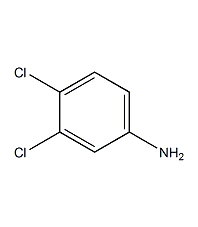
3,4-dichloroaniline

3,4-dichloroaniline structural formula

structural formula

business number 029s
molecular formula c6h5cl2n
molecular weight 162
label

aromatic nitrogen-containing compounds and their derivatives

numbering system

cas number:95-76-1

mdl number:mfcd00007768

einecs number:202-448-4

rtecs number:bx2625000

brn number:636837

pubchem number:24867396

physical property data

1. characteristics: brown needle-like crystals. [1]

2. melting point (℃): 70~72.5[2]

3. boiling point (℃) :272[3]

4. relative density (water = 1): 1.33[4]

5. relative vapor density (air=1): 5.59[5]

6. saturated vapor pressure (kpa): 0.13 (80.5℃)[6]

7. critical pressure (mpa): 4.1[7]

8. octanol/water partition coefficient: 2.69[8]

9. flash point (℃): 166 (oc) [9]

10. ignition temperature (℃): 265[10]

11. explosion upper limit (%): 7.2 (179°c) [11]

12. explosion lower limit (%): 2.8 (153℃) [12]

13. solubility: slightly soluble in water, soluble in most organic solvents. [13]

toxicological data

1. acute toxicity[14] ld50: 545mg/kg (rat oral)

2. irritation[15]

rabbit transdermal: 2mg (24h), severe stimulation.

rabbit eye: 250μg (24h), severe irritation.

3. mutagenicity [16] microbial mutagenicity: aspergillus nidulans 200mg/l. sister chromatid exchange: human lymphocytes 125 μmol/l.

ecological data

1. ecotoxicity[17]

lc50: 7.26~8.95mg/l (96h) (fathead minnow, 36d); <0.1mg/l (96h) (daphnia)

2. biodegradability no data available

3. non-biodegradability [18] in the air, when the concentration of hydroxyl radicals is 5.00×10⁵ units/cm3, the degradation half-life is 17h (theory).

4. bioaccumulation [19] bcf: 30.2 (zebrafish, contact time 10h)

molecular structure data

1. molar refractive index: 40.27

2. molar volume (cm3/mol): 115.6

3. isotonic specific volume (90.2k ): 304.8

4. surface tension (dyne/cm): 48.3

5. polarizability (10-24cm3): 15.96

compute chemical data

1. reference value for hydrophobic parameter calculation (xlogp): none

2. number of hydrogen bond donors: 1

3. number of hydrogen bond acceptors: 1

4. number of rotatable chemical bonds: 0

5. number of tautomers: none

6. topological molecule polar surface area 26

7. number of heavy atoms: 9

8. surface charge: 0

9. complexity: 97.1

10. number of isotope atoms: 0

11. determined number of atomic stereocenters: 0

12. uncertain number of atomic stereocenters: 0

13.�the number of stereocenters of certain chemical bonds: 0

14. the number of stereocenters of uncertain chemical bonds: 0

15. the number of covalent bond units: 1

properties and stability

1. this product is toxic. can cause lesions in the respiratory system, nervous system and hematopoietic system. mice were given ld501000mg/kg by gavage, and rats were given ld50700mg/kg by gavage. the olfactory threshold of rats is 0.047mg/m3; the lowest light perception of the eyes is 0.025mg/kg. the equipment should be sealed to prevent running, leaking, dripping and leaking. protective equipment should be worn during operation to avoid direct contact with the human body. the maximum allowable concentration in the air in the operating place is 0.05mg/m3.

2. stability[20] stable

3. incompatible substances[21] acids, acid chlorides, acid anhydrides, strong oxidants

4. conditions to avoid contact[22] heating

5. polymerization hazard[23] no polymerization

6. decomposition products[24] hydrogen chloride

storage method

storage precautions[25] store in a cool, ventilated warehouse. keep away from fire and heat sources. the packaging is sealed. they should be stored separately from oxidants, acids, and food chemicals, and avoid mixed storage. equipped with the appropriate variety and quantity of fire equipment. suitable materials should be available in the storage area to contain spills.

synthesis method

1. using anhydrous ferric chloride as a catalyst, pass chlorine gas into the molten p-nitrochlorobenzene at 105°c to obtain 3,4-dichloronitrobenzene. then, it undergoes reduction reaction with iron powder, formic acid and water under reflux to obtain 3,4-dichloroaniline. 3,4-dichloronitrobenzene can also be obtained by nitration of o-dichlorobenzene. glacial acetic acid can be used instead of formic acid in the reduction reaction with iron powder. another reduction method is catalytic hydrogenation.

2. the preparation method is to add p-chloronitrobenzene and anhydrous ferric chloride catalyst into the reaction kettle, and introduce chlorine gas at 100-110°c. when the freezing point of the chlorination reactant reaches 30 the reaction endpoint is when ~31°c. move this material to the reduction kettle, then add sodium thiosulfate (to eliminate the influence of residual chlorine in the reactant) and formic acid, heat to 100°c (reflux state) and slowly add iron powder (complete addition in about 4 to 5 hours). then continue to maintain the reflux reaction, and the end point of the reaction is when no nitrobenzene is observed. add chlorobenzene with 5 to 6 times the yield of 3,4-dichloroaniline, stir for 0.5 to 1.0 hours, cool, filter and wash the filter residue with a small amount of chlorobenzene. the resulting filtrate is a chlorobenzene solution of 3,4-dichloroaniline. heating and dechlorination of benzene gives 3,4-dichloroaniline.
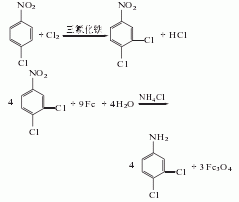

3,4-dichloronitrate can also be used it is prepared by catalytic hydrogenation of benzene. add 3,4-dichloronitrobenzene to the autoclave, add raney nickel catalyst, industrial ethanol as the solvent, flush the high-pressure system with nitrogen 3 times, hydrogen 3 times, then fill with hydrogen to a pressure of 4 mpa, and at the same time the temperature is raised to 60-70°c for reaction until no hydrogen is absorbed, and then the finished product can be obtained by cooling and post-processing.
in addition, o-dichlorobenzene can also be used as raw material, which can be nitrated to obtain 3,4-dichloronitrobenzene, which can then be further reduced to obtain the finished product. most foreign companies use this method to produce 3,4-dichloroaniline.

purpose

1. used to synthesize c.i. disperse red 153 (disperse red g-s) and c.i. disperse red 152, etc. it is also an intermediate for herbicides such as diuron and benzofen.

2. used in dye intermediates, pesticide intermediates and biological component intermediates. [26]

extended-reading:https://www.newtopchem.com/archives/44765
extended-reading:https://www.bdmaee.net/ethylhexanoic-acid-zinc-salt/
extended-reading:https://www.newtopchem.com/archives/42995
extended-reading:https://www.newtopchem.com/archives/44567
extended-reading:https://www.bdmaee.net/wp-content/uploads/2022/08/59.jpg
extended-reading:https://www.cyclohexylamine.net/low-atomization-catalyst-9727-low-atomization-amine-catalyst/
extended-reading:https://www.newtopchem.com/archives/584
extended-reading:https://www.newtopchem.com/archives/805
extended-reading:https://www.bdmaee.net/nt-cat-ea-103-catalyst-cas10027-40-8-newtopchem/
extended-reading:https://www.bdmaee.net/n-acetylmorpholine-cas1696-20-4-4-acetylmorpholine/
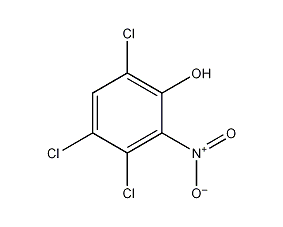
3,4,6-trichloro-2-nitrophenol

3,4,6-trichloro-2-nitrophenol structural formula

structural formula

business number 01t1
molecular formula c6h2cl3no3
molecular weight 242.44
label

2-nitro-3,4,6-trichlorophenol,

2-nitro-3,4,6-trichlorophenol

numbering system

cas number:82-62-2

mdl number:none

einecs number:none

rtecs number:none

brn number:none

pubchem id:none

physical property data

1. physical property data

1. character: uncertain.

2. density (g/ml,25/4): unsure

3. relative vapor density (g/ml,air=1): unsure

4. melting point (ºc): unsure

5. boiling point (ºc,normal pressure): uncertain

6. boiling point (ºc,5.2kpa): unsure

7. refractive index: uncertain

8. flash point (ºc): unsure

9. specific optical rotation (º): unsure

10. autoignition point or ignition temperature (ºc): unsure

11. vapor pressure (kpa,25ºc): unsure

12. saturated vapor pressure (kpa,60ºc): unsure

13. heat of combustion (kj/mol): unsure

14. critical temperature (ºc): unsure

15. critical pressure (kpa): unsure

16. oil and water (octanol/log value of water) partition coefficient: uncertain

17. explosion limit (%,v/v): unsure

18. lower explosion limit (%,v/v): unsure

19. solubility: uncertain.

toxicological data

acute toxicity:

mouse veinld50:56mg/kg

ecological data

none yet

molecular structure data

5. molecular property data:

1. molar refractive index:49.36

2. molar volume (m3/mol):135.5

3. isotonic specific volume (90.2k):385.3

4. surface tension (dyne/cm):65.3

5. polarizability10-24cm3):19.56

compute chemical data

1. reference value for hydrophobic parameter calculation (xlogp): none

2. number of hydrogen bond donors: 1

3. number of hydrogen bond acceptors: 3

4. number of rotatable chemical bonds: 0

5. number of tautomers: 4

6. topological molecule polar surface area 66

7. number of heavy atoms: 13

8. surface charge: 0

9. complexity: 210

10. number of isotope atoms: 0

11. determine the number of atomic stereocenters: 0

12. uncertain number of atomic stereocenters: 0

13. determine the number of chemical bond stereocenters: 0

14. number of uncertain chemical bond stereocenters: 0

15. number of covalent bond units: 1

properties and stability

none yet

storage method

none yet

synthesis method

none yet

purpose

none yet

extended-reading:https://www.newtopchem.com/archives/1131
extended-reading:https://www.bdmaee.net/nnn-trimethyl-n-hydroxyethyl-bisaminoethyl-ether-cas-83016-70-0-jeffcat-zf-10/
extended-reading:https://www.bdmaee.net/18-diazabicycloundec-7-ene-cas-6674-22-2-dbu/
extended-reading:https://www.bdmaee.net/wp-content/uploads/2022/08/dioctyl-dimaleate-di-n-octyl-tin-cas33568-99-9-dioctyl-dimaleate-di-n-octyl-tin.pdf
extended-reading:https://www.bdmaee.net/tin-chloride-anhydrous%ef%bc%8ctiniv-chloride/
extended-reading:https://www.bdmaee.net/wp-content/uploads/2022/08/51.jpg
extended-reading:https://www.newtopchem.com/archives/44475
extended-reading:https://www.newtopchem.com/archives/45523
extended-reading:https://www.bdmaee.net/wp-content/uploads/2022/08/-bl-17-niax-a-107-jeffcat-zf-54.pdf
extended-reading:https://www.bdmaee.net/fomrez-ul-24-catalyst-/

bdmaee:bis (2-dimethylaminoethyl) ether

cas no:3033-62-3

china supplier

for more information, please contact the following email:

email:sales@newtopchem.com

email:service@newtopchem.com

email:technical@newtopchem.com

BDMAEE Manufacture !