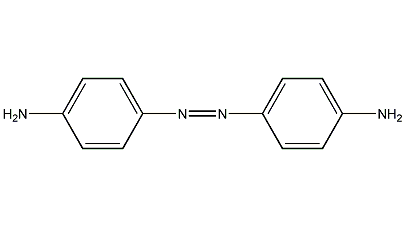
2,4,4-trimethyl-2-pentanol
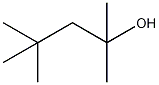
2,4,4-Trimethyl-2-pentanol structural formula

2,4,4-trimethyl-2-pentanol structural formula

structural formula

business number 079e
molecular formula c8h18o
molecular weight 130.23
label

2-hydroxy-2,4,4-trimethylpentane,

aliphatic compounds

numbering system

cas number:690-37-9

mdl number:mfcd00101611

einecs number:none

rtecs number:none

brn number:none

pubchem id:none

physical property data

1. properties: colorless and transparent liquid.

2. density (g/ml, 25/4℃): 0.819

3. relative density (20℃, 4℃): 0.823

4 . melting point (ºc): undetermined

5. boiling point (ºc, normal pressure): 164.4

6. refractive index at room temperature (n25): 1.426

7. refractive index at room temperature (n20): 1.428

8. flash point (ºc): undetermined

9. specific rotation (º): not determined

10. autoignition point or ignition temperature (ºc): not determined

11. vapor pressure (kpa, 25ºc): not determined determined

12. saturated vapor pressure (kpa, 60ºc): undetermined

13. heat of combustion (kj/mol): undetermined

14. critical temperature (ºc): undetermined

15. critical pressure (kpa): undetermined

16. log value of oil-water (octanol/water) partition coefficient: undetermined

p>

17. explosion upper limit (%, v/v): undetermined

18. explosion lower limit (%, v/v): undetermined

19. dissolution sex: undetermined.

toxicological data

none

ecological data

generally not hazardous to water, do not discharge material into the surrounding environment without government permission.

molecular structure data

1. molar refractive index: 40.57

2. molar volume (cm3/mol): 158.1

3. isotonic specific volume (90.2k ): 357.3

4. surface tension (dyne/cm): 26.0

5. dielectric constant:

6. dipole moment (10-24cm3):

7. polarizability: 16.08

compute chemical data

1. reference value for hydrophobic parameter calculation (xlogp): 2.2

2. number of hydrogen bond donors: 1

3. number of hydrogen bond acceptors: 1

4. number of rotatable chemical bonds: 2

5. number of tautomers: none

6. topological molecule polar surface area 20.2

7. number of heavy atoms: 9

8. surface charge: 0

9. complexity: 87.2

10. number of isotope atoms: 0

11. determine the number of atomic stereocenters�:0

12. uncertain number of stereocenters of atoms: 0

13. determined number of stereocenters of chemical bonds: 0

14. uncertain chemical bonds number of stereocenters: 0

15. number of covalent bond units: 1

properties and stability

keep away from oxides.

storage method

store in an airtight container in a cool, dry place. store away from oxidizing agents. avoid sources of fire.

synthesis method

none

purpose

none
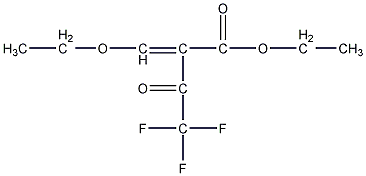
ethyl 2-(ethoxymethylene)-4,4,4-trifluoroacetoacetate

Ethyl 2-(ethoxymethylene)-4,4,4-trifluoroacetoacetate  Ester structural formula

ethyl 2-(ethoxymethylene)-4,4,4-trifluoroacetoacetate  ester structural formula

structural formula

business number 05u1
molecular formula c9h11f3o4
molecular weight 240.18
label

ethoxy-2-methylenetrifluoroacetoacetate,

medicine

numbering system

cas number:571-55-1

mdl number:mfcd02677683

einecs number:none

rtecs number:none

brn number:none

pubchem number:24867645

physical property data

1. physical property data

1. density (g/ml ,25/4℃):1.235

2. flashpoint ():104

3. boiling point (ºc,1mmhg ): 80-82

toxicological data

none

ecological data

none

molecular structure data

5. molecular property data:

1. molar refractive index: 47.65

2. molar volume (m3/mol):193.8

3. isotonic specific volume (90.2k):446.6

4. surface tension (dyne/cm):28.1

5. polarizability10-24cm3):18.89

compute chemical data

4. calculated chemical data:

1. hydrophobic parameters calculate reference value (xlogp):3.5

2. hydrogen bonding number of donors: 1

3. hydrogen bonding number of receptors: 2

4. rotatable number of chemical bonds: 4

5. topological molecules polar surface area (tpsa):37.3

6. heavy atoms quantity: 15

7. surface charge :0

8. complexity :203

9. isotope atomic number:0

10. determine the number of atomic stereocenters:0

11. uncertain number of atomic stereocenters:1

12. determine the number of stereocenters of chemical bonds:0

13. uncertain number of chemical bond stereocenters:0

14. number of covalent bond units: 1

properties and stability

none

storage method

none

synthesis method

none

purpose

none

the innovative application of polyurethane foam catalysts in environmentally friendly coatings is in line with green trends

innovative application of polyurethane foam catalyst in environmentally friendly coatings

introduction: catalyst revolution under green trend

in today’s society, “green environmental protection” is no longer a slogan, but a development direction pursued by all walks of life around the world. whether it is industrial production or daily life, people are looking for more environmentally friendly and sustainable solutions. as an important part of the chemical industry, the coatings industry has a particularly significant impact on the environment. traditional coatings often contain a large number of volatile organic compounds (vocs), which not only pollutes the air, but may also pose a threat to human health. therefore, the development of environmentally friendly coatings has become an inevitable choice for the industry.

in this context, polyurethane foam catalysts emerged as a new material and gradually became one of the key technologies to promote the development of environmentally friendly coatings. polyurethane foam itself is widely used in many fields such as construction, automobiles, home appliances, etc. with its excellent thermal insulation performance, sound insulation effect and lightweight properties. as a key component in its preparation process, the catalyst directly determines the performance and environmental protection of the foam. through innovative applications, polyurethane foam catalysts can not only improve the physical performance of the product, but also significantly reduce energy consumption and emissions in the production process, truly realizing “green manufacturing”.

this article will start from the basic principles of catalysts, deeply explore its specific application in environmentally friendly coatings, analyze its advantages and challenges, and combine relevant domestic and foreign research literature to present a comprehensive and vivid perspective for readers. the article will also make complex chemical knowledge easy and interesting with easy-to-understand language and rich rhetorical techniques. at the same time, through detailed parameter comparison and data support, readers can better understand the potential and prospects of this technology.

next, we will unveil the mystery of polyurethane foam catalyst one by one and explore how it can lead the transformation of the coatings industry under the green trend.


basic principles and classification of polyurethane foam catalyst

to understand the role of polyurethane foam catalysts in environmentally friendly coatings, it is necessary to clarify its basic principles and classification. simply put, polyurethane foam is a polymer material produced by the reaction of isocyanate and polyol, and catalysts are the key factor in accelerating this chemical reaction. without the participation of the catalyst, the reaction rate will be very slow and even the ideal effect will not be achieved. therefore, the role of the catalyst is like a “behind the scenes” that quietly drives the entire chemical reaction process.

working mechanism of catalyst

the formation of polyurethane foam mainly depends on two chemical reactions: foaming reaction and crosslinking reaction. foaming reaction refers to the reaction of isocyanate with water or foaming agent to form carbon dioxide gas, thereby forming a foam structure; while crosslinking reaction refers to the polymerization reaction between isocyanate and polyol, which ultimately forms a stable three-dimensional network structure. the function of the catalyst is to regulate the speed and proportion of these two reactions to ensure uniformity of the foam.sex and stability.

depending on the function, polyurethane foam catalysts can be divided into the following categories:

  1. amine catalyst
    amines are a common category and are mainly used to promote foaming and gel reactions. they accelerate the reaction rate by interacting with isocyanate groups (-nco). for example, dimethylamine (dmea) and triamine (tea) are typical amine catalysts.

  2. tin catalyst
    tin catalysts are usually used to promote crosslinking reactions and increase the hardness and strength of foams. common tin catalysts include stannous octanoate (snoct) and dibutyltin dilaurate (dbtdl). although this type of catalyst is efficient, its use in environmentally friendly coatings is subject to certain limitations due to its potential toxicity problems.

  3. composite catalyst
    to balance the needs of foaming and crosslinking reactions, the researchers have developed a variety of composite catalysts. by optimizing the formulation, these catalysts can promote both reactions simultaneously, thus achieving better foam performance.

principles for selecting catalysts

in practical applications, the selection of catalysts requires comprehensive consideration of multiple factors, including reaction conditions, raw material characteristics and performance requirements of the target product. for example, for products that require rapid curing, strong amine catalysts can be selected; for products that focus on flexibility, tin catalysts or composite catalysts are more suitable.

in addition, with the increase in environmental awareness, the toxicity of catalysts is also increasing. in recent years, many studies have been committed to developing novel catalysts that are non-toxic and low-volatility to meet the requirements of green manufacturing. for example, catalysts based on biodegradable materials are gradually becoming research hotspots, providing more possibilities for environmentally friendly coatings.

through the above introduction, we can see that polyurethane foam catalysts are not only the “accelerator” of chemical reactions, but also the key factor in determining product performance. next, we will further explore its specific application in environmentally friendly coatings.


innovative application of polyurethane foam catalyst in environmentally friendly coatings

with the increasing strict environmental regulations and the increasing demand for green products by consumers, the application of polyurethane foam catalysts in environmentally friendly coatings is ushering in unprecedented development opportunities. this catalyst can not only significantly improve the performance of the coating, but also effectively reduce environmental pollution during the production process. it can be called the “green engine” of the coating industry. the following are examples of its innovative application in several typical fields.

1. building exterior wall insulation coating

the insulation of building exterior walls is an important part of energy saving and consumption reductionone of the means, polyurethane foam coating has become a popular choice in the market due to its excellent thermal insulation performance and construction convenience. however, traditional foam coatings may release harmful substances during production and use, affecting the environment and human health. to solve this problem, the researchers developed an environmentally friendly foam coating based on composite catalysts.

innovation points:

  • low voc emissions: by optimizing the catalyst formulation, the generation of by-products during the reaction of isocyanate and polyols is reduced, thereby greatly reducing voc emissions.
  • high-performance foam structure: use two-component amine catalysts to accurately control the ratio of foaming reaction and crosslinking reaction, so that the foam has a more uniform pore structure and higher mechanical strength.
  • strong weather resistance: adding special modification additives improves the stability and service life of the paint under extreme climatic conditions.
parameter name traditional foam coating environmental foam coating
voc content (g/l) >500 <50
thermal insulation performance (w/m·k) 0.04 0.02
service life (years) 5-8 >10

2. water-based wood coating

water-based wood coatings have gradually replaced traditional solvent-based coatings with their environmental protection and safety characteristics, becoming the first choice for home decoration. however, due to the particularity of the aqueous system, traditional catalysts are difficult to meet their performance requirements. to this end, scientists have designed a new water-soluble amine catalyst that is specially used in the production of water-based wood coatings.

innovation points:

  • rapid dry: this catalyst can significantly accelerate the reaction of isocyanate with water, causing the coating to cure in a short period of time, greatly improving construction efficiency.
  • high transparency: by finely adjusting the amount of catalyst, the yellowing of the coating caused by excessive cross-linking is avoided, and the original natural texture of the wood is maintained.
  • strong scratch resistance: the optimized foam structure givesthe coating has higher hardness and wear resistance, extending the service life of the furniture.
parameter name solvent-based coatings water-based environmentally friendly coatings
drying time (hours) 6-8 2-3
transparency medium high
scratch resistance general excellent

3. car interior coating

auto interior coatings must not only have good decorative effects, but also meet strict environmental protection standards and safety requirements. the application of polyurethane foam catalyst in this field has successfully solved the problems of high odor and prone to aging in traditional coatings.

innovation points:

  • ultra-low odor: use low-volatile tin catalysts to replace traditional toxic catalysts, significantly reducing the risk of pollution in the air quality in the car.
  • soft touch: by adjusting the catalyst ratio, the foam is highly elastic and soft, improving the comfort experience of passengers.
  • strong stain resistance: introducing functional additives enhances the coating’s stain resistance and makes it easier to clean and maintain.
parameter name traditional interior coating environmental interior coating
odor level level 3 level 1
comfort general excellent
stain resistance poor excellent

4. home appliance shell coating

home appliance shell coatings need to take into account the three major characteristics of beauty, durability and environmental protection. the application of polyurethane foam catalysts in this field not only improves the appearance quality of the product, but also greatly reduces production costs.

innovation points:

  • low cost highbenefits: by optimizing the amount of catalyst, the waste of raw materials is reduced and the excellent performance of the coating is ensured.
  • rich color: use nano-scale pigment dispersion technology to make the coating appear more vivid and lasting color effects.
  • anti-bacterial and mildew: adding functional catalysts to the coating, giving special anti-bacterial and mildew-proof properties, extending the service life of home appliances.
parameter name traditional home appliance coatings environmental-friendly home appliance coatings
cost reduction ratio 20%
color durability general excellent
antibacterial rate none >99%

from the above cases, it can be seen that the application of polyurethane foam catalysts in environmentally friendly coatings not only brings performance breakthroughs, but also injects new vitality into the development of the industry. next, we will further analyze its advantages and challenges.


the advantages and challenges of polyurethane foam catalyst

although the application of polyurethane foam catalysts in environmentally friendly coatings has shown many highlights, its development has not been smooth. in order to have a more comprehensive understanding of this technology, we need to deeply analyze its advantages and challenges.

advantage analysis

  1. efficiency
    polyurethane foam catalysts can significantly increase chemical reaction speeds, shorten production cycles, and thus reduce energy consumption and operational costs. for example, in the production of building exterior wall insulation coatings, the use of composite catalysts can shorten the reaction time from the original few hours to dozens of minutes.

  2. verifiability
    different types of catalysts can be flexibly matched according to specific needs to meet diverse product performance requirements. for example, amine catalysts are suitable for rapid curing scenarios, while tin catalysts are more suitable for applications requiring high hardness and strength.

  3. environmentality
    the focus of the research and development of new catalysts is to reduce the use of toxic substances and reduce the harm to the environment and human health. for example, bio-basedthe emergence of catalysts provides the possibility to achieve a completely green manufacturing.

challenge analysis

  1. cost issues
    although environmentally friendly catalysts have more advantages in performance, their high r&d and production costs are still the main obstacles to large-scale promotion. especially in some price-sensitive markets, traditional catalysts still dominate.

  2. technical barriers
    developing efficient and stable catalysts requires deep technical accumulation and continuous capital investment. at present, a few large chemical companies in the world have mastered core technologies and formed a high industry threshold.

  3. insufficient policy support
    in some regions, the lack of special support policies for environmentally friendly catalysts has led to enterprises facing greater economic pressure during the transformation process.

faced with these challenges, researchers and enterprises are actively exploring solutions. for example, reduce the cost of catalysts by improving production processes, or seeking support from governments and industry associations to promote the introduction of relevant policies. only in this way can more people enjoy a better life brought by environmentally friendly paints.


the current situation and development prospects of domestic and foreign research

in order to more intuitively show the research progress of polyurethane foam catalysts, we have referred to many authoritative documents at home and abroad and summarized the research results and development trends in the following aspects.

domestic research status

in recent years, domestic scholars have made significant progress in the field of polyurethane foam catalysts. for example, a research team at a university developed a bio-based catalyst based on vegetable oil extracts, which was successfully applied to the production of water-based wood coatings. experimental data show that the catalyst not only has good catalytic effects, but also fully complies with the requirements of the eu reach regulations.

literature title main content
“application of bio-based catalysts in water-based coatings” the feasibility of vegetable oil extracts as catalysts and their environmental advantages are discussed
“study on the synthesis and properties of new amines catalysts” the influence of different amine catalysts on foam performance and optimization methods were analyzed

foreign research trends

at the same time, foreign research is also being promoted. a famous americanindustrial company has launched a composite catalyst based on nanotechnology, which can significantly improve the mechanical properties and heat resistance of foams. in addition, the german research team focuses on developing low-toxic tin catalysts to meet the automotive industry’s demand for environmentally friendly interior coatings.

literature title main content
“application of nanocatalysts in polyurethane foams” describes the effect of nanotechnology on catalyst performance improvement
“research progress in low-toxic tin catalysts” summary of the safety and scope of application of the new generation of tin catalysts

development prospects

in the future, with the continuous emergence of new materials and new technologies, polyurethane foam catalysts will usher in a broader application space. for example, the research and development of intelligent catalysts will make the production process more accurate and controllable, while the emergence of recyclable catalysts is expected to completely solve the problem of waste disposal. it can be foreseen that this technology will play an important role in promoting the coatings industry toward green and intelligent directions.


conclusion: going towards a green future

to sum up, polyurethane foam catalyst, as one of the core technologies of environmentally friendly coatings, is profoundly changing our lives. its figure is everywhere from building exterior walls to car interiors, from appliance shells to wooden furniture. although we are still facing some technological and economic challenges, we have reason to believe that with the continuous strengthening of scientific research power and the gradual improvement of the policy environment, this technology will surely shine even more dazzlingly in the green wave of the future.

let us work together and contribute our strength to the realization of the beautiful vision of harmonious coexistence between man and nature!

extended reading:https://www.bdmaee.net/methyl-tin-maleate-powder-c6h8o4sn-methyl-tin-maleate/

extended reading:https://www.bdmaee.net/dabco-bl-17-niax-a-107-jeffcat-zf-54/

extended reading:https://www.newtopchem.com/archives/40390

extended reading:https://www.bdmaee.net/monobutyl-tin-oxide/

extended reading:https://www.bdmaee.net/wp-content/uploads/2022/08/37-6.jpg

extended reading:https://www.bdmaee.net/dabco-ne600-catalyst-cas10861-07-1–germany/

extended reading:https://www.cyclohexylamine.net/dabco-bx405-low-odor-strong-gel-amine-catalyst-bx405/

extended reading:https://www.cyclohexylamine.net/pc-amine-ma-190-amine-balance-catalyst/

extended reading:https://www.bdmaee.net/lupragen-n400-catalyst-trimethylhydroxyethyl-ethylene-diamine-/

extended reading:https://www.morpholine.org/category/morpholine/page/5396/

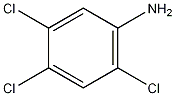
2,4,5-trichloroaniline

2,4,5-Trichloroaniline Structural Formula

2,4,5-trichloroaniline structural formula

structural formula

business number 0701
molecular formula c6h4cl3n
molecular weight 196.46
label

1-amino-2,4,5-trichlorobenzene,

2,4,5-trichlorobenzenamine,

1-amino-2,4,5-trichlorobenzene,

cl3c6h2nh2,

anilines

numbering system

cas number:636-30-6

mdl number:mfcd00007662

einecs number:211-254-9

rtecs number:none

brn number:879091

pubchem number:24861966

physical property data

1. character: light yellow needle-like crystal[1]

2. melting point (℃): 93~95[2]

3. boiling point (℃): 270[3]

4. octanol/water partition coefficient: 3.45[4]

5. solubility: slightly soluble in petroleum ether, soluble in ethanol, ether, carbon disulfide and acetic acid. [5]

toxicological data

1. acute toxicity no data available

2. irritation no data available

ecological data

extremely harmful to water, even in small amounts. do not let this product come into contact with groundwater, waterways and sewage systems. even a small amount of this product seeping into groundwater will cause danger to drinking water and is toxic to fish and plankton in the water. highly toxic to organic matter in water. do not discharge materials into the surrounding environment without government permission.

molecular structure data

1. molar refractive index: 45.17

2. molar volume (cm3/mol): 127.5

3. isotonic specific volume (90.2k ): 340.7

4. surface tension (dyne/cm): 50.8

5. polarizability (10-24cm3): 17.90

compute chemical data

1. reference value for hydrophobic parameter calculation (xlogp): none

2. number of hydrogen bond donors: 1

3. number of hydrogen bond acceptors: 1

4. number of rotatable chemical bonds: 0

5. number of tautomers: none

6. topological molecule polar surface area 26

7. number of heavy atoms: 10

8. surface charge: 0

9. complexity: 120

10. number of isotope atoms: 0

11. determine the number of atomic stereocenters: 0

12. uncertain number of atomic stereocenters: 0

13. determine the number of chemical bond stereocenters: 0

14. number of uncertain chemical bond stereocenters: 0

15. number of covalent bond units: 1

properties and stability

1. stability[6] stable

2. incompatible substances[7] acids, acid chlorides, acid anhydrides, chloroform, strong oxidants

3. conditions to avoid contact[8] heating

4. polymerization hazard[9] no polymerization

5. decomposition products[10] ammonia, hydrogen chloride

storage method

storage precautions[11] store in a cool, ventilated warehouse. keep away from fire and heat sources. the packaging is sealed. they should be stored separately from oxidants, acids, and food chemicals, and avoid mixed storage. equipped with the appropriate variety and quantity of fire equipment. suitable materials should be available in the storage area to contain spills.

synthesis method

add 1500kg 95% sulfuric acid; 3000kg 1,2,4-trichlorobenzene into the nitrification pot, stir, add 300kg of mixed acid (hno335%, h2so465%) at 40-50℃, stir for 2 hours at 48-50℃, then add 150kg of water to dilute to 75 % sulfuric acid, separate the upper oily substance, wash with water, and obtain 3650kg of crude trichloronitrobenzene. put 125l of water, 125kg of iron powder, 150kg of benzene, 150kg of pure trichloronitrobenzene and 1kg of formic acid into the reduction pot, heat to boil, add iron powder if necessary, after 3 hours of reduction reaction, check that the relative density of the benzene layer reaches 0.83 (50℃ )until. benzene was distilled off, and 2,4,5-trichloroaniline was distilled off under reduced pressure, with a yield of 84%.

purpose

1. intermediates for organic synthesis and dyes. after 2,4,5-trichloroaniline is diazotized and coupled with naphthol as-d in a weakly acidic medium, the pigment permanent red fgr (c.i. pigment red 112) can be produced. permanent red fgr is used for ink; emulsion paint; water slurry paint, and can also be used for coloring and pigment printing of paper, oilcloth and leather.

2. used as dye intermediate and used in organic synthesis. [12]

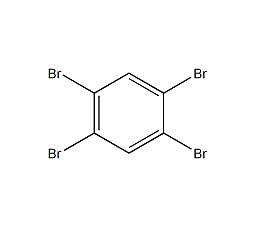
1,2,4,5-tetrabromobenzene

1,2,4,5-tetrabromobenzene structural formula

1,2,4,5-tetrabromobenzene structural formula

structural formula

business number 0700
molecular formula c6h2br4
molecular weight 393.70
label

tetrabromobenzene,

tetrabromobenzene,

aromatic hydrocarbons,

halogenated hydrocarbons

numbering system

cas number:636-28-2

mdl number:mfcd00000063

einecs number:211-253-3

rtecs number:none

brn number:1365830

pubchem number:24856808

physical property data

1. characteristics: prism needle crystal.

2. density (g/ml,25/4): 3.072

3. relative vapor density ( g/ml,air =1): not ok

4. melting point (ºc): 182

5. boiling point (ºc,normal pressure): undetermined

6. boiling point (ºc,5.2kpa): undetermined

7. refractive index: undetermined

8. flashpoint (ºc): not ok

9. specific optical rotation (º): undetermined

10. autoignition point or ignition temperature (ºc): undetermined

11. vapor pressure (kpa,25ºc): undetermined

12. saturated vapor pressure (kpa,60ºc): undetermined

13. heat of combustion (kj/mol): undetermined

14. critical temperature (ºc): undetermined

15. critical pressure (kpa): undetermined

16. oil and water (octanol/log value of partition coefficient (water): undetermined

17. explosion limit (%,v/v): undetermined

18. lower explosion limit (%,v/v): undetermined

19. solubility: soluble in benzene, slightly soluble in ethanol, insoluble in water.

toxicological data

1, acute toxicity: mouse (peritoneal) ldlo: 1,300 mg/kg;
rat (peritoneal)ld50 1,071mg/kg

since the ld50 of table salt is 3,000 mg/kg, bpa has the same degree of acute toxicity as table salt.

ecological data

usually for water is not hazardous and materials should not be discharged into the surrounding environment without government permission.

molecular structure data

1. molar refractive index: 57.01

2. molar volume (m3/mol):154.1

3. isotonic specific volume (90.2k):409.2

4. surface tension (dyne/cm):49.6

5. polarizability10-24cm3):22.60

compute chemical data

1. reference value for hydrophobic parameter calculation (xlogp): none

2. number of hydrogen bond donors: 0

3. number of hydrogen bond acceptors: 0

4. number of rotatable chemical bonds: 0

5. number of tautomers: none

6. topological molecule polar surface area 0

7. number of heavy atoms: 10

8. surface charge: 0

9. complexity: 90.3

10. number of isotope atoms: 0

11. determine the number of atomic stereocenters: 0

12. uncertain number of atomic stereocenters: 0

13. determine the number of chemical bond stereocenters: 0

14. number of uncertain chemical bond stereocenters: 0

15. number of covalent bond units: 1

properties and stability

keep away from oxidizing agents.

storage method

stored in seal the container and place in a cool, dry place. store away from oxidizing agents.

�compilation method

none

purpose

organic synthesis

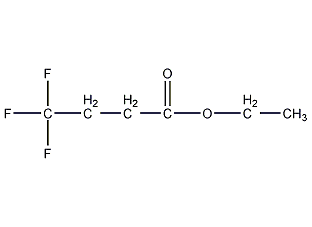
4,4,4-trifluorobutyric acid ethyl ester

Structural formula of ethyl 4,4,4-trifluorobutyrate

structural formula of ethyl 4,4,4-trifluorobutyrate

structural formula

business number 04hr
molecular formula c6h9f3o2
molecular weight 170.13
label

cf3ch2ch2co2c2h5,

alicyclic compounds

numbering system

cas number:371-26-6

mdl number:mfcd00041398

einecs number:none

rtecs number:none

brn number:1769215

pubchem number:24868070

physical property data

一 , physical property data

traits :light yellow or colorless liquid

density (g/ml,25/4): 1.16

relative vapor density (g/ml, air=1)not available

melting point (ºc): not available

boiling point (ºc, normal pressure): 127

boiling point (ºc, 5.2kpa): not available

refraction rate: 1.3526

flash point (ºc): not available

optical rotation (º): not available

spontaneous combustion point or ignition temperature (ºc): not available

steam pressure (kpa, 25ºc): not available

saturation vapor pressure (kpa, 60ºc): not available

burn heat (kj/mol):not available

critical temperature (ºc): not available

critical pressure (kpa): not available

oil and water log value of (octanol/water) partition coefficient:not available

explosion upper limit (%, v/v): not available

explosion lower limit (%, v/v): not available

dissolve character: not available

toxicological data

two , toxicological data:

acute toxicity:not available.

ecological data

three , ecological data:

1 ,other harmful effects: this substance may be harmful to the environment, and special treatment should be given to water bodies. notice.

molecular structure data

1. molar refractive index: 32.07

2. molar volume (m3/mol):147.4

3. isotonic specific volume (90.2k):319.2

4. surface tension (dyne/cm):21.9

5. polarizability 10-24 cm3):12.71

compute chemical data

1. reference value for hydrophobic parameter calculation (xlogp): 1.9

2. number of hydrogen bond donors: 0

3. number of hydrogen bond acceptors: 5

4. number of rotatable chemical bonds: 4

5. number of tautomers: none

6. topological molecule polar surface area 26.3

7. number of heavy atoms: 11

8. surface charge: 0

9. complexity: 130

10. number of isotope atoms: 0

11. determine the number of atomic stereocenters: 0

12. uncertain number of atomic stereocenters: 0

13. determine the number of chemical bond stereocenters: 0

14. number of uncertain chemical bond stereocenters: 0

15. number of covalent bond units: 1

properties and stability

none yet

storage method

none yet

synthesis method

none yet

purpose

used as organic solvent in resist materials; used as solvent in thermosensitive photosensitive resin

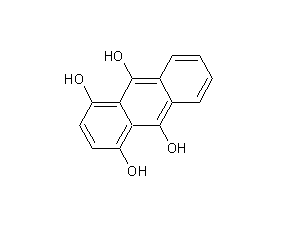
1,4,9,10-anthracenetetraol

1,4,9,10-anthracenetetraol structural formula

1,4,9,10-anthracenetetraol structural formula

structural formula

business number 051b
molecular formula c14h10o4
molecular weight 242.23
label

quinocyanine leucosome,

1,4-dihydroxyanthraquinone leucobody,

1,4,9,10-tetrahydroxy-anthracene,

leucoquinizarin,

anthracene-1,4,9,10-tetraol

numbering system

cas number:476-60-8

mdl number:none

einecs number:207-507-8

rtecs number:none

brn number:none

pubchem id:none

physical property data

1. character:undetermined

2. density (g/ m3,25/4): undetermined

3. relative vapor density (g/cm3,air=1): not ok

4. melting point (ºc): 151

5. boiling point (ºc,normal pressure): undetermined

6. boiling point (ºc,5.2kpa): undetermined

7. refractive index: undetermined

8. flash point (ºc): undetermined

9. specific optical rotation (º): undetermined

10. autoignition point or ignition temperature (ºc): undetermined

11. vapor pressure (kpa,25ºc): undetermined

12. saturated vapor pressure (kpa,60ºc): undetermined

13. heat of combustion (kj/mol): undetermined

14. critical temperature (ºc): undetermined

15. critical pressure (kpa): undetermined

16. oil and water (octanol/log value of water) partition coefficient: undetermined

17. explosion limit (%,v/v): undetermined

18. lower explosion limit (%,v/v): undetermined

19. solubility: undetermined

toxicological data

microorganismtestsystemic mutation: bacteriasalmonella typhimurium:100ug/tablet

ecological data

this substance may be harmful to the environment, and special attention should be paid to water bodies.

molecular structure data

1 molar refractive index:69.46

2 molar volumem3/mol)151.3

3 isotonic specific volume (90.2k):474.9

4 surface tensiondyne/cm)96.9

5 polarizability(10-24cm327.53

compute chemical data

1. reference value for hydrophobic parameter calculation (xlogp): none

2. number of hydrogen bond donors: 4

3. number of hydrogen bond acceptors: 4

4. number of rotatable chemical bonds: 0

5. number of tautomers: 15

6. topological molecule polar surface area 80.9

7. number of heavy atoms: 18

8. surface charge: 0

9. complexity: 278

10. number of isotope atoms: 0

11. determine the number of atomic stereocenters: 0

12. uncertain number of atomic stereocenters: 0

13. determine the number of chemical bond stereocenters: 0

14. number of uncertain chemical bond stereocenters: 0

15. number of covalent bond units: 1

properties and stability

according to specifications�it will not decompose during use and storage and avoid contact with oxides

storage method

save in a sealed manner and place it in a ventilated and dry place to avoid contact with other oxides.

synthesis method

none

purpose

used as dye intermediate

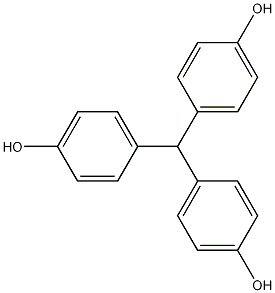
4,4′,4”-trihydroxytrimethylbenzene

4,4',4''-Trihydroxytrimethylbenzene structural formula

4,4',4''-trihydroxytrimethylbenzene structural formula

structural formula

business number 067u
molecular formula c19h16o3
molecular weight 292.33
label

4,4′,4”-methylenetriphenol

numbering system

cas number:603-44-1

mdl number:none

einecs number:210-040-2

rtecs number:none

brn number:none

pubchem number:24853626

physical property data

none

toxicological data

none

ecological data

3. ecological data:

1. other harmful effects: this substance may be harmful to the environment and should be harmful to water bodies. give special attention.

molecular structure data

5. molecular property data:

1, molar refractive index:85.61

2, molar volume (m3/mol):227.9

3, isotonic specific volume (90.2k ):636.2

4, surface tension (dyne/ cm):60.6

5 polarizability (10-24cm3): 33.93

compute chemical data

1. reference value for hydrophobic parameter calculation (xlogp): none

2. number of hydrogen bond donors: 3

3. number of hydrogen bond acceptors: 3

4. number of rotatable chemical bonds: 3

5. number of tautomers: 4

6. topological molecule polar surface area 60.7

7. number of heavy atoms: 22

8. surface charge: 0

9. complexity: 269

10. number of isotope atoms: 0

11. determine the number of atomic stereocenters: 0

12. uncertain number of atomic stereocenters: 0

13. determine the number of chemical bond stereocenters: 0

14. number of uncertain chemical bond stereocenters: 0

15. number of covalent bond units: 1

properties and stability

properties and stability:

no decomposition products may occur under normal temperatures and pressures.

storage method

storage:

seal the secret container and store it in a sealed main container in a cool place dry position.

synthesis method

none

purpose

none
2,4,6-tris(trichloromethyl)-1,3,5-triazine

2,4,6-Tris(trichloromethyl)-1,3,5-triazine  Structural formula

2,4,6-tris(trichloromethyl)-1,3,5-triazine  structural formula

structural formula

business number 04h7
molecular formula c6f9n3
molecular weight 285.07
label

heterocyclic compounds

numbering system

cas number:368-66-1

mdl number:mfcd00042436

einecs number:206-709-3

rtecs number:xz2800000

brn number:302339

pubchem number:24887353

physical property data

一 , physical property data

traits :not available

density (g/ml,25/4): 1.596

relative vapor density (g/ml, air=1)not available

melting point (ºc): not available

boiling point (ºc, normal pressure): 94-95

boiling point (ºc, 5.2kpa): not available

refraction rate: not available

flash point (ºc): >110

optical rotation (º): not available

spontaneous combustion point or ignition temperature (ºc): not available

steam pressure (kpa, 25ºc): not available

saturated vapor pressure (kpa, 60ºc): not available

burn heat (kj/mol):not available

critical temperature (ºc): not available

critical pressure (kpa): not available

oil and water log value of the (octanol/water) partition coefficient:not available

explosion upper limit (%, v/v): not available

explosion lower limit (%, v/v): not available

dissolve properties: not available

toxicological data

two , toxicological data:

acute toxicity:not available .

ecological data

three , ecological data:

1 ,other harmful effects: this substance may be harmful to the environment, and special treatment should be given to water bodies. notice.

molecular structure data

1. molar refractive index: 35.46

2. molar volume (m3/mol):169.6

3. isotonic specific volume (90.2k):361.3

4. surface tension (dyne/cm):20.5

5. not available .

ecological data

three , ecological data:

1 ,other harmful effects: this substance may be harmful to the environment, and special treatment should be given to water bodies. notice.

molecular structure data

1. molar refractive index: 35.46

2. molar volume (m3/mol):169.6

3. isotonic specific volume (90.2k):361.3

4. surface tension (dyne/cm):20.5

5. polarizability10-24cm3):14.05

compute chemical data

1. reference value for hydrophobic parameter calculation (xlogp): 2.7

2. number of hydrogen bond donors: 0

3. number of hydrogen bond acceptors: 12

4. number of rotatable chemical bonds: 0

5. number of tautomers: none

6. topological molecule polar surface area 38.7

7. number of heavy atoms: 18

8. surface charge: 0

9. complexity: 233

10. number of isotope atoms: 0

11. determine the number of atomic stereocenters: 0

12. uncertain number of atomic stereocenters: 0

13. determine the number of chemical bond stereocenters: 0

14. number of uncertain chemical bond stereocenters: 0

15. number of covalent bond units: 1

properties and stability

none yet

storage method

none yet

synthesis method

none yet

purpose

none yet

: arial; mso-ascii-font-family: arial; mso-hansi-font-family: arial; mso-bidi-font-family: arial”>polarizability10-24cm3):14.05

compute chemical data

1. reference value for hydrophobic parameter calculation (xlogp): 2.7

2. number of hydrogen bond donors: 0

3. number of hydrogen bond acceptors: 12

4. number of rotatable chemical bonds: 0

5. number of tautomers: none

6. topological molecule polar surface area 38.7

7. number of heavy atoms: 18

8. surface charge: 0

9. complexity: 233

10. number of isotope atoms: 0

11. determine the number of atomic stereocenters: 0

12. uncertain number of atomic stereocenters: 0

13. determine the number of chemical bond stereocenters: 0

14. number of uncertain chemical bond stereocenters: 0

15. number of covalent bond units: 1

properties and stability

none yet

storage method

none yet

synthesis method

none yet

purpose

none yet

1,8-innovative application of diazabicycloundeene (dbu) in automotive interior manufacturing

1,8-diazabicycloundeene (dbu): innovative power in automotive interior manufacturing

on the stage of modern industry, chemicals are like props in the hands of magicians, seemingly ordinary but can create amazing miracles. among many chemicals, 1,8-diazabicycloundene (1,8-diazabicyclo[5.4.0]undec-7-ene, dbu for short) is becoming a star in the industry for its unique performance and wide application fields. as an efficient, environmentally friendly and multifunctional organic compound, dbu not only occupies an important position in the chemical industry, but also shows unprecedented innovation potential in automotive interior manufacturing.

this article will start from the basic characteristics of dbu and deeply explore its specific application in automotive interior manufacturing and its technological breakthroughs. the structure of the article is as follows: first, briefly introduce the basic properties and synthesis methods of dbu; secondly, analyze the mechanism and advantages of dbu in the preparation of automotive interior materials in detail; then, compare traditional processes to reveal how dbu can improve the quality and environmental performance of automotive interiors; then, look forward to the future development trends of dbu and discuss the possible challenges. let’s walk into this amazing world of chemistry together and explore how dbu can inject new vitality into the interior of the car.


basic characteristics and synthesis methods of dbu

chemical structure and physical properties

dbu is an organic basic compound with a unique molecular structure. its chemical formula is c7h11n3 and its molecular weight is 145.18 g/mol. its core structure is composed of a bicyclic system composed of two nitrogen atoms, which gives dbu extremely strong alkalinity and stability. dbus are usually present in the form of colorless or light yellow liquids, have a high boiling point (about 200°c), and are able to remain stable over a wide temperature range.

parameters value
molecular formula c7h11n3
molecular weight 145.18 g/mol
melting point -30°c
boiling point 200°c
density 0.96 g/cm³
solution easy soluble in water and organic solvents

the big feature of dbu is its excellent alkalinity, with a pka value of up to ~18, which means it exhibits strong catalytic capabilities in many acid-base reactions. in addition, dbu also has good thermal stability and chemical inertia, which make it ideal for a variety of industrial fields.

synthetic method

dbu synthesis methods are mainly divided into two categories: classic routes and green synthesis routes.

classic route

classic dbu synthesis method is based on the chemical transformation of the quinuclidine ring. the target product is finally obtained through a series of complex reaction steps, including nitration, reduction and dehydrogenation. however, this method has problems such as expensive raw materials, many by-products and serious environmental pollution.

green synthesis route

in recent years, with the increase of environmental awareness, researchers have developed a more environmentally friendly green synthesis method. based on simple and easy-to-get starting materials (such as amine compounds), this method uses metal catalysts to carry out efficient cyclization reactions, which significantly reduces production costs and environmental burdens.

synthetic method pros disadvantages
classic route technology mature high cost and high pollution
green synthesis route environmentally friendly, low cost the process is complex and needs to be optimized

no matter which synthesis method is used, dbu’s high-quality production cannot be separated from strict process control and advanced technical support.


the application of dbu in automotive interior manufacturing

overview of automotive interior materials

automotive interior materials are important factors that determine the comfort, safety and aesthetics of the car. traditional automotive interior materials mainly include plastics, leather, fabrics and foam, but these materials are often accompanied by problems such as emissions of volatile organic compounds (vocs), insufficient durability and poor environmental protection performance during production and use. dbu, as a high-performance additive, has shown great potential in improving these problems.

the mechanism of action of dbu

the application of dbu in automotive interior manufacturing is mainly reflected in the following aspects:

1. catalytic crosslinking reaction

dbu powerfulalkaline makes it an ideal catalyst, especially in the production of polyurethane (pu) foams. during the foaming stage of pu foam, dbu can effectively promote the cross-linking reaction between isocyanate and polyol, thereby improving the mechanical strength and dimensional stability of the foam.

2. vocs emission reduction

dbu can reduce the release of vocs in the material by chemisorption or catalytic decomposition. for example, during leather tanning, dbu can replace traditional formaldehyde-based curing agents, thereby reducing the emission of harmful gases.

3. improve material properties

dbu can also be used to modify plastic and rubber materials to enhance its anti-aging, wear resistance and uv resistance. this improvement not only extends the service life of the material, but also improves the overall experience of the user.


comparative analysis of dbu and traditional technology

in order to more intuitively demonstrate the advantages of dbu, we compare and analyze the dbu process with traditional processes.

indicators dbu process traditional crafts
production efficiency efficient, short reaction time lower, long reaction time
environmental performance reduce vocs emissions significantly vocs emissions are high
material properties high strength, stable size, strong anti-aging ability usual performance, easy to age
cost high initial investment, but significant long-term benefits the initial cost is low, but the later maintenance cost is high.

from the table above, it can be seen that although the initial cost of the dbu process is slightly higher than that of the traditional process, its advantages in environmental performance, material performance and production efficiency are sufficient to make up for this disadvantage in the long run.


analysis of actual case of dbu

the following are some practical application cases that show the specific effects of dbu in automotive interior manufacturing.

case 1: pu foam seat

a internationally renowned automaker has introduced dbu-catalyzed pu foam into the seats of its new models. the results show that the comfort of the new seats is increased by 20%, and the service life is increased by 30%.at the same time, vocs emissions have been reduced by more than 50%.

case 2: environmentally friendly leather

a european leather supplier uses dbu instead of traditional formaldehyde-based curing agents to successfully develop a new type of environmentally friendly leather. this leather is not only soft and durable, but also fully complies with the requirements of the eu reach regulations and has been widely recognized by the market.


the future development and challenges of dbu

although dbu shows many advantages in automotive interior manufacturing, its further promotion still faces some challenges. for example, dbu is relatively high in price, limiting its application in low-cost products; in addition, dbu storage and transportation conditions are relatively harsh, and special attention should be paid to moisture and light protection.

future research directions include:

  1. develop more cost-effective dbu synthesis methods;
  2. explore the application of dbu in more new materials;
  3. improve the stability of dbu and lower its threshold for use.

conclusion

1,8-diazabicycloundeene (dbu) is undoubtedly a shining pearl in the field of automotive interior manufacturing. with its outstanding performance and environmental advantages, it is redefining the standards of automotive interior materials. as a chemist said: “dbu is not only a treasure in the chemistry world, but also an important force in promoting the green industrial revolution.” i believe that in the near future, dbu will continue to write its legendary stories and bring more surprises and conveniences to our lives.

extended reading:https://www.newtopchem.com/archives/category/products/page/172

extended reading:https://www.bdmaee.net/fascat2001-catalyst-cas301-10-0-stannous-octoate/

extended reading:https://www.newtopchem.com/archives/219

extended reading:https://www.bdmaee.net/9727-substitutes/

extended reading:https://www.bdmaee.net/fascat8201-tertiary-amine-catalyst-arkema-pmc/

extended reading:https://www.bdmaee.net/pentamethyldipropylenenetriamine-cas3855-32-1-nnnnn-pentamethyldipropylenenetriamine/

extended reading:https://www.newtopchem.com/archives/1013

extended reading:https://www.bdmaee.net/u-cat-5002-catalyst-cas126741-28-8-sanyo-japan/

extended reading:https://www.morpholine.org/3-morpholinopropylamine/

extended reading:https://www.newtopchem.com/archives/45053

bdmaee:bis (2-dimethylaminoethyl) ether

cas no:3033-62-3

china supplier

for more information, please contact the following email:

email:sales@newtopchem.com

email:service@newtopchem.com

email:technical@newtopchem.com

BDMAEE Manufacture !