1,5-dihydroxy-4,8-dinitroanthraquinone 1,5-dihydroxy-4,8-dinitroanthraquinone

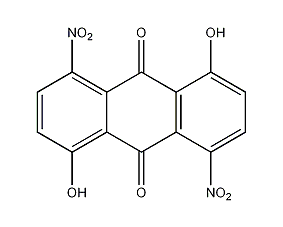
1,5-dihydroxy-4,8-dinitroanthraquinone structural formula

1,5-dihydroxy-4,8-dinitroanthraquinone structural formula

structural formula

business number 03lt
molecular formula c14h6n2o8
molecular weight 330.21
label

1,5-dihydroxy-4,8-dinitroquinoneanthracene,

1,5-dihydroxy-4,8-dinitro-10-anthracenedione,

1,5-dihydroxy-4,8-dinitroanthracene-9,10-dione,

1,5-dihydroxy-4,8-dinitroanthrachinon,

4,8-dinitroanthrarufin,

aromatic compounds

numbering system

cas number:128-91-6

mdl number:mfcd00035827

einecs number:none

rtecs number:none

brn number:none

pubchem id:none

physical property data

none

toxicological data

none

ecological data

none

molecular structure data

1. molar refractive index: 75.52

2. molar volume (cm3/mol): 179.6

3. isotonic specific volume (90.2k ): 579.4

4. surface tension (dyne/cm): 108.2

5. polarizability (10-24cm3): 29.93

compute chemical data

1. reference value for hydrophobic parameter calculation (xlogp): 2.9

2. number of hydrogen bond donors: 2

3. number of hydrogen bond acceptors: 8

4. number of rotatable chemical bonds: 0

5. number of tautomers: 10

6. topological molecule polar surface area 166

7. number of heavy atoms: 24

8. surface charge: 0

9. complexity: 545

10. number of isotope atoms: 0

11. determine the number of atomic stereocenters: 0

12. uncertain number of atomic stereocenters: 0

13. determine the number of chemical bond stereocenters: 0

14. number of uncertain chemical bond stereocenters: 0

15. number of covalent bond units: 1

properties and stability

has a pungent odor.

storage method

sealed iron drum packaging

synthesis method

it is produced by the interaction between 1,5-dichloroanthraquinone and phenol, followed by nitrification and hydrolysis. first add sodium hydroxide and phenol into the reaction kettle, and heat to 130~150°c to completely dissolve them. cool to 120°c, add 1,5-dichloroanthraquinone, react at 145~155°c to the end point, and obtain 1,5-diphenoxyanthraquinone through distillation, filtration, water washing and drying. then, add mixed acid and 1,5-diphenoxyanthraquinone into the nitrating kettle and perform nitration at 40°c to obtain 1,5-(2,4-dinitrophenoxy)-4,8-dinitroanthracene. quinone. add water and the nitrate obtained above to the hydrolysis kettle, stir evenly, adjust the volume, add 30% solution, raise the temperature to 95°c, keep it warm for 30 minutes, cool it below 50°c, filter, and wash with 3% sodium hydroxide solution until washed. no precipitation occurs after liquid acid precipitation. the filter cake is the finished product 1,5-dihydroxy-4,8-dinitroanthraquinone. the filtrate is subjected to acid precipitation and filtration to obtain 2,4-dinitrophenol.

purpose

dye intermediates. used to manufacture disperse blue 2bln dye, etc.

1,3,5-trimethylhexahydro-1,3,5-triazine 1,3,5-trimethylhexahydro-1,3,5-triazine

1,3,5-trimethylhexylhydroxy-1,3,5-triazine structural formula

1,3,5-trimethylhexylhydroxy-1,3,5-triazine structural formula

structural formula

business number 02xu
molecular formula c6h15n3
molecular weight 129.20
label

hexahydro-1,3,5-trimethyl-s-triazine,

1,3,5-trimethylhexahydro-1,3,5-triazine,

timtec-bb sbb008536,

trimethylcyclotrimethylenetriamine,

1,3,5-trimethyl-1,3,5-triazinane,

1,3,5-trimethylhexahydro-s-triazine,

1,3,5-trimethylhexahydro-sym-triazine,

3,5-triazine,hexahydro-1,3,5-trimethyl-1,

5-triazine,hexahydro-1,3,5-trimethyl-3,

f7771

numbering system

cas number:108-74-7

mdl number:mfcd00006057

einecs number:203-612-8

rtecs number:xy9300000

brn number:none

pubchem number:24855400

physical property data

1. properties: undetermined

2. density (g/ml, 25℃): 0.91

3. relative vapor density (g/ml, air=1) : undetermined

4. melting point (ºc): -27

5. boiling point (ºc, normal pressure): 162-163.5

6. boiling point ( ºc, mm hg): not determined

7. refractive index (d20): 1.461-1.463

8. flash point (ºc): 49

9. specific rotation (ºc): undetermined

10. autoignition point or ignition temperature (ºc): undetermined

11. vapor pressure (mmhg, ºc): undetermined

12. saturation vapor pressure (kpa, ºc): undetermined

13. heat of combustion (kj/mol ): undetermined

14. critical temperature (ºc): undetermined

15. critical pressure (kpa): undetermined

16. oil and water (polymer) log value of the partition coefficient (alcohol/water): undetermined

17. explosion upper limit (%, v/v): undetermined

18. explosion lower limit (%, v/v ): undetermined

19. solubility: undetermined

toxicological data

1. acute toxicity: mouse intravenous ld50: 100mg/kg;

ecological data

none

molecular structure data

1. molar refractive index: 38.65

2. molar volume (cm3/mol): 139.6

3. isotonic specific volume (90.2k ): 319.6

4. surface tension (dyne/cm): 27.4

5. polarizability (10-24cm3): 15.32

calculate chemical numbers�

1. reference value for hydrophobic parameter calculation (xlogp): 0.4

2. number of hydrogen bond donors: 0

3. number of hydrogen bond acceptors: 3

4. number of rotatable chemical bonds: 0

5. number of tautomers: none

6. topological molecule polar surface area 9.7

7. number of heavy atoms: 9

8. surface charge: 0

9. complexity: 63.3

10. number of isotope atoms: 0

11. determine the number of atomic stereocenters: 0

12. uncertain number of atomic stereocenters: 0

13. determine the number of chemical bond stereocenters: 0

14. number of uncertain chemical bond stereocenters: 0

15. number of covalent bond units: 1

properties and stability

none

storage method

none

synthesis method

none

purpose

none

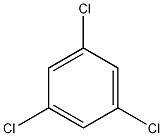
1,3,5-trichlorobenzene 1,3,5-trichlorobenzene

1,3,5-Trichlorobenzene Structural Formula

1,3,5-trichlorobenzene structural formula

structural formula

business number 02xs
molecular formula c6h3cl3
molecular weight 181.45
label

symmetric trichlorobenzene,

trichlorobenzene,

sym-trichlorobenzene,

1,3,5-trichloro-benzen,

ai3-22031,

benzene,1,3,5-trichloro-,

s-trichlorobenzene,

trichloro-1,3,5benzene,

1,3,5-tcb

numbering system

cas number:108-70-3

mdl number:mfcd00000585

einecs number:203-608-6

rtecs number:dc2100100

brn number:1635233

pubchem id:none

physical property data

1. characteristics: white crystal with special smell. [1]

2. melting point (℃): 63.4[2]

3. boiling point (℃): 208.5 [3]

4. relative density (water = 1): 1.356 (100℃) [4]

5 .relative vapor density (air=1): 6.26[5]

6. saturated vapor pressure (kpa): 1.33 (78.0℃)[6]

7. critical pressure (mpa): 3.72[7]

8. octanol/water partition coefficient: 4.19[8 ]

9. flash point (℃): 107[9]

10. ignition temperature (℃): 577[10]

11. solubility: insoluble in water, slightly soluble in ethanol, easily soluble in ether and benzene. [11]

12. gas phase standard entropy (j·mol-1·k-1): 362.83

13. gas phase standard hot melt (j·mol-1·k-1): 129.17

toxicological data

1. acute toxicity: rat oral ld50: 800mg/kg; mouse oral ld50: 3350mg/kg; mouse abdominal ld50: 2260mg/kg;

2. other multiple doses toxicity: oral tdlo in rats: 7380mg/kg/13w-c;

3. parenteral dominant lethality test of mutagenic insects: 10ppm; dominant lethality test of skin contact with insects: 10ppm; mouse intraperitoneal micronucleus test: 425mg/kg/24h;

4. acute toxicity [12] ld50: 800mg/kg (orally in rats); 2260mg/kg (orally in mice)

5. irritation [13]

rabbit transdermal: 500mg (24h), mild stimulation.

rabbit eye: 100mg, mild irritation.

6. mutagenicity [14] micronucleus test: mice were given 425mg/kg intraperitoneally (24h)

ecological data

this substance may be harmful to the environment and it is recommended not to let it enter the environment.

molecular structure data

1. molar refractive index: 40.93

2. molar volume (cm3/mol): 125.2

3. isotonic specific volume (90.2k ): 314.8

4. surface tension (dyne/cm): 39.9

5. polarizability (10-24cm3): 16.22

compute chemical data

1. reference value for hydrophobic parameter calculation (xlogp): none

2. number of hydrogen bond donors: 0

3. number of hydrogen bond acceptors: 0

4. number of rotatable chemical bonds: 0

5. number of tautomers: none

6. topological molecule polar surface area 0

7. number of heavy atoms: 9

8. surface charge: 0

9. complexity: 63.3

10. number of isotope atoms: 0

11. determine the number of atomic stereocenters: 0

12. uncertain number of atomic stereocenters: 0

13. determine the number of chemical bond stereocenters: 0

14. number of uncertain chemical bond stereocenters: 0

15. number of covalent bond units: 1

properties and stability

1. stability[15] stable

2. incompatible substances[16] strong oxidizing agent

3. conditions to avoid contact[17] heating

4. polymerization hazards[18] no polymerization

5. decomposition products[19] hydrogen chloride

storage method

storage precautions[20] store in a cool, ventilated warehouse. keep away from fire and heat sources. the packaging is sealed. they should be stored separately from oxidants and food chemicals, and avoid mixed storage. equipped with the appropriate variety and quantity of fire equipment. suitable materials should be available in the storage area to contain spills.

synthesis method

1. pyrolysis method: the dried nontoxic body of 666 is heated in a pyrolysis kettle to obtain trichlorobenzene, and a large amount of hydrogen chloride is produced as a by-product.

2. alkaline hydrolysis method: trichlorobenzene is obtained by heating the nontoxic body of 666 with lime milk, and a large amount of calcium chloride liquid is produced as a by-product. the trichlorobenzene obtained by the above two methods is a mixture of three isomers: 1,2,4-trichlorobenzene; 1,3,5-trichlorobenzene; 1,2,3-trichlorobenzene. , 4-trichlorobenzene is the main component. among the trichlorobenzene produced by the lime milk method, the content of 1,2,4-trichlorobenzene is more than 75%, and 1,2,3-trichlorobenzene accounts for about 20%.

purpose

1. can be used as a solvent to prepare pesticides, dyes, medicines, electrolytes, lubricants, etc. used in organic synthesis, pesticide and dye synthesis.

2. used in organic synthesis, pesticide and dye synthesis. [21]

1,3-diacetoxybenzene 1,3-diacetoxybenzene

1,3-diacetoxybenzene structural formula

1,3-diacetoxybenzene structural formula

structural formula

business number 02xh
molecular formula c10h10o4
molecular weight 194.18
label

resorcinol diacetate,

1,3-diacetoxybenzene,

1,3-benzenediol,diacetate,

1,3-dihydroxybenzene diacetate,

1,3-dihydroxybenzenediacetate,

3-(acetyloxy)phenyl acetate,

dihydroxybenzene diacetate,

resorcinyl acetate,

1,3-diacetoxybenzene,

1,3-phenylene diacetate

numbering system

cas number:108-58-7

mdl number:mfcd00008701

einecs number:203-596-2

rtecs number:vh0580000

brn number:1875007

pubchem id:none

physical property data

1. properties: colorless viscous liquid.

2. density (g/ml, 25℃): 1.178

3. relative vapor density (g/ml, air=1): undetermined

4. melting point (ºc): undetermined

5. boiling point (ºc, normal pressure): undetermined

6. boiling point (ºc, 12mm hg): 146

7. refractive index (d20): 1.503

8. flash point (ºc): >110

9. specific rotation (ºc): undetermined

10. autoignition point or ignition temperature (ºc): undetermined

11. vapor pressure (mmhg, ºc) : undetermined

12. saturated vapor pressure (kpa, ºc): undetermined

13. heat of combustion (kj/mol): undetermined

14 . critical temperature (ºc): undetermined

15. critical pressure (kpa): undetermined

16. log value of oil-water (octanol/water) partition coefficient: undetermined

17. explosion upper limit (%, v/v): undetermined

18. explosion lower limit (%, v/v): undetermined

19 . solubility: undetermined

toxicological data

1. skin/eye irritation

standard draize test: rabbit, eye contact: 5%, severity of reaction: severe.

2. acute toxicity: mouse intraperitoneal ld50: 660mg/kg;

ecological data

this substance is slightly hazardous to water.

molecular structure data

1. molar refractive index: 48.93

2. molar volume (cm3/mol): 164.6

3. isotonic specific volume (90.2k ): 410.3

4. surface tension (dyne/cm��:38.5

5. polarizability (10-24cm3): 19.39

compute chemical data

1. reference value for hydrophobic parameter calculation (xlogp): none

2. number of hydrogen bond donors: 0

3. number of hydrogen bond acceptors: 4

4. number of rotatable chemical bonds: 4

5. number of tautomers: none

6. topological molecule polar surface area 52.6

7. number of heavy atoms: 14

8. surface charge: 0

9. complexity: 202

10. number of isotope atoms: 0

11. determine the number of atomic stereocenters: 0

12. uncertain number of atomic stereocenters: 0

13. determine the number of chemical bond stereocenters: 0

14. number of uncertain chemical bond stereocenters: 0

15. number of covalent bond units: 1

properties and stability

avoid contact with oxides.

storage method

stored in a cool, ventilated warehouse. keep away from fire and heat sources. the packaging requires sealing and should be stored separately from oxidants. mixed storage is strictly prohibited. use explosion-proof lighting and ventilation facilities. it is prohibited to use mechanical equipment and tools that are prone to sparks. the storage area should be equipped with emergency release equipment and suitable containment materials.

synthesis method

none

purpose

none

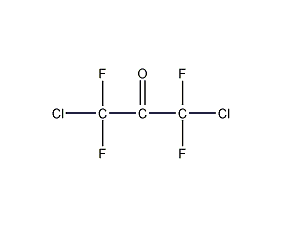
1,3-dichlorotetrafluoroacetone 1,3-dichlorotetrafluoroacetone

1,3-Dichlorotetrafluoroacetone structural formula

1,3-dichlorotetrafluoroacetone structural formula

structural formula

business number 03ks
molecular formula c3cl2f4o
molecular weight 198.93
label

dioxin,

dichlorotetrafluoroacetone,

sym-dichlorotetrafluoroacetone hydrates,

perchlorofiuoroacetone,

(cclf2)2co,

multifunctional solvents,

aliphatic compounds

numbering system

cas number:127-21-9

mdl number:none

einecs number:none

rtecs number:none

brn number:none

pubchem id:none

physical property data

1. properties: colorless liquid, highly hygroscopic.

2. boiling point (ºc, 101.3kpa): 45.2

3. boiling point (ºc, +2.5h2o): 106

4. relative density (g /ml, 25/4ºc): 1.52

5. melting point (ºc, +2.5h2o): -8

6. melting point (ºc, +10h2o, unstable): 24

7. refractive index (20ºc): 1.3290

8. heat of evaporation (kj/kg, 25ºc): 101.2

9. solubility: natural excellent solvent for polymer compounds.

toxicological data

1. acute toxicity: rat oral ld50: 61mg/kg; rat inhalation lc50: 4800mg/m3

                            mouse inhalation lc50: 4500mg/m3; mouse intravenous injection ld50: 180mg/kg

                           rabbit skin ld50: 91mg/kg

ecological data

none

molecular structure data

1. molar refractive index: 26.26

2. molar volume (cm3/mol): 119.8

3. isotonic specific volume (90.2k ): 261.6

4. surface tension (dyne/cm): 22.7

5. polarizability (10-24cm3): 10.41

compute chemical data

1. reference value for hydrophobic parameter calculation (xlogp): 2.7

2. number of hydrogen bond donors: 0

3. number of hydrogen bond acceptors: 5

4. number of rotatable chemical bonds: 2

5. number of tautomers: none

6. topological molecule polar surface area 17.1

7. number of heavy atoms: 10

8. surface charge: 0

9. complexity: 141

10. number of isotope atoms: 0

11. determine the number of atomic stereocenters: 0

12. uncertain number of atomic stereocenters: 0

13. determine the number of chemical bond stereocenters: 0

14. number of uncertain chemical bond stereocenters: 0

15. number of covalent bond units: 1

properties and stability

chemical properties: symmetry – dichlorotetrafluoroacetone, like hexafluoroacetone, reacts with water exothermically. generate various hydrates. it decomposes into carbon monoxide and chlorodifluoroacetic acid under the action of alkali.

storage method

none

synthesis method

hydrates of symmetric-dichlorotetrafluoroacetone such as (cclf2)2co·2.5h2o are stable liquids that can be distilled and are an excellent solvent. however, (cclf2)2co·10h2o is an unstable liquid and decomposes into stable hydrates and water during distillation.

purpose

hydrate is an excellent solvent for synthetic and natural polymer compounds such as acetal resin, polyamide, polyacrylonitrile, polyvinyl alcohol, and polyester.

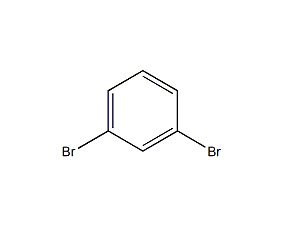
1,3-dibromobenzene 1,3-dibromobenzene

1,3-dibromobenzene structural formula

structural formula

business number 02wy
molecular formula c6h4br2
molecular weight 235.90
label

m-dibromobenzene,

m-dibromobenzene,

halogenated hydrocarbon solvents,

aromatic compounds

numbering system

cas number:108-36-1

mdl number:mfcd00000078

einecs number:203-574-2

rtecs number:cz1790000

brn number:1904538

pubchem number:24851649

physical property data

1. properties: colorless to light yellow liquid.

2. density (g/ml, 20/4℃): 1.9529

3. melting point (ºc): -7

4. boiling point (ºc , normal pressure): 219.5

5. refractive index (17ºc): 1.6083

6. flash point (ºc): 93

7. solubility: insoluble in water, soluble in ethanol, ether, acetone, acetic acid, benzene, petroleum ether and carbon tetrachloride.

8. the refractive index at room temperature (n20): 1.6082

9. the refractive index at room temperature (n25): 1.5914

10. gas phase standard entropy (j·mol-1·k-1): 367.01

11. gas phase standard hot melt (j·mol-1·k-1): 117.32

12. liquid phase standard hot melt (j·mol -1·k-1): 181.4

toxicological data

acute toxicity: oral ld50 in mice: 2250mg/kg; intraperitoneal ld50 in mice: 900mg/kg.

ecological data

this substance may be harmful to the environment. special attention should be paid to the pollution of water bodies, especially the occurrence of bioaccumulation in aquatic organisms.

molecular structure data

1. molar refractive index: 41.63

2. molar volume (cm3/mol): 121.8

3. isotonic specific volume (90.2k ): 308.2

4. surface tension (dyne/cm): 41.0

5. dielectric constant:

6. dipole moment (10-24cm3):

7. polarizability: 16.50

compute chemical data

1. reference value for hydrophobic parameter calculation (xlogp): none

2. number of hydrogen bond donors: 0

3. number of hydrogen bond acceptors: 0

4. number of rotatable chemical bonds: 0

5. number of tautomers: none

6. topological molecule polar surface area 0

7. number of heavy atoms: 8

8. surface charge: 0

9. complexity: 64.9

10. number of isotope atoms: 0

11. determine the number of atomic stereocenters: 0

12. uncertain number of atomic stereocenters: 0

13. determine the number of chemical bond stereocenters: 0

14. uncertain number of chemical bond stereocenters: 0

15. number of covalent bond units: 1

properties and stability

avoid contact with strong oxidizing agents. flammable, toxic and irritating, avoid inhalation of vapor and contact with eyes and skin.

storage method

stored in a cool, ventilated warehouse. keep away from fire and heat sources. protect from direct sunlight. the storage temperature should not exceed 30℃. keep container tightly sealed. should be kept away from oxidizer, do not store together. equipped with the appropriate variety and quantity of fire equipment. the storage area should be equipped with emergency release equipment and suitable containment materials.

synthesis method

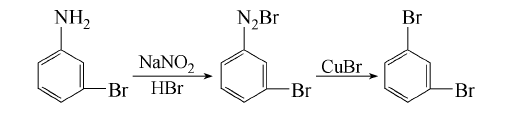
mix 86g m-bromoaniline and 175ml hydrobromic acid, stir and cool to below 5℃, add dropwise a solution made of 35g sodium nitrite and 70ml water. when the starch potassium iodide test paper turns blue, add crushed ice to lower the temperature to 10°c. the obtained diazonium salt solution was slowly added to the boiling cuprous bromide (40g) 48% hydrobromic acid (40ml) solution. after adding, carry out steam distillation until no oil beads are evaporated. use 20% sodium hydroxide to make the distillate liquid to remove possible m-bromophenol, shake it thoroughly and separate out the crude m-dibromobenzene. wash with 40~50ml concentrated hydrochloric acid, then wash with water, then wash with 30% sodium hydroxide solution, and finally wash with water. after drying with anhydrous calcium chloride, distill and collect the 215~217°c fraction to obtain the finished product.

purpose

used as solvent and organic synthesis intermediate.

1,2-propylene carbonate 1,2-propylene carbonate

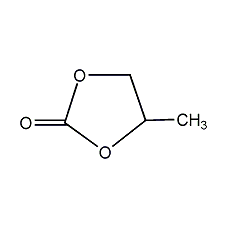
1,2-propanediol carbonate structural formula

structural formula

business number 02ww
molecular formula c4h6o3
molecular weight 102.09
label

1,2-propanediyl carbonate,

1-methylethylene carbonate,

dispersants for plastics,

extracting agent,

plasticizer,

electrochemical solution,

wood adhesive

numbering system

cas number:108-32-7

mdl number:mfcd00005385

einecs number:203-572-1

rtecs number:ff9650000

brn number:107913

pubchem number:24887955

physical property data

1. properties: colorless liquid, odorless, non-hygroscopic.

2. density (g/ml, 20/20℃): 1.189

3. relative density (20℃, 4℃): 1.2047

4 . melting point (ºc): -50

5. boiling point (ºc, normal pressure): 240

6. relative density (25℃, 4℃): 1.198

7. refractive index (20ºc): 1.4218

8. flash point (ºc): 123

9. viscosity (mpa·s, 40ºc): 1.38

10. viscosity (mpa·s, 60ºc): 1.00

11. refractive index at room temperature (n25): 1.4197

12. saturated vapor pressure (kpa, 20ºc): 0.004

13. heat of evaporation (kj/mol, 150ºc): 55.27

14. gas phase standard combustion heat (enthalpy) (kj·mol -1): -1849.1

15. conductivity (s/m): (1~2)×10-8

16. specific heat capacity (kj/(kg·k), 50ºc, constant pressure): 1.80

17. gas phase standard claimed heat (enthalpy) (kj·mol-1): -582.5

18. liquid phase standard combustion heat (enthalpy) (kj·mol-1): -1818.4

19. solubility : soluble in water, alcohol, etherbenzene, carbon tetrachloride, ethyl acetate, chloroform, acetone and other solvents. can selectively dissolve carbon dioxide from gas mixtures.

20. the liquid phase standard claims heat (enthalpy) (kj·mol-1): -613.2

toxicological data

1. acute toxicity: rat oral ld50: 29000mg/kg.

2. animal tests have proven that there is no toxicity when taken or absorbed through the skin. moderately irritating to the mucous membranes of the eyes and respiratory system, but not dangerous. rats inhaled concentrated vapor for 8 hours without death.

ecological data

this substance is slightly hazardous to water.

molecular structure data

1. molar refractive index: 21.88

2. molar volume (cm3/mol): 87.2

3. isotonic specific volume (90.2k )��204.3

4. surface tension (dyne/cm): 30.0

5. dielectric constant:

6. dipole moment (10 -24cm3):

7. polarizability: 8.67

compute chemical data

1. reference value for hydrophobic parameter calculation (xlogp): none

2. number of hydrogen bond donors: 0

3. number of hydrogen bond acceptors: 3

4. number of rotatable chemical bonds: 0

5. number of tautomers: none

6. topological molecule polar surface area 35.5

7. number of heavy atoms: 7

8. surface charge: 0

9. complexity: 88.9

10. number of isotope atoms: 0

11. determine the number of atomic stereocenters: 0

12. uncertain number of atomic stereocenters: 1

13. determine the number of chemical bond stereocenters: 0

14. number of uncertain chemical bond stereocenters: 0

15. number of covalent bond units: 1

properties and stability

1. avoid contact with strong oxidants.

chemical properties: partial decomposition occurs above 200°c, and trace amounts of acid or alkali can promote decomposition. propylene glycol carbonate can also hydrolyze rapidly at room temperature in the presence of acid, especially alkali.

2.the toxicity of this product is unknown. pay attention to prevent phosgene poisoning during production. the workshop should be well ventilated and the equipment should be sealed. operators should wear protective equipment.

3. exist in flue-cured tobacco leaves and smoke.
 

storage method

stored in a cool, ventilated warehouse. keep away from fire and heat sources. should be kept away from oxidizer, do not store together. equipped with the appropriate variety and quantity of fire equipment. the storage area should be equipped with emergency release equipment and suitable containment materials.

this product is packed in iron drums and stored in a cool and ventilated place, away from fire sources. store and transport according to regulations on flammable chemicals.

synthesis method

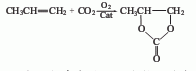
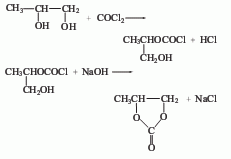
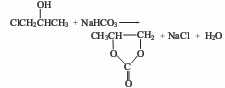
1. the raw material propylene glycol of the phosgene method reacts with phosgene to generate hydroxyisopropyl chloroformate, and then reacts with sodium hydroxide to generate propylene carbonate, which is then distilled under reduced pressure to obtain the finished product.

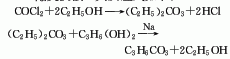
2. transesterification method.

3. chloropropanol method.

4. propylene oxide and carbon dioxide synthetic method: carbon dioxide and propylene oxide react at 150-160°c and 5mpa to produce propylene carbonate. the finished product is obtained by fractionation under reduced pressure. the above methods have all been industrialized, but the first three methods have high production costs and poor product quality, so they are gradually replaced by the fourth method.

5. propylene oxidation and carbon dioxide synthesis law. this method is a synthetic method developed by laboratories in recent years.

refining method: the main impurity is water , carbon dioxide, 1,2-propanediol, allyl alcohol and propylene oxide, etc. it is generally refined by vacuum distillation. however, when used as a solvent for high-energy batteries, impurities have a significant impact. it can be dried with molecular sieves overnight, then passed through a dry molecular sieve column, fractionated twice under reduced pressure, and 2/3 of the middle distillate collected. this method can reduce the impurity content below the standard requirements.

6. tobacco: fc, 18.

purpose

this product is a polar solvent used as a plasticizer, spinning solvent, water-soluble dye and dispersant for plastics. it can also be used as an extraction agent for oily solvents and olefins and aromatics. propylene carbonate is used as the battery electrolyte and can withstand harsh light, heat and chemical changes. it also has certain uses in geological mineral processing and analytical chemistry. in addition, propylene carbonate can also be used as a wood adhesive instead of phenolic resin, and is also used to synthesize dimethyl carbonate.

it is used as a solvent for synthetic fibers and other polymers, as well as an extractant and plasticizer. propylene glycol carbonate is also used as a high dielectric constant electrochemical solution. in particular, the metal salt solution of propylene glycol carbonate is used as an aprotic electrolyte in the research of output high-voltage batteries. in addition, it is also used to separate carbon dioxide from gas mixtures and for organic synthesis. since propylene glycol carbonate can stably dissolve free radicals, it is effectively used as a solvent for esr (electron spin resonance).

1,3-dimethylbutylamine 1,3-dimethylbutylamine

1,3-dimethylbutylamine structural formula

1,3-dimethylbutylamine structural formula

structural formula

business number 02wc
molecular formula c6h15n
molecular weight 101.19
label

1,3-dimethyl-n-butylamine,

2-amino-4-methylpentane,

2-amino-4-methylpentane,

(ch3)2chch2ch(ch3)nh2

numbering system

cas number:108-09-8

mdl number:mfcd00008088

einecs number:203-549-6

rtecs number:eo4460000

brn number:none

pubchem number:24847726

physical property data

1. properties: colorless liquid with unpleasant odor. [1]

2. boiling point (℃): 106~109[2]

3. relative density (water =1): 0.75[3]

4. relative vapor density (air=1): 3.5[4]

5. flash point (℃): 12.78 (oc) [5]

6. solubility: insoluble in water [6]

toxicological data

1. skin/eye irritation

standard draize test: rabbit, skin contact: 500mg, severity of reaction: severe.

2. acute toxicity:

oral ldlo in rats: 600mg/kg; oral ld50 in mice: 470mg/kg; inhaled lclo in mice: 1278ppm/15m; small rat intravenous ld50: 80mg/kg; rabbit skin contact ld50: 600mg/kg;

3. acute toxicity [7]

ld50: 600mg/kg (oral in rats); 470mg/kg (oral in mice); 600mg/kg (transdermal in rabbits)

4. irritation[8] rabbit transdermal: 500mg, severe irritation.

ecological data

1. ecotoxicity no data available

2. biodegradability no data available

3 .non-biodegradability no data yet

4. other harmful effects[9] this substance may be harmful to the environment and is harmful to the environment. bodies of water should be given special attention.

molecular structure data

1. molar refractive index: 42.57

2. molar volume (cm3/mol): 164.3

3. isotonic specific volume (90.2k ): 369.6

4. surface tension (dyne/cm): 25.5

5. polarizability (10-24cm3): 16.87

compute chemical data

1. reference value for hydrophobic parameter calculation (xlogp): 1.4

2. number of hydrogen bond donors: 1

3. number of hydrogen bond acceptors: 1

4. number of rotatable chemical bonds: 2

5. number of tautomers: none

6. topological molecule polar surface area 26

7. number of heavy atoms: 7

8. surface charge: 0

9. complexity: 41.4

10. number of isotope atoms: 0

11. determine the number of atomic stereocenters: 0

12. uncertain number of atomic stereocenters: 1

13. determine the number of chemical bond stereocenters: 0

14. number of uncertain chemical bond stereocenters: 0

15. number of covalent bond units: 1

properties and stability

1. stability[10] stable

2. incompatible materials [11] acids, acid chlorides, acid anhydrides , carbon dioxide, strong oxidants

3. polymerization hazards[12] no polymerization

storage method

storage precautions[13] store in a cool, ventilated warehouse. keep away from fire and heat sources. the storage temperature should not exceed 37°c. keep container tightly sealed. they should be stored separately from oxidants, acids, etc., and avoid mixed storage. use explosion-proof lighting and ventilation facilities. it is prohibited to use mechanical equipment and tools that are prone to sparks. the storage area should be equipped with emergency release equipment and suitable containment materials.

synthesis method

none

purpose

1. used as an intermediate in organic synthesis. [14]

1,3-butaneiol 1,3-butaneiol

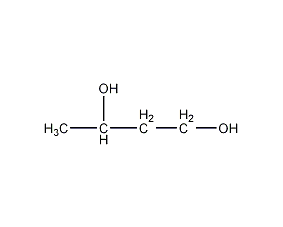
1,3-butanediol structural formula

structural formula

business number 02vy
molecular formula c4h10o2
molecular weight 90.12
label

(±)-1,3-butanediol,

1,3-dihydroxybutane,

1,3-butylene glycol,

1,3-dihydroxybutane,

β-butylene glycol,

d,

softener,

alcohol solvent

numbering system

cas number:107-88-0

mdl number:mfcd00004554

einecs number:203-529-7

rtecs number:ek0440000

brn number:1731276

pubchem number:24858732

physical property data

1. properties: colorless viscous liquid with bitter and sweet taste.

2. boiling point (ºc, 101.3kpa): 203~204

3. boiling point (ºc, 1.60kpa): 108

4. boiling point (ºc ,1.33kpa): 98

5. melting point (ºc): -54

6. relative density (g/ml, 20/4ºc): 1.0053

7. relative vapor density (g/ml, air=1): 3.2

8. refractive index (n20ºc): 1.441

9. refractive index (n25ºc): 1.439

10. viscosity (mpa·s, 20ºc): 130.3

11. viscosity (mpa·s, 25ºc): 103.9

12. viscosity (mpa· s, 35ºc): 89

13. flash point (ºc, open): 121

14. fire point (ºc): 392.8

15. heat of evaporation (kj/mol, b.p.): 58.49

16. heat of combustion (kj/mol, liquid): 2491.2

17. vapor pressure (kpa, 74ºc): 0.067

18. critical temperature (ºc): 290.8

19. critical pressure (mpa): 3.89

20. lower explosion limit (%, v/v): 1.9

21. solubility: miscible with water, ethanol, acetone, methyl ethyl ketone, and dibutyl phthalate. insoluble in aliphatic hydrocarbons, benzene, toluene, carbon tetrachloride, phenol, 2-aminoethanol, mineral oil, cottonseed oil, etc.

22. boiling point (ºc): 207

23. critical density (g·cm-3): 0.295

24 . critical volume (cm3·mol-1): 305

25. critical compression factor: 0.217

26. eccentricity factor: 1.146

27. solubility parameter (j·cm-3)0.5: 26.974

28. van van der waals area (cm2·mol-1): 8.310×10⁹

29. van der waals volume (cm3·mol-1): 56.990

30. gas phase standard combustion heat (enthalpy) (kj·mol-1): -2570.0

31. gas phase standard claimed heat (enthalpy) (kj·mol-1): -433.2

32. liquid phase standard combustion heat (enthalpy) (kj·mol-1): -2502.2

33. liquid phase standard claims heat (enthalpy) (kj·mol-1): -501.0

34. liquid phase standard hot melt (j·mol -1·k-1): 236.4

toxicological data

1. skin/eye irritation

standard draize test: rabbit, skin contact: 500mg/24h, severity of reaction: mild.

standard draize test: rabbit, eye contact: 500 mg, severity of reaction: mild.

standard draize test: rabbit, eye contact: 500mg/24h, severity of reaction: mild.

2. acute toxicity: rat oral ld50: 18610mg/kg; rat subcutaneous ld50: 20mg/kg; the mouse through the abdominal cavity lc50: 10276mg/kg;

rabbit contacts ld50: > 20 mg/kg; guinea pigs ld50: 11mg/kg;

3, reproductive toxicity: rats oral tdlo: 42360mg/kg (female rats are pregnant for 6-15 days);

4. the toxicity is similar to that of glycerol, which is slightly toxic and has no irritation to human mucous membranes and skin. animals show symptoms during acute poisoning. deep anesthesia.

ecological data

this substance is slightly hazardous to water.

molecular structure data

1. molar refractive index: 23.60

2. molar volume (cm3/mol): 89.9

3. isotonic specific volume (90.2k ): 222.1

4. surface tension (dyne/cm): 37.1

5. dielectric constant:

6. dipole moment (10-24cm3):

7. polarizability: 9.35

compute chemical data

1. reference value for hydrophobic parameter calculation (xlogp): -0.4

2. number of hydrogen bond donors: 2

3. number of hydrogen bond acceptors: 2

p>

4. number of rotatable chemical bonds: 2

5. number of tautomers: none

6. topological molecule polar surface area 40.5

7. number of heavy atoms: 6

8. surface charge: 0

9. complexity: 28.7

10. number of isotope atoms: 0

11. determine the number of atomic stereocenters: 0

12. uncertain number of atomic stereocenters: 1

13. determine the number of chemical bond stereocenters: 0

14. number of uncertain chemical bond stereocenters: 0

15. number of covalent bond units: 1

properties and stability

1. avoid contact with strong oxidants, strong acids, acid chlorides, and acid anhydrides. flammable liquids. it is hygroscopic and non-corrosive to metals.

2. the toxicity to higher animals is very low, lower than 1,4-butanediol. rat oral ld502.8g/kg. in high doses, it has an anesthetic effect and has a certain inhibitory effect on the central nervous system. no obvious irritation to skin and mucous membranes.

3. found in tobacco leaves.

storage method

1. store in a cool, ventilated warehouse. keep away from fire and heat sources. they should be stored separately from oxidants, acids, etc., and avoid mixed storage. equipped with the appropriate variety and quantity of fire equipment. the storage area should be equipped with emergency release equipment and suitable containment materials.

2.ordinary storage and transportation methods can be used. see glycerol.

synthesis method

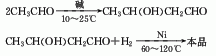
1. it is obtained by aldol condensation of acetaldehyde in alkaline water to 3-methylbutyraldehyde, and then hydrogenated and reduced.


2. from propylene and formaldehyde in the presence of sulfuric acid formed by condensation.

3.use acetaldehyde condensation method. in the presence of sodium hydroxide, acetaldehyde is condensed to obtain butyraldehyde, and nickel is used as a catalyst. the crude product is obtained by hydrogenation, which is then cooled, separated from nickel, and distilled under reduced pressure.

purpose

1. used to prepare polyester resin, polyurethane resin, plasticizer, ink, etc. also used as a wetting agent and softener for textiles, paper and tobacco.

2.organic synthesis intermediates. used to synthesize plastic additives, food additives, etc. used as industrial solvent. it is used as a moisturizer in cosmetics and has good antibacterial effects. can be used in various lotions, creams, toothpastes, etc. it is a good additive for various essential oils and dyes.
1,3-dibromobutane 1,3-dibromobutane

1,3-dibromobutane structural formula

1,3-dibromobutane structural formula

structural formula

business number 02vq
molecular formula c4h8br2
molecular weight 215.91
label

1,3-butylenebromide,

1,3-butylene bromide,

ch3chbrch2ch2br

numbering system

cas number:107-80-2

mdl number:mfcd00000152

einecs number:203-520-8

rtecs number:none

brn number:1731231

pubchem number:24849619

physical property data

1. properties: colorless and transparent liquid.

2. density (g/ml, 25℃): 1.8

3. relative density (20℃, 4℃): 1.7903

4. relative density (25℃, 4℃): 1.7824

5. boiling point (ºc, normal pressure): 174

6. liquid phase standard claims heat (enthalpy) (kj·mol-1): -147.8

7. refractive index (d20): 1.5080

8. flash point (ºc): 173-176

9. refractive index at room temperature (n20): 1.5085

10. refractive index at room temperature (n 25): 1.5061

11. vapor pressure (mmhg, ºc): undetermined

12. saturated vapor pressure (kpa, ºc): undetermined

13. heat of combustion (kj/mol): undetermined

14. critical temperature (ºc): undetermined

15. critical pressure (kpa) : undetermined

16. log value of oil-water (octanol/water) partition coefficient: undetermined

17. explosion upper limit (%, v/v): undetermined

p>

18. lower explosion limit (%, v/v): undetermined

19. solubility: undetermined

toxicological data

none

ecological data

this substance is slightly hazardous to water.

molecular structure data

1. molar refractive index: 36.00

2. molar volume (cm3/mol): 121.3

3. isotonic specific volume (90.2k ): 292.9

4. surface tension (dyne/cm): 34.0

5. polarizability (10-24cm3): 14.27

compute chemical data

1. reference value for hydrophobic parameter calculation (xlogp): 2.5

2. number of hydrogen bond donors: 0

3. number of hydrogen bond acceptors: 0

4. number of rotatable chemical bonds: 2

5. number of tautomers: none

6. topological molecule polar surface area 0

7. number of heavy atoms: 6

8. surface charge: 0

9. complexity: 28.7

10. number of isotope atoms: 0

11. determine the number of atomic stereocenters: 0

12. uncertain number of atomic stereocenters: 1

13. determine the number of chemical bond stereocenters: 0

14. number of uncertain chemical bond stereocenters: 0

15. number of covalent bond units: 1

sexquality and stability

avoid contact with strong oxidizing agents.

storage method

stored in a cool, ventilated warehouse. keep away from fire and heat sources. should be kept away from oxidizer, do not store together. use explosion-proof lighting and ventilation facilities. it is prohibited to use mechanical equipment and tools that are prone to sparks. the storage area should be equipped with emergency release equipment and suitable containment materials.

synthesis method

none

purpose

organic synthesis intermediates.

bdmaee:bis (2-dimethylaminoethyl) ether

cas no:3033-62-3

china supplier

for more information, please contact the following email:

email:sales@newtopchem.com

email:service@newtopchem.com

email:technical@newtopchem.com

BDMAEE Manufacture !