1,2,3-trichlorobenzene
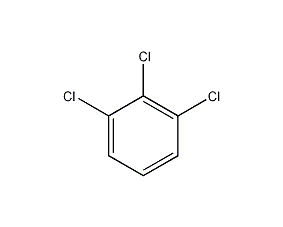
1,2,3-Trichlorobenzene Structural Formula

1,2,3-trichlorobenzene structural formula

structural formula

business number 01y7
molecular formula c6h3cl3
molecular weight 181
label

none

numbering system

cas number:87-61-6

mdl number:mfcd00000537

einecs number:201-757-1

rtecs number:dc2095000

brn number:956882

pubchem number:24862748

physical property data

1. properties: colorless liquid or plate crystal (in alcohol)

2. relative density (g/ml, 100/4℃): 1.381

3. relative density (solid): 1.69

4. melting point (ºc): 53.5

5. boiling point (ºc, normal pressure): 218.5

6. refraction rate (20ºc): 1.5776

7. flash point (ºc): 126

8. fire point (ºc): >500

9. solubility: insoluble in water, slightly soluble in ethanol, easily soluble in organic solvents such as ether, benzene, petroleum ether, carbon disulfide, chlorinated hydrocarbons.

10. relative density (25℃, 4℃): 1.381298

11. gas phase standard entropy (j·mol-1·k-1): 369.67

12. gas phase standard hot melt (j·mol-1·k-1 ):128.71

toxicological data

1. acute toxicity

rat caliber ld50: 1830mg/kg;

mouse abdominal cavity ld50: 1390mg/kg;

2. teratogenicity sex

mouse: 250mg/kg/24h;

3. other multiple dose toxicity data

rat caliber tdl0: 7020 mg/kg/13w- c;

4. irritate eyes and respiratory tract, causing cough, sore throat and red eyes.

ecological data

the substance is toxic to aquatic life.

molecular structure data

1. molar refractive index: 40.93

2. molar volume (cm3/mol): 125.2

3. isotonic specific volume (90.2k): 314.8

4. surface tension (dyne/cm): 39.9

5. polarizability (10-24cm3): 16.22

compute chemical data

1. reference value for hydrophobic parameter calculation (xlogp): none

2. number of hydrogen bond donors: 0

3. number of hydrogen bond acceptors: 0

4. number of rotatable chemical bonds: 0

5. number of tautomers: none

6. topological molecule polar surface area 0

7. number of heavy atoms: 9

8. surface charge: 0

9. complexity: 84.3

10. number of isotope atoms: 0

11. determine the number of atomic stereocenters: 0

12. uncertain number of atomic stereocenters: 0

13. determine the number of chemical bond stereocenters: 0

14. number of uncertain chemical bond stereocenters: 0

15. number of covalent bond units: 1

properties and stability

decomposes when heated or burned, producing toxic and corrosive fumes containing chlorine, hydrogen chloride and carbon monoxide. with�the oxidizing agent reacts.

storage method

this product should be sealed and stored in a cool, dry place.

synthesis method

1. the nontoxic body of 666 dried by pyrolysis method is heated in a pyrolysis kettle to obtain trichlorobenzene, and a large amount of hydrogen chloride is produced as a by-product. 2. alkaline hydrolysis method: trichlorobenzene is obtained by heating the nontoxic body of 666 with lime milk, and at the same time, a large amount of calcium chloride liquid is produced as a by-product. the trichlorobenzene obtained by the above two methods is a mixture of three isomers: 1,2,4-trichlorobenzene; 1,3,5-trichlorobenzene; 1,2,3-trichlorobenzene. , 4-trichlorobenzene is the main component. among the trichlorobenzene produced by the lime milk method, the content of 1,2,4-trichlorobenzene is more than 75%, and 1,2,3-trichlorobenzene accounts for about 20%.

purpose

used as solvent and pharmaceutical intermediate. used in the production of pesticides, dyes, transformer oil, electrolyte, lubricating oil and heat transfer media.

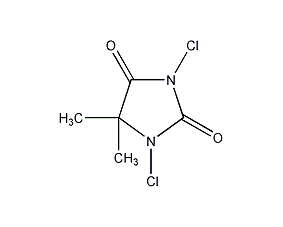
1,3-dichloro-5,5-dimethylhydantoin

1,3-dichloro-5,5-dimethylhydantoin structural formula

structural formula

business number 039v
molecular formula c5h6cl2n2o2
molecular weight 197.02
label

water treatment agent

numbering system

cas number:118-52-5

mdl number:mfcd00003190

einecs number:204-258-7

rtecs number:mu0700000

brn number:146013

pubchem id:none

physical property data

1. properties: white powder. it absorbs moisture easily and is partially hydrolyzed after absorbing moisture. has a slightly pungent odor.

2. density (g/ml, 25℃): 1.5

3. relative vapor density (g/ml, air=1): undetermined

4. melting point (ºc): 132-134

5. boiling point (ºc, normal pressure): undetermined

6. boiling point (ºc, kpa): undetermined

p>

7. refractive index: undetermined

8. flash point (ºc): 171

9. specific rotation (º): undetermined

10. autoignition point or ignition temperature (ºc): undetermined

11. vapor pressure (mmhg, ºc): undetermined

12. saturated vapor pressure (kpa , ºc): undetermined

13. heat of combustion (kj/mol): undetermined

14. critical temperature (ºc): undetermined

15 . critical pressure (kpa): undetermined

16. log value of oil-water (octanol/water) distribution coefficient: undetermined

17. explosion upper limit (%, v/v ): undetermined

18. lower explosion limit (%, v/v): undetermined

19. solubility: slightly soluble in water.

toxicological data

1. irritation: rabbit transdermal: 100mg/24h severe irritation.

2. acute toxicity: guinea pig oral ld50: 1350mg/kg

rat oral ld50: 542mg/kg

rabbit oral ld50: 1520mg/ kg

rabbit transdermal ld50: >20g/kg

rat inhalation lcl0: 20gm/m3/1h

ecological data

slightly harmful to water.

molecular structure data

5. molecular property data:

1. molar refractive index: 35.75

2. molar volume (cm3/mol): 113.5

3. isotonic specific volume (90.2k): 300.7

4. surface tension (dyne/cm): 49.2

5. polarizability (10-24cm3): 14.17

compute chemical data

1. reference value for hydrophobic parameter calculation (xlogp): 1.1

2. number of hydrogen bond donors: 0

3. number of hydrogen bond acceptors: 2

4. number of rotatable chemical bonds: 0

5. number of tautomers: none

6. topological molecule polar surface area 40.6

7. number of heavy atoms: 11

8. surface charge: 0

9. complexity: 229

10. number of isotope atoms: 0

11. determine the number of atomic stereocenters: 0

12. uncertain number of atomic stereocenters: 0

13. determine the number of chemical bond stereocenters :0

14. number of uncertain chemical bond stereocenters: 0

15. number of covalent bond units: 1

properties and stability

stable at room temperature and pressure, avoid contact with reducing agents and moisture.

storage method

stored in a cool, ventilated warehouse. keep away from flammable substances, reducing agents, and water sources. equipped with the appropriate variety and quantity of fire equipment. suitable materials should be available in the storage area to contain spills.

this product is packed in lined plastic bags, outer woven bags or plastic barrels. store in a cool, dry, ventilated place, protected from sunlight and moisture, and be stored and transported in accordance with general chemical regulations.

synthesis method

produced by chlorination of 5,5-dimethylhydantoin in the presence of alkaline substances.

purpose

mainly used as water treatment agent, disinfectant and fruit preservative, it has the characteristics of high efficiency, broad spectrum, safety and stability, and can strongly kill fungi, bacteria, viruses and algae. mainly used as a bactericidal and algaecide, it can effectively kill various bacteria, fungi, viruses, algae, hepatitis viruses, etc.

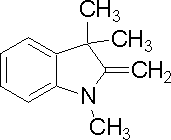
1,3,3-trimethyl-2-methyleneindoline

1,3,3-Trimethyl-2-methyleneindoline structural formula

1,3,3-trimethyl-2-methyleneindoline structural formula

structural formula

business number 039l
molecular formula c12h15n
molecular weight 173.26
label

none yet

numbering system

cas number:118-12-7

mdl number:mfcd00005813

einecs number:204-235-1

rtecs number:nm1926500

brn number:131162

pubchem number:24889678

physical property data

1. properties: dark red liquid

2. density (g/ml, 25℃): 0.979

3. relative vapor density (g/ml, air=1 ): undetermined

4. melting point (ºc): -8

5. boiling point (ºc, normal pressure): 248

6. boiling point (ºc) , kpa): undetermined

7. refractive index: 1.578

8. flash point (ºc): 102

9. specific rotation (º) : 229

10. autoignition point or ignition temperature (ºc): undetermined

11. vapor pressure (mmhg, ºc): undetermined

12 . saturated vapor pressure (kpa, ºc): undetermined

13. heat of combustion (kj/mol): undetermined

14. critical temperature (ºc): undetermined

p>

15. critical pressure (kpa): undetermined

16. log value of oil-water (octanol/water) partition coefficient: undetermined

17. explosion upper limit (%, v/v): undetermined

18. lower explosion limit (%, v/v): undetermined

19. solubility: easily soluble in hot ethanol, soluble in insoluble in ethanol, chloroform, ether, insoluble in water.

toxicological data

none yet

ecological data

slightly harmful to water.

molecular structure data

1. molar refractive index: 55.90

2. molar volume (cm3/mol): 171.6

3. isotonic specific volume (90.2k ): 420.7

4. surface tension (dyne/cm): 36.1

5. polarizability (10-24cm3): 22.16

compute chemical data

1. reference value for hydrophobic parameter calculation (xlogp): 3.4

2. number of hydrogen bond donors: 0

3. number of hydrogen bond acceptors: 1

4. number of rotatable chemical bonds: 0

5. number of tautomers: none

6. topological molecule polar surface area 3.2

7. number of heavy atoms: 13

8. surface charge: 0

9. complexity: 229

10. number of isotope atoms: 0

11. determine the number of atomic stereocenters: 0

12. uncertain number of atomic stereocenters: 0

13. determine the number of chemical bond stereocenters: 0

14. number of uncertain chemical bond stereocenters: 0

15. number of covalent bond units: 1

properties and stability

stable at room temperature and pressure, avoid contact with strong oxidants.

storage method

stored in a cool, ventilated warehouse. keep away from fire and water sources. should be kept away from oxidizer, do not store together. equipped with the appropriate variety and quantity of fire equipment. suitable materials should be available in the storage area to contain spills.

synthesis method

it is produced by condensation and ring-closing reaction of phenylhydrazine and methyl ethyl ketone, then methylation with methyl toluenesulfonate, and then neutralized with ammonia water. put water, phenylhydrazine and sulfuric acid into the reaction pot, heat it to 80°c, add methyl ethyl ketone dropwise, and control the feeding temperature at 80-90°c. after the addition is completed, continue the reaction at 90-100°c for 1.5 hours. cool to 70°c, add xylene, let it stand to separate the lower layer of water, and wash the xylene layer again with water. add methyl p-toluenesulfonate, heat, react at 155-160°c for 3 hours, then react at 160-165°c for 3 hours, dilute the reaction material in water, and add 20% ammonia dropwise at 70-90°c until the ph value is greater than 8. let it stand for stratification, distill the upper oil layer under reduced pressure, and collect the fractions above 80°c (1.33-2.67kpa) as the finished product. the yield is about 70%.

purpose

it can be used as a dye intermediate to produce cationic golden x-gl, cationic pink fg, cationic brilliant red 5-gn, cationic red 6b, cationic bright red 3gl, etc.

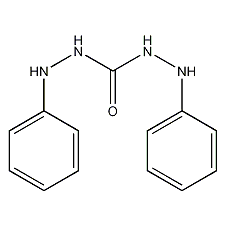
1,5-biphenylsodisemicarbazide

1,5-biphenyl s-diaminarbazide structural formula

structural formula

business number 03st
molecular formula c13h14n4o
molecular weight 242.28
label

1,5-diphenylcarbohydrazide,

sym.-diphenylcarbazide,

diphenyl semicarbazide; diphenylcarbazide; 1,5-diphenylcarbonyl hydrazine;,

aromatic compounds

numbering system

cas number:140-22-7

mdl number:mfcd00003013

einecs number:205-403-7

rtecs number:ff2750000

brn number:752039

pubchem number:24894160

physical property data

1. properties: white crystalline powder.

2. melting point ℃: 170-175

3. solubility: slightly soluble in water, soluble in ethanol, acetone, insoluble in ether.

toxicological data

none yet

ecological data

none yet

molecular structure data

molecular property data:

1. molar refractive index: 72.26

2. molar volume (cm3/mol): 187.4

3. isotonic specific volume (90.2k): 521.3

4. surface tension (3.0 dyne/cm): 59.7

5. polarizability (0.5 10-24cm3): 28.64

compute chemical data

1. reference value for hydrophobic parameter calculation (xlogp): 3.1

2. number of hydrogen bond donors: 4

3. number of hydrogen bond acceptors: 3

4. number of rotatable chemical bonds: 4

5. number of tautomers: 2

6. topological molecule polar surface area 65.2

7. number of heavy atoms: 18

8. surface charge: 0

9. complexity: 223

10. number of isotope atoms: 0

11. determine the number of atomic stereocenters: 0

12. uncertain number of atomic stereocenters: 0

13. determine the number of chemical bond stereocenters: 0

14. number of uncertain chemical bond stereocenters: 0

15. number of covalent bond units: 1

properties and stability

with ag+ , ni2+ , pd2+ , cu2+ , fe metal ions such as 3+, hg+, hg2+ have color reactions.

storage method

stored in a cool, dry place and sealed.

synthesis method

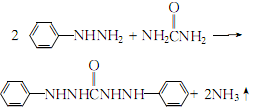
1. obtained from the reaction of phenylhydrazine and urea. add phenylhydrazine and urea to xylene, reflux for 32 hours, leave overnight, and filter out the crude product. then dissolve it with a mixed acid solvent of ethanol and a little acetic acid, quickly cool and crystallize, filter it, wash it with ethanol again, and filter it dry to get the finished product

2.reflux and heat phenylhydrazine and a slight excess of urea to 155~160℃ until the reactants are completely melted and the bubbles disappear:

keep warm for 2 to 3 hours, and the reaction will end. after cooling slightly, add 95% ethanol to precipitate part of the diphenylcarbamoyl dihydrazide, then reheat and reflux until the crystals are completely dissolved, filter while hot, cool the filtrate with ice salt to crystallize, filter with suction and wash with a small amount of ethanol until it is qualified. . filter and dry at 100°c to obtain diphenylcarbonyl dihydrazide.

purpose

1. used as a redox indicator for the colorimetric determination of chromium, mercury, lead, dichromate determination, adsorption indicator for the determination of chloride and cyanide by mercury measurement, and for the determination of cadmium, copper, iron, molybdenum and vanadium etc.

2it is also used as an indicator for redox, adsorption and coordination titration.

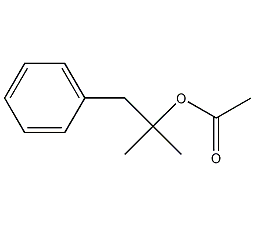
1,1-dimethyl-2-phenylethyl acetate

1,1-Dimethyl-2-phenylethyl acetate structural formula

1,1-dimethyl-2-phenylethyl acetate structural formula

structural formula

business number 03yl
molecular formula c12h16o2
molecular weight 192.25
label

dimethylbenzyl alcohol ethyl ester,

dimethylbenzyl acetate,

α,α-dimethylphenylethyl acetate,

benzyldimethylcarbinol acetate,

dimethylbenzylcarbinyl acetate

numbering system

cas number:151-05-3

mdl number:mfcd00026196

einecs number:205-781-3

rtecs number:sg8100000

brn number:none

pubchem number:24901042

physical property data

1. physical property data:

1.characteristics: colorless and transparent liquid with floral and fruity aroma.

2.density (g/ml, 25/4℃):0.998

3.refractive index (nd20): 1.4925

4.flash point (°f): 206

5.boiling point (ºc):250

6 .solubility:soluble in ethanol, most non-volatile oils and mineral oil, slightly soluble in propylene glycol, insoluble in glycerin and water.

toxicological data

2. toxicological data:

1, acute toxicity: rat oral ld503300 mg/kg

ecological data

3. ecological data:

other harmful effect: this substance may be harmful to the environment, and special attention should be paid to water bodies.

molecular structure data

5. molecular property data:

1. molar refractive index:56.07

2. molar volume (m3/ mol):191.8

3. isotonic specific volume (90.2k): 462.8

4. surface tension (dyne/cm): 33.9

5. polarizability10-24cm3):22.22

compute chemical data

1. reference value for hydrophobic parameter calculation (xlogp): 2.7

2. number of hydrogen bond donors: 0

3. number of hydrogen bond acceptors: 2

4. number of rotatable chemical bonds: 4

n>

1. molar refractive index:56.07

2. molar volume (m3/ mol):191.8

3. isotonic specific volume (90.2k): 462.8

4. surface tension (dyne/cm): 33.9

5. polarizability10-24cm3):22.22

compute chemical data

1. reference value for hydrophobic parameter calculation (xlogp): 2.7

2. number of hydrogen bond donors: 0

3. number of hydrogen bond acceptors: 2

4. number of rotatable chemical bonds: 4

5. number of tautomers: none

6. topological molecule polar surface area 26.3

7. number of heavy atoms: 14

8. surface charge: 0

9. complexity: 191

10. number of isotope atoms: 0

11. determine the number of atomic stereocenters: 0

12. uncertain number of atomic stereocenters: 0

13. determine the number of chemical bond stereocenters: 0

14. number of uncertain chemical bond stereocenters: 0

15. number of covalent bond units: 1

properties and stability

stable under normal temperature and pressure.

incompatible materials:strong oxidizing agent

storage method

seal and store in a dry and cool place.

synthesis method

it is produced by direct esterification of dimethylbenzyl alcohol and acetic anhydride.

purpose

1. gb 2760—96 is specified as permitted flavors. it is mainly used to prepare fruit flavors such as pears, cherries, and strawberries.

2. use used to prepare a variety of cosmetics, soaps and food flavors.

3. available to enhance head and body fragrance, it is often used in fragrance formulas of hyacinth, magnolia, lilac, and lily of the valley. in addition, it can also be used in fragrance formulas such as rose, geranium, jasmine, and orchids to enhance the aroma and make it fresh and elegant. adding fragrance to perfume can give it a floral scent. it can also be used in soap flavors and food flavors.

5. number of tautomers: none

6. topological molecule polar surface area 26.3

7. number of heavy atoms: 14

8. surface charge :0

9. complexity: 191

10. number of isotope atoms: 0

11. determine the number of atomic stereocenters: 0

12. uncertain number of atomic stereocenters: 0

13. determined number of chemical bond stereocenters: 0

14. uncertain number of chemical bond stereocenters: 0

15. number of covalent bond units: 1

properties and stability

stable under normal temperature and pressure.

incompatible materials:strong oxidizing agent

storage method

seal and store in a dry and cool place.

synthesis method

it is produced by direct esterification of dimethylbenzyl alcohol and acetic anhydride.

purpose

1. gb 2760—96 is specified as permitted flavors. it is mainly used to prepare fruit flavors such as pears, cherries, and strawberries.

2. use used to prepare a variety of cosmetics, soaps and food flavors.

3. available to enhance head and body fragrance, it is often used in fragrance formulas of hyacinth, magnolia, lilac, and lily of the valley. in addition, it can also be used in fragrance formulas such as rose, geranium, jasmine, and orchids to enhance the aroma and make it fresh and elegant. adding fragrance to perfume can give it a floral scent. it can also be used in soap flavors and food flavors.

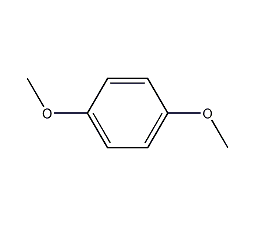
1,4-dimethoxybenzene

1,4-dimethoxybenzene structural formula

1,4-dimethoxybenzene structural formula

structural formula

business number 03ye
molecular formula c8h10o2
molecular weight 138.16
label

p-dimethoxybenzene,

hydroquinone dimethyl ether,

hydroquinone dimethyl ether,

dimethylhydroquinone,

dimethylhydroquinone ether,

hydroquinone dimethyl ether,

dimethylhydroquinone,

dmb

numbering system

cas number:150-78-7

mdl number:mfcd00008401

einecs number:205-771-9

rtecs number:cz6650000

brn number:774605

pubchem number:24901038

physical property data

1. physical property data:

1. properties: white flaky crystals with clove smell.

2. density (g/ml, 25/4℃): 1.053

3. flash point (℃): 125

4. melting point (℃ ): 58

5. boiling point (ºc): 212.6

6. boiling point (ºc, 2.67kpa): 109

7. solubility: soluble in ethanol, ether and benzene are insoluble in water.

8. relative density (20℃, 4℃): 1.038355

toxicological data

2. toxicology data:

1. acute toxicity: rat oral ld50: 3600 mg/kg;

mouse oral ld50: 4 gm/kg;

mouse abdominal ld50: 100 mg/kg.

ecological data

3. ecological data:

other harmful effects: this substance may be harmful to the environment, and special attention should be paid to water bodies.

molecular structure data

1. molar refractive index: 39.60

2. molar volume (cm3/mol): 137.4

3. isotonic specific volume (90.2k ): 320.6

4. surface tension (dyne/cm): 29.6

5. polarizability (10-24cm3): 15.70

compute chemical data

1. reference value for hydrophobic parameter calculation (xlogp): none

2. number of hydrogen bond donors: 0

3. number of hydrogen bond acceptors: 2

4. number of rotatable chemical bonds: 2

5. number of tautomers: none

6. topological molecule polar surface area 18.5

7. number of heavy atoms: 10

8. surface charge: 0

9. complexity: 73.3

10. number of isotope atoms: 0

11. determine the number of atomic stereocenters: 0

12. uncertain number of atomic stereocenters: 0

13. determine the number of chemical bond stereocenters: 0

14. number of uncertain chemical bond stereocenters: 0

15. number of covalent bond units: 1

properties and stability

1. stable under normal temperature and pressure.

2. incompatible materials: strong oxidizing agents.

3. exist in mainstream smoke.

4. naturally found in green tea, peppermint oil, and papaya.

storage method

seal the package and store in a dry and cool place, avoid sunlight.

synthesis method

1. obtained from the methylation of hydroquinone with dimethyl sulfate or methyl chloride.

2. obtained from the reaction of dimethyl sulfate and hydroquinone in the presence of alkali.

purpose

1. gb 2760-96 stipulates that edible spices are allowed to be used. mainly used for preparing nut flavors.

2. this product is an organic synthesis intermediate, used in the production of the drug methoxyamine hydrochloride, the dye black salt ans, etc. it is also used as a fixative, used in daily chemicals, to prepare food and tobacco flavors; it can also be used as an anti-corrosion agent for plastics and coatings.

3. used as an organic chemical intermediate to produce the drug methoxyamine hydrochloride, the dye black salt ans, etc., and also used as a fixative.

4. it can also be used for the synthesis of spices.

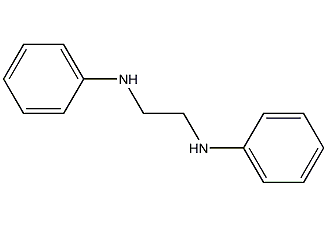
1,2-diphenylamineethane

1,2-diphenylamine ethane structural formula

1,2-diphenylamine ethane structural formula

structural formula

business number 03ya
molecular formula c14h16n2
molecular weight 212.29
label

triethyldiamine,

n,n′-ethylenedianiline,

1,2-dianilinoethane

numbering system

cas number:150-61-8

mdl number:mfcd00003019

einecs number:205-765-6

rtecs number:kv4800000

brn number:646740

pubchem id:none

physical property data

1. physical property data:

1. character:white crystal.

2. flash point (ºc):228 ºc

3. melting point (): 67.5

4. boiling point (ºc,1.60kpa ): 228230

5. solubility: easily soluble in ethanol and ether, insoluble in water.

6. density (g/ml, 25/4℃): 1.14

toxicological data

2. toxicological data:

1, acute toxicity: rat oral ldlo500 mg/kg

ecological data

3. ecological data:

other harmful effect: this substance may be harmful to the environment, and special attention should be paid to water bodies.

molecular structure data

5. molecular property data:

1. molar refractive index:69.67

2. molar volume (m3/ mol):189.2

3. isotonic specific volume (90.2k): 500.1

4. surface tension (dyne/cm): 48.7

5. polarizability10-24cm3):27.62

schedulinglign=left>5. molecular property data:

1. molar refractive index:69.67

2. molar volume (m3/ mol):189.2

3. isotonic specific volume (90.2k): 500.1

4. surface tension (dyne/cm): 48.7

5. polarizability10-24cm3):27.62

compute chemical data

1. reference value for hydrophobic parameter calculation (xlogp): 3.6

2. number of hydrogen bond donors: 2

3. number of hydrogen bond acceptors: 2

4. number of rotatable chemical bonds: 5

5. number of tautomers: none

6. topological molecule polar surface area 24.1

7. number of heavy atoms: 16

8. surface charge: 0

9. complexity: 150

10. number of isotope atoms: 0

11. determine the number of atomic stereocenters: 0

12. uncertain number of atomic stereocenters: 0

13. determine the number of chemical bond stereocenters: 0

14. number of uncertain chemical bond stereocenters: 0

15. number of covalent bond units: 1

properties and stability

stable under normal temperature and pressure.

storage method

should be sealed and stored in a cool place.

synthesis method

none

purpose

for the determination of aldehydes. stabilizer for rubber and resins. intermediates for the manufacture of antihistamine drugs.

�chemical data

1. reference value for hydrophobic parameter calculation (xlogp): 3.6

2. number of hydrogen bond donors: 2

3. number of hydrogen bond acceptors: 2

4. number of rotatable chemical bonds: 5

5. number of tautomers: none

6. topological molecule polar surface area 24.1

7. number of heavy atoms: 16

8. surface charge: 0

9. complexity: 150

10. number of isotope atoms: 0

11. determine the number of atomic stereocenters: 0

12. uncertain number of atomic stereocenters: 0

13. determine the number of chemical bond stereocenters: 0

14. number of uncertain chemical bond stereocenters: 0

15. number of covalent bond units: 1

properties and stability

stable under normal temperature and pressure.

storage method

should be sealed and stored in a cool place.

synthesis method

none

purpose

for the determination of aldehydes. stabilizer for rubber and resins. intermediates for the manufacture of antihistamine drugs.

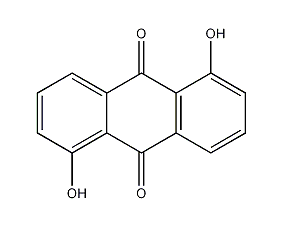
1,5-dihydroxyanthraquinone

1,5-dihydroxyanthraquinone structural formula

1,5-dihydroxyanthraquinone structural formula

structural formula

business number 038y
molecular formula c14h8o4
molecular weight 240.21
label

anthraquinones

numbering system

cas number:117-12-4

mdl number:mfcd00001210

einecs number:204-175-6

rtecs number:cb6630000

brn number:1881718

pubchem id:none

physical property data

1. appearance: yellow powder

2. density (g/ml, 20℃): undetermined

3. relative vapor density (g/ml, air=1 ): undetermined

4. melting point (ºc): 280 (decomposition)

5. boiling point (ºc, normal pressure): 280

6. boiling point (ºc, kpa): not determined

7. refractive index: not determined

8. flash point (ºc): not determined

9. specific rotation degree (º): undetermined

10. autoignition point or ignition temperature (ºc): undetermined

11. vapor pressure (mmhg, ºc): undetermined

12. saturated vapor pressure (kpa, ºc): undetermined

13. heat of combustion (kj/mol): undetermined

14. critical temperature (ºc) : undetermined

15. critical pressure (kpa): undetermined

16. log value of oil-water (octanol/water) partition coefficient: undetermined

17. explosion upper limit (%, v/v): undetermined

18. explosion lower limit (%, v/v): undetermined

19. solubility: dissolved in benzene and nitrobenzene are slightly soluble in ethanol, acetic acid and ether. they are red when soluble in potassium hydroxide solution. they are insoluble in sodium carbonate solution and ammonia. they are fluorescent red when soluble in concentrated sulfuric acid.

toxicological data

1. irritation: rabbit eye: 500mg/24h mild irritation.

ecological data

slightly harmful to water.

molecular structure data

5. molecular property data:

1. molar refractive index: 62.43

2. molar volume (cm3/mol): 155.9

3. isotonic specific volume (90.2k): 465.2

4. surface tension (dyne/cm): 79.2

5. polarizability (10-24cm3): 24.74

compute chemical data

1. reference value for hydrophobic parameter calculation (xlogp): none

2. number of hydrogen bond donors: 2

3. number of hydrogen bond acceptors: 4

4. number of rotatable chemical bonds: 0

5. number of tautomers: 15

6. topological molecule polar surface area 74.6

7. number of heavy atoms: 18

8. surface charge: 0

9. complexity: 342

10. number of isotope atoms: 0

11. determine the number of atomic stereocenters: 0

12. uncertain number of atomic stereocenters: 0

13. determine the chemical bond establishment.number of ��centers: 0

14. number of uncertain chemical bond stereocenters: 0

15. number of covalent bond units: 1

properties and stability

stable at room temperature and pressure, avoid contact with strong oxidants.

storage method

stored in a cool, ventilated warehouse. keep away from fire and water sources. should be kept away from oxidizer, do not store together. equipped with the appropriate variety and quantity of fire equipment. suitable materials should be available in the storage area to contain spills.

synthesis method

there are anthraquinone sulfonation method and benzoic acid sulfonation method. (1) using anthraquinone as raw material and mercury sulfate as positioning agent, 1,5-anthraquinone disulfonic acid and 1,8-anthraquinone disulfonic acid are obtained through sulfonation. 1,5-dihydroxyanthraquinone can be obtained by alkali melting and acidification of 1,5-anthraquinone disulfonic acid. (2) using benzoic acid as raw material, it is obtained through sulfonation, alkali fusion, acidification, condensation and ring closure. this method does not use a mercury catalyst and eliminates mercury damage, but the one-step closed-loop yield is only 40% and consumes a large amount of aluminum trichloride. this method consumes more money, causes other pollution, and has high production costs.

purpose

it is an intermediate for disperse dyes and acid dyes. used in synthetic dyes.

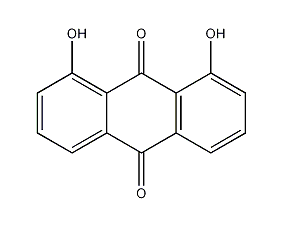
1,8-dihydroxyanthraquinone

1,8-dihydroxyanthraquinone structural formula

1,8-dihydroxyanthraquinone structural formula

structural formula

business number 038w
molecular formula c14h8o4
molecular weight 240.21
label

chrysazine,

danthron,

quinones

numbering system

cas number:117-10-2

mdl number:mfcd00001211

einecs number:204-173-5

rtecs number:cb6650000

brn number:2054727

pubchem number:24893346

physical property data

1. characteristics: yellow, red-yellow or red needle-like or flake crystals.

2. density (g/ml,20) : undetermined

3. relative vapor density (g/ml,air =1): undetermined

4. melting point (ºc): 191193, can be sublimated.

5. boiling point (ºc,normal pressure): undetermined

6. boiling point (ºc, kpa): undetermined

7. refractive index: undetermined

8. flashpoint (ºc): undetermined

9. specific rotation (º): undetermined

10. autoignition point or ignition temperature (ºc): undetermined

11. vapor pressure (mmhg, ºc): undetermined

12. saturated vapor pressure (kpa, ºc): undetermined

13. heat of combustion (kj/mol): undetermined

14. critical temperature (ºc): undetermined

15. critical pressure (kpa): undetermined

16. oil and water (octanol/log value of the partition coefficient for water: undetermined

17. explosion upper limit (%,v/v): undetermined

molar volume (m3/mol): 155.9

3 isotonic specific volume (90.2k) :465.2

4 surface tension (dyne/cm):79.2

5 polarizability (10-24cm3):24.74

compute chemical data

1. reference value for hydrophobic parameter calculation (xlogp): none

2. number of hydrogen bond donors: 2

3. number of hydrogen bond acceptors: 4

4. number of rotatable chemical bonds: 0

5. number of tautomers: 14

6. topological molecule polar surface area 74.6

7. number of heavy atoms: 18

8. surface charge: 0

9. complexity: 346

10. number of isotope atoms: 0

11. determine the number of atomic stereocenters: 0

12. uncertain number of atomic stereocenters: 0

13. determine the number of chemical bond stereocenters: 0

14. number of uncertain chemical bond stereocenters: 0

15. number of covalent bond units: 1

properties and stability

stable at normal temperature and pressure, avoid contact with strong oxidizing agentcontact.

storage method

stored in a cool, ventilated warehouse. keep away from fire and water sources. should be kept away from oxidizer, do not store together. equipped with the appropriate variety and quantity of fire equipment. suitable materials should be available in the storage area to contain spills.

synthesis method

it is produced by disulfonation or dinitration of anthraquinone.

purpose

used as dyes and pharmaceutical intermediates.

“>

compute chemical data

1. reference value for hydrophobic parameter calculation (xlogp): none

2. number of hydrogen bond donors: 2

3. number of hydrogen bond acceptors: 4

4. number of rotatable chemical bonds: 0

5. number of tautomers: 14

6. topological molecule polar surface area 74.6

7. number of heavy atoms: 18

8. surface charge: 0

9. complexity: 346

10. number of isotope atoms: 0

11. determine the number of atomic stereocenters: 0

12. uncertain number of atomic stereocenters: 0

13. determine the number of chemical bond stereocenters: 0

14. number of uncertain chemical bond stereocenters: 0

15. number of covalent bond units: 1

properties and stability

stable at normal temperature and pressure, avoid contact with strong oxidizing agentcontact.

storage method

stored in a cool, ventilated warehouse. keep away from fire and water sources. should be kept away from oxidizer, do not store together. equipped with the appropriate variety and quantity of fire equipment. suitable materials should be available in the storage area to contain spills.

synthesis method

it is produced by disulfonation or dinitration of anthraquinone.

purpose

used as dyes and pharmaceutical intermediates.

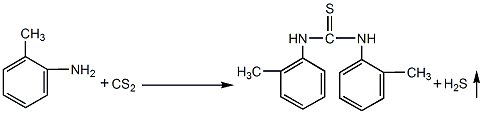
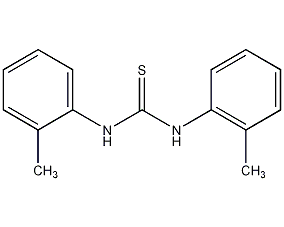
1,3-di-o-tolyl-2-thiourea

1,3-di-o-tolyl-2-thiourea structural formula

structural formula

business number 03rs
molecular formula c15h16n2s
molecular weight 256.37
label

n,n’-di-o-tolylthiourea,

2,2′-xylenethiourea,

di(o-toluene)thiourea,

n, n’-2-o-tolyl thiourea,

2,2′- xylene thiourea,

2 (o-methylphenyl) thiourea,

thiourea accelerator

numbering system

cas number:137-97-3

mdl number:mfcd00025922

einecs number:205-309-6

rtecs number:fe0700000

brn number:2125770

pubchem number:24848804

physical property data

  1. melting point (℃): 165~166
  2. boiling point (sublimation, ℃): 216~218
  3. characteristics: white needle-like crystals.

toxicological data

none

ecological data

none

molecular structure data

molecular property data:

1. molar refractive index: 81.98

2. molar volume (cm3/mol): 210.2

3. isotonic specific volume (90.2k): 582.2

4. surface tension (3.0 dyne/cm): 58.7

5. polarizability (0.5 10-24cm3): 32.50

compute chemical data

1. reference value for hydrophobic parameter calculation (xlogp): 3.8

2. number of hydrogen bond donors: 2

3. number of hydrogen bond acceptors: 1

4. number of rotatable chemical bonds: 2

5. number of tautomers: 2

6. topological molecule polar surface area 56.2

7. number of heavy atoms: 18

8. surface charge: 0

9. complexity: 254

10. number of isotope atoms: 0

11. determine the number of atomic stereocenters: 0

12. uncertain number of atomic stereocenters: 0

13. determine the number of chemical bond stereocenters: 0

14. number of uncertain chemical bond stereocenters: 0

15. number of covalent bond units: 1

properties and stability

soluble in dimethylformamide, acetone, slightly soluble in carbon disulfide, benzene, chloroform, insoluble in xylene, carbon tetrachloride, ethanol and water. can evaporate with water vapor.

storage method

  1. store in a cool, dry and ventilated place.
  2. fire-proof, moisture-proof and sun-proof.

synthesis methodlaw

  1. at room temperature, add 1% sulfur and 1% carbonic acid to the reaction solution composed of o-toluidine, water and a slight excess of carbon disulfide. ammonium hydrogen or ammonia water is used as catalyst. start stirring and perform the reaction under closed conditions. the initial pressure is 0.05~0.1mpa. when the pressure rises, the gas is released regularly, and the released hydrogen sulfide gas is absorbed by liquid alkali. the normal temperature reaction production cycle is long, about 15 days or more in summer.
  2. when the reaction temperature is controlled at about 40°c, the carbon disulfide is slightly excessive than the normal temperature method, and sulfur and ammonia are used as catalysts. the production cycle about 50h. when the reaction temperature is 70°c, the reaction time is 10h; when the reaction temperature is 80°c, the reaction time is 5h. at this time, the amount of carbon disulfide needs to be doubled, the amount of water is also increased, the catalyst is sulfur and sodium carbonate, and the carbon disulfide is added dropwise. a high pressure needs to be maintained during the reaction.
  3. after the condensation reaction is completed, filter, wash and dry to obtain the finished product.

purpose

uses:

  1. used as boiler chemical cleaning corrosion inhibitor.
  2. this product is a thiourea vulcanization accelerator. its function is very similar to the accelerator ca (diphenyl urea sulfur), but it is less likely to be scorched than the accelerator ca. it can be used together with thiazole vulcanization accelerator in natural rubber and 2-mercaptoimidazoline in chloroprene rubber to achieve rapid vulcanization.

bdmaee:bis (2-dimethylaminoethyl) ether

cas no:3033-62-3

china supplier

for more information, please contact the following email:

email:sales@newtopchem.com

email:service@newtopchem.com

email:technical@newtopchem.com

BDMAEE Manufacture !